Top Ten IT Infrastructure Trends Dominating 2026
IT infrastructure has reached a decisive inflection point. What once centered on physical servers, on-premises storage, and static networks has evolved into a highly distributed, intelligent ecosystem spanning public and private cloud platforms, edge locations, AI-driven automation, and security-first architectures.
As digital transformation accelerates across industries, organizations are under mounting pressure to deliver always-on services, real-time insights, and secure access at scale.
By 2026, enterprises that continue to rely on rigid, legacy infrastructure models will face rising operational costs, performance bottlenecks, limited scalability, and heightened cyber risk. These limitations not only affect IT operations but also restrict the speed, personalization, and analytics required to execute a modern marketing plan effectively. Manual processes, siloed tools, and reactive monitoring simply cannot keep pace with today’s complexity.
In contrast, organizations that align early with emerging IT infrastructure trends will gain predictive operational capabilities, flexible deployment models, and faster innovation cycles, turning infrastructure into a competitive advantage rather than a constraint.
This blog explores the top 10 IT infrastructure trends dominating 2026, explains why each trend matters, and provides practical insights to help IT leaders prioritize investments and future-proof their infrastructure strategies in an increasingly digital and interconnected world.
Top 10 IT Infrastructure Trends for 2026
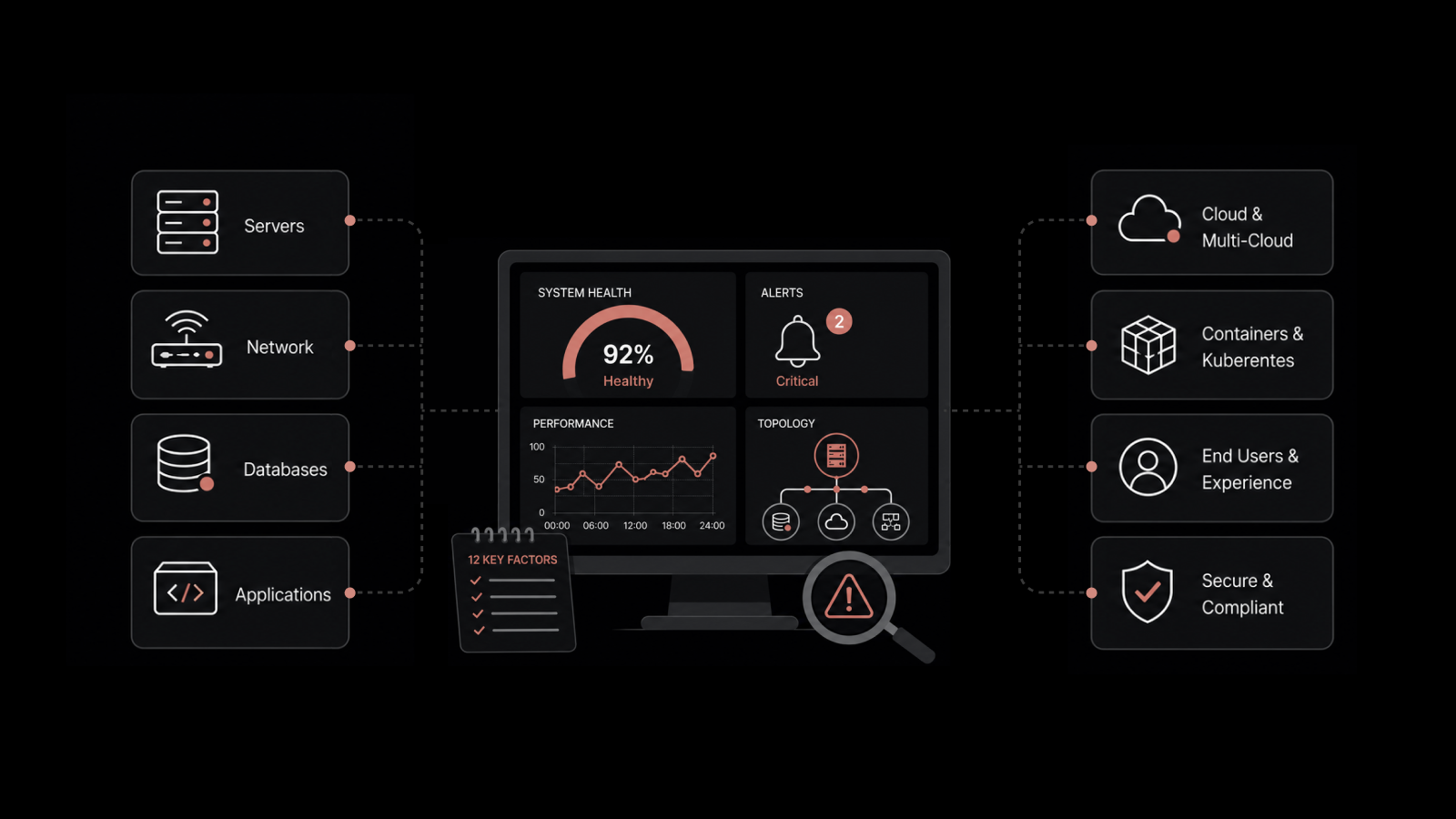
IT infrastructure trends will be defined by intelligent automation, resilient hybrid architectures, and real-time visibility across distributed environments. As complexity increases, organizations are strengthening infrastructure monitoring, security, and scalability to support cloud-native, edge, and AI-driven operations.
These trends highlight how modern IT infrastructure is evolving from static systems into adaptive, business-critical platforms built for speed, reliability, and continuous innovation.
1. ObserveOps: Redefining Infrastructure Monitoring and Operations
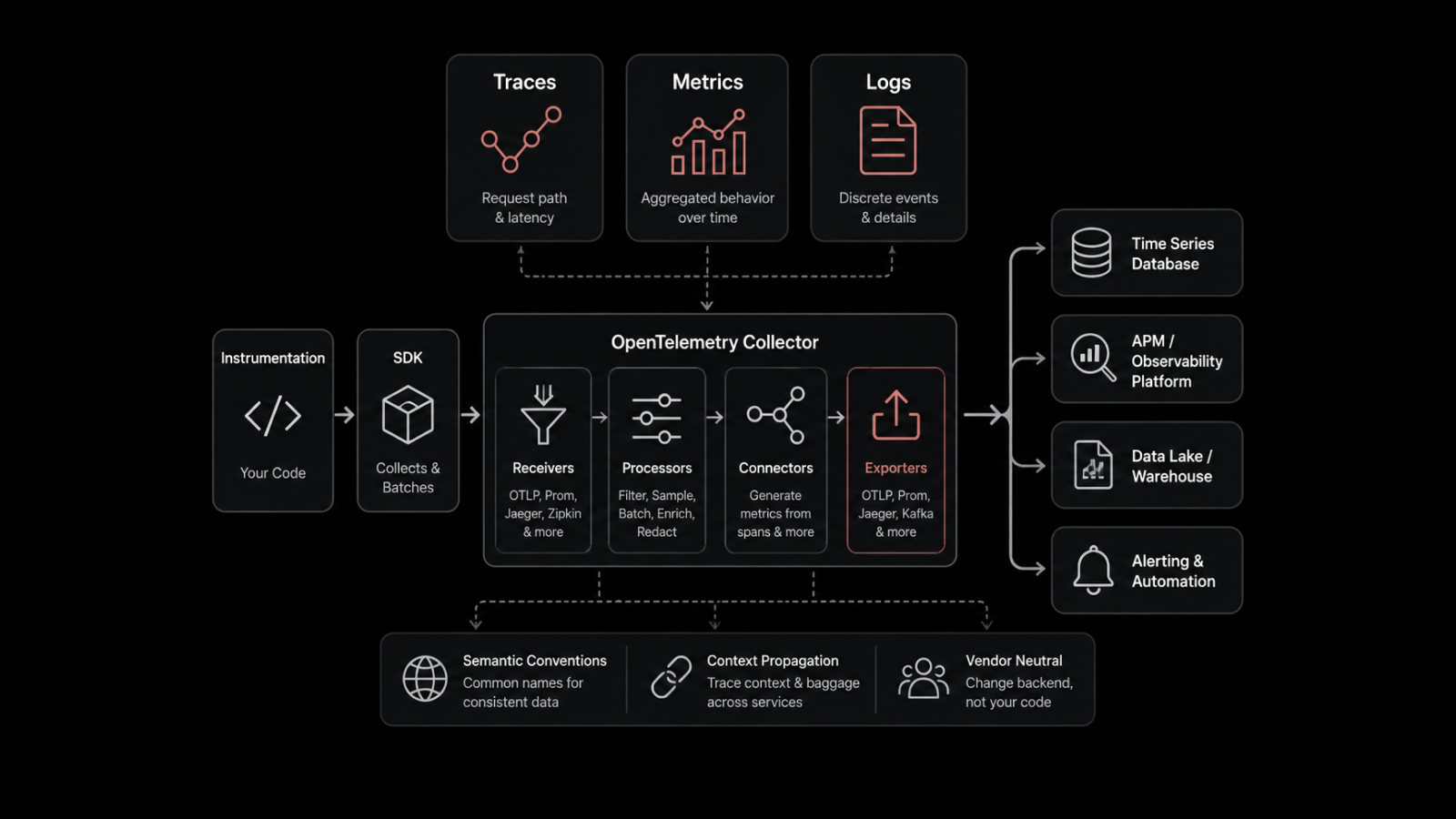
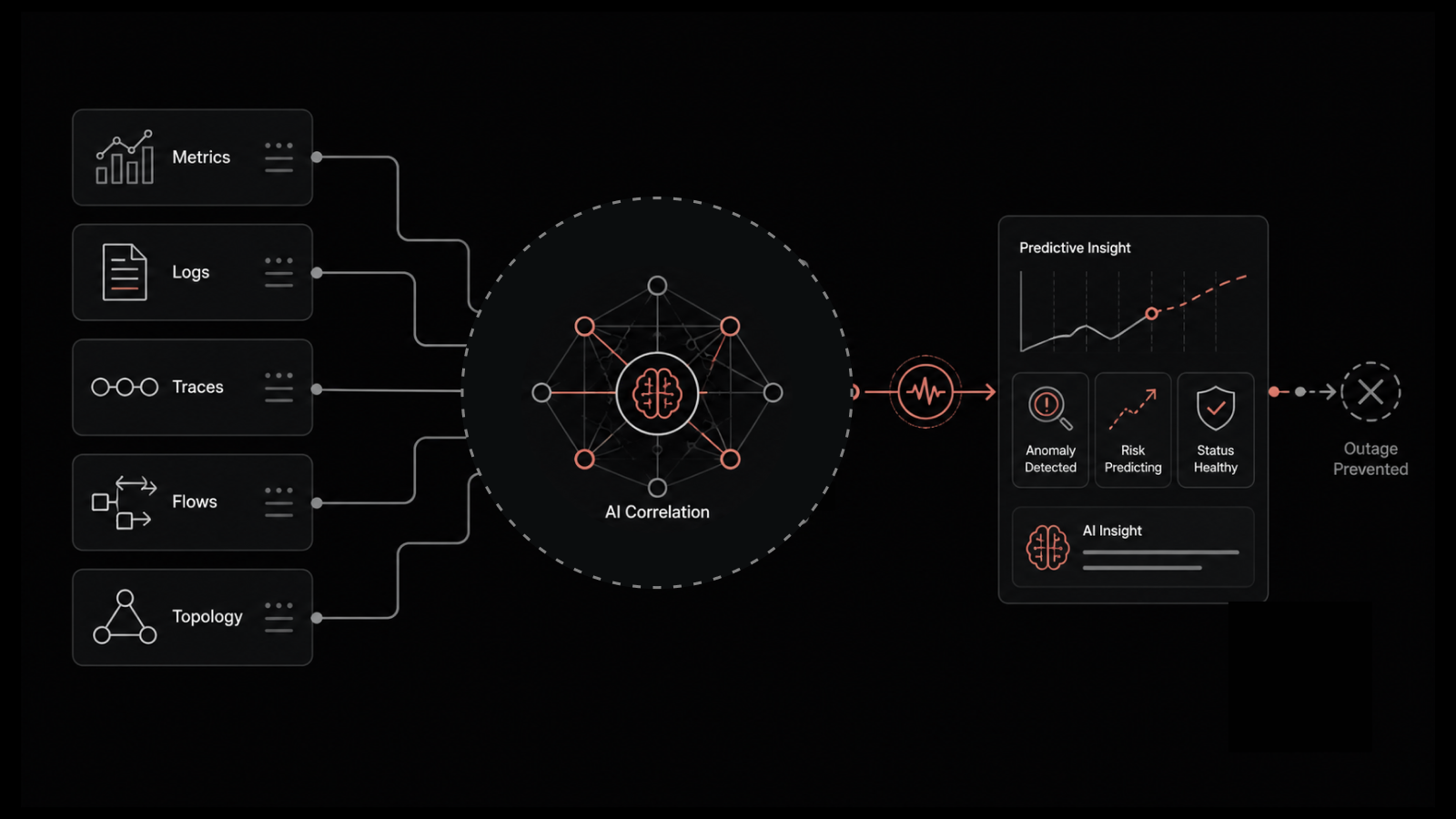
Artificial Intelligence for IT Operations (AIOps) has moved beyond hype to become a foundational capability within modern IT environments. ObserveOps platforms apply machine learning and advanced analytics to massive volumes of telemetry data—including logs, metrics, events, and traces—to detect anomalies, predict failures, and automate remediation actions.
As IT environments grow more distributed across cloud, edge, and on-premises systems, traditional monitoring tools struggle to keep up with data volume and complexity. ObserveOps enables proactive infrastructure monitoring by identifying subtle patterns and correlations long before issues impact users or business operations.
Key Capabilities of ObserveOps in 2026
| Capability | What It Does | Business Impact |
|---|---|---|
| Predictive analytics | Anticipates performance degradation and failures | Prevents outages and service disruptions |
| Intelligent alert correlation | Groups related alerts across systems | Reduces noise and alert fatigue |
| Automated root-cause analysis | Identifies underlying causes across stacks | Speeds incident resolution |
| Self-healing workflows | Triggers automated remediation | Lowers operational costs and MTTR |
| Capacity forecasting | Predicts future resource needs | Improves planning and cost optimization |
Why it matters: ObserveOps transforms IT operations from reactive firefighting into predictive, data-driven management—freeing teams to focus on innovation rather than constant troubleshooting.
2. Cybersecurity: Building Attack-Proof Workplaces
Cybersecurity is no longer a standalone function—it is deeply embedded in IT infrastructure design. With remote work, SaaS adoption, APIs, and cloud-native architectures expanding the attack surface, security must be built into every layer of infrastructure rather than bolted on afterward.
In 2026, organizations will prioritize attack-proof workplaces by integrating identity, endpoint protection, network security, and continuous monitoring directly into their infrastructure stack. Automation and AI will play a critical role in detecting threats and responding in real time.
Infrastructure-Driven Security Focus Areas
| Area | Description | Value to the Business |
|---|---|---|
| Identity-first security | Identity replaces perimeter-based trust | Reduces unauthorized access |
| Continuous monitoring | Real-time threat detection and response | Limits dwell time of attackers |
| Automated compliance | Policies enforced through infrastructure | Simplifies audits and governance |
| Secure Access Service Edge (SASE) | Unified networking and security model | Secures remote and hybrid work |
Why it matters: A single breach can disrupt operations, damage brand trust, and result in significant regulatory and financial penalties.
3. Enhanced Observability for Faster Decision-Making
Observability extends far beyond traditional monitoring by enabling teams to understand why systems behave the way they do—not just what is happening. While monitoring focuses on predefined metrics and thresholds, observability delivers deep, contextual visibility into complex, dynamic systems operating under real-world conditions.
As IT environments grow more distributed and software-driven, advanced observability platforms are becoming critical for managing dependencies across hybrid and cloud-native architectures. By correlating telemetry logs, metrics, traces, and user experience signals—across applications, infrastructure, networks, and services, these platforms provide actionable intelligence that accelerates decisions and reduces operational risk.
Monitoring vs. Observability
| Monitoring | Observability |
|---|---|
| Tracks known metrics | Explores unknown and emerging issues |
| Reactive alerts | Proactive insights and predictions |
| Siloed tools | Unified, end-to-end visibility |
| Limited context | Rich contextual analysis |
Why it matters: Faster insight leads to faster decisions, quicker fixes, and consistently better digital experiences for users.
4. Automating Cross-Functional Collaboration
Modern IT infrastructure issues rarely remain confined to a single team. Performance degradation or service outages often span DevOps pipelines, cloud resources, network performance, and security controls, requiring coordinated action across multiple functional domains.
To address this complexity, automation is emerging as the connective layer between teams. Intelligent workflows now orchestrate escalations, approvals, diagnostics, and remediation across teams, eliminating manual coordination delays and ensuring faster, more consistent resolution.
Collaboration Automation Benefits
| Benefit | Outcome |
|---|---|
| Reduced handoffs | Faster incident resolution |
| Automated runbooks | Consistent and repeatable responses |
| Integrated tools | Fewer silos between teams |
| Shared dashboards | Improved accountability and transparency |
Why it matters: Collaboration automation reduces friction, accelerates resolution times, and improves overall service reliability.
5. Zero Trust Architecture (ZTA) as the New Standard
Zero Trust Architecture (ZTA) is rapidly becoming the foundational security model for modern IT infrastructure. Built on the principle of “never trust, always verify,” Zero Trust removes implicit trust by continuously validating users, devices, workloads, and applications, regardless of location.
With identities replacing network boundaries as the new control plane, Zero Trust frameworks now underpin access across users, endpoints, applications, and data. Continuous verification based on identity, context, and behavior significantly reduces lateral movement, limits breach impact, and strengthens security in highly distributed, cloud-based environments.
Core Pillars of Zero Trust
| Pillar | Purpose | Security Benefit |
|---|---|---|
| Strong identity | Verifies users and devices | Prevents impersonation |
| Least-privilege access | Limits permissions | Reduces attack surface |
| Continuous authentication | Verifies access continuously | Stops lateral movement |
| Micro segmentation | Isolates workloads | Contains breaches |
Why it matters: Zero Trust minimizes the blast radius of attacks in highly distributed and cloud-based environments.
6. Infrastructure as Code (IaC) Goes Enterprise-Wide
Manual infrastructure provisioning is no longer sustainable in environments defined by scale, speed, and constant change. Infrastructure as Code (IaC) addresses this challenge by enabling organizations to define, deploy, and manage IT infrastructure through standardized, version-controlled code instead of error-prone manual processes. What started as a DevOps efficiency practice has matured into a critical enterprise-wide capability.
As infrastructure expands across cloud, hybrid, and on-premises environments, IaC delivers the consistency and governance enterprises require. Automated provisioning, built-in policy enforcement, and version control support faster deployments, simplified audits, and dependable scalability. It helps in aligning infrastructure operations with modern application development and continuous delivery models.
Advantages of Infrastructure as Code
| Advantage | Impact on IT Infrastructure |
|---|---|
| Repeatability | Faster, predictable deployments |
| Version control | Easy rollback and auditing |
| Automation | Reduced human error |
| Policy enforcement | Compliance built into code |
| Scalability | Rapid expansion across environments |
Why it matters: IaC aligns infrastructure speed with modern application development and continuous delivery.
7. Edge Computing Expansion Across Industries
The rapid growth of connected devices and data-intensive applications is pushing computing beyond centralized data centers. Edge computing responds by bringing processing and analytics closer to where data is generated, significantly reducing latency and improving real-time responsiveness for critical workloads.
Across industries, organizations are deploying edge infrastructure to support use cases that centralized cloud environments cannot efficiently handle. By processing data locally and synchronizing selectively with the cloud, edge computing enables faster insights, improved reliability, and new opportunities for automation, personalization, and real-time analytics.
Edge Computing Use Cases
| Industry | Use Case | Infrastructure Benefit |
|---|---|---|
| Manufacturing | Predictive maintenance | Reduced downtime |
| Healthcare | Real-time patient monitoring | Faster clinical decisions |
| Retail | Personalized in-store experiences | Improved customer engagement |
| Transportation | Autonomous systems | Ultra-low latency |
Why it matters: Centralized cloud alone cannot meet the performance demands of real-time, data-intensive applications.
8. Hybrid and Multi-Cloud as the Dominant IT Infrastructure Model
Enterprises are no longer forced to choose between on-premises environments and the cloud—they are strategically adopting both. Hybrid and multi-cloud architectures deliver greater flexibility, improved resilience, and enhanced cost optimization across modern IT infrastructure. By 2026, most organizations will operate across multiple cloud providers while maintaining on-premises systems to meet regulatory requirements, performance demands, and legacy application dependencies.
This approach reduces vendor lock-in, strengthens business continuity, and enables scalable infrastructure monitoring across diverse environments, making hybrid and multi-cloud models a core pillar of future-ready IT infrastructure strategies.
Hybrid vs. Multi-Cloud Explained
| Model | Description | Key Benefit |
|---|---|---|
| Hybrid cloud | On-prem + public cloud | Balanced control and scalability |
| Multi-cloud | Multiple public cloud providers | Vendor independence and resilience |
Why it matters: Hybrid and multi-cloud architectures reduce vendor lock-in and improve business continuity.
9. Cloud-Native Technologies Power Modern Infrastructure
Cloud-native technologies are fundamentally redefining how modern IT infrastructure is designed, deployed, and managed. Instead of relying on tightly coupled systems, organizations are adopting modular, loosely connected architectures that improve scalability, resilience, and speed.
By 2026, cloud-native will be the default approach for building and running applications across on-premises, hybrid, and multi-cloud environments. These technologies enable rapid application updates, automated scaling, and efficient resource utilization while reducing downtime. As businesses demand faster innovation and greater flexibility, cloud-native infrastructure provides the foundation needed to support continuous delivery, high availability, and seamless portability across diverse computing environments.
Cloud-Native Benefits
| Benefit | Result |
|---|---|
| Scalability | Elastic resource usage |
| Resilience | Fault-tolerant systems |
| Portability | Seamless cross-cloud deployment |
| Faster innovation | Shorter release cycles |
Why it matters: Cloud-native infrastructure enables rapid adaptation to changing business needs.
10. Network Transformation: 5G, Early 6G, and Network Slicing
Networking is undergoing a profound transformation as 5G adoption accelerates and early groundwork for 6G begins to take shape. These next-generation networks deliver ultra-low latency, massive device connectivity, and higher bandwidth, enabling real-time applications, intelligent automation, and data-intensive workloads across modern IT environments.
In parallel, AI-native networking capabilities are emerging, allowing networks to self-optimize based on traffic patterns and application demands. Network slicing further enhances this transformation by enabling organizations to create multiple virtual networks on a shared physical infrastructure, each optimized for specific applications, workloads, or security requirements, ensuring performance, reliability, and operational efficiency at scale.
Network Evolution Impact
| Technology | Infrastructure Impact |
|---|---|
| 5G | Real-time and mobile applications |
| 6G (early) | AI-driven network intelligence |
| Network slicing | Application-specific performance and security |
Why it matters: Networks are becoming programmable platforms rather than static pipes.
Conclusion
The Three Most Disruptive IT Infrastructure Trends
Among all IT infrastructure trends, three stand out as the most transformative for 2026:
ObserveOps – Reinventing infrastructure monitoring and operations through intelligence and automation.
Zero Trust Architecture – Establishing security as a foundational design principle.
Hybrid and Multi-Cloud – Defining the future deployment model for enterprise IT infrastructure.
Together, these trends redefine how infrastructure is built, secured, and managed.
FAQs
What is a key trend in IT infrastructure?
A key trend is the rise of AIOps, which uses AI and machine learning to automate infrastructure monitoring, detect anomalies, and predict failures.
What are the top 3 trends in the IT industry?
The top three trends are AIOps, Zero Trust Architecture, and hybrid/multi-cloud adoption.
What are the 7 domains of IT infrastructure?
They include hardware, software, networking, storage, security, facilities, and IT operations management.
What are the five major categories of IT infrastructure?
The five categories are compute, storage, networking, security, and management/monitoring.
Future-Proof Your IT Infrastructure with AI-Driven Observability
Author
Arpit Sharma
Senior Content Marketer
Arpit Sharma is a Senior Content Marketer at Motadata with over 8 years of experience in content writing. Specializing in telecom, fintech, AIOps, and ServiceOps, Arpit crafts insightful and engaging content that resonates with industry professionals. Beyond his professional expertise, he is an avid reader, enjoys running, and loves exploring new places.