From Data to Decisions: Why Correlation is the New Currency in IT Operations
IT teams have more visibility than ever, thanks to the modern observability tools, yet some of the critical incidents take too long to fix. Have you ever stopped to consider why?
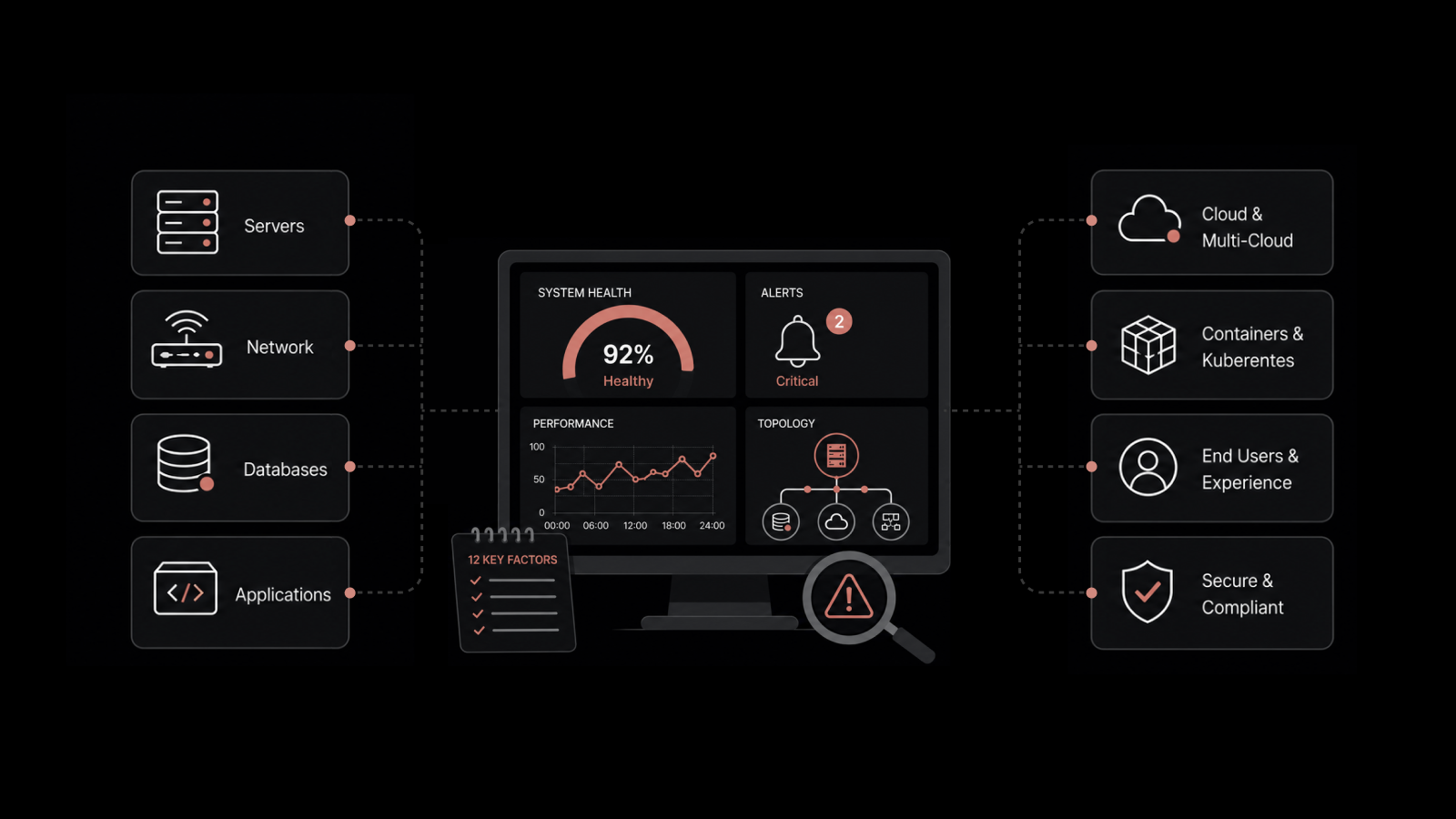
IT systems, i.e., applications, servers, containers, cloud services, and network devices, constantly send logs, metrics, traces, and even alerts when issues or outages arise, but they lack clarity. Even with complete control and clear visibility, IT teams handling large volumes of data find it challenging to identify essential and less-critical alerts. As a result, incidents take longer to resolve. The issue is no longer about the amount of data but the connection between the data.
Event correlation is a new feature in IT Operations (AIOps) that helps IT teams connect the dots and identify related alerts across different systems in an IT environment. Based on the cause and pattern, it allows group alerts and cut through the operational noise.
On one end, AI and machine learning algorithms are making data analysis easier; on the other, event correlation is the emerging trend that can turn data-driven insights into clear, actionable outcomes. Let’s go deeper to understand how correlation is the future currency of intelligent IT Operations.
The Explosion of IT Telemetry: Why Volume Isn’t Enough Anymore
Over the years, a dramatic transformation in the IT environment has been observed. Monolithic applications have given way to microservices. A constant rise in complex microservice architectures, cloud-native deployments, and distributed systems has been recorded. In fact, DevOps pipelines now push code into production multiple times a day. Each of these shifts has multiplied the volume of telemetry data.
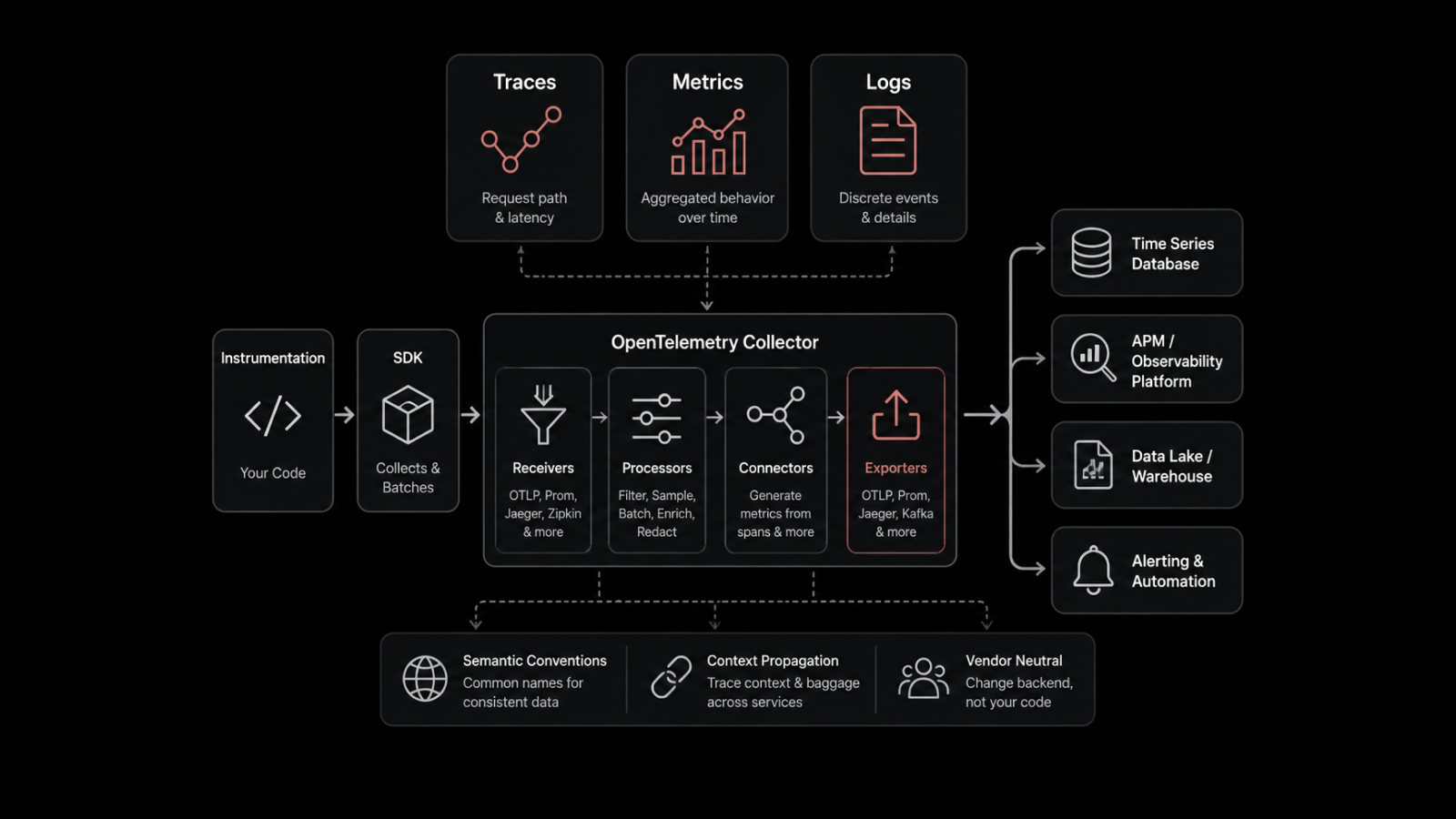
Every single IT system is constantly sending data. Applications generate logs related to how the code is working. Teams monitor CPU usage, memory, response time, error rates, and other metrics to keep track of performance trends. Traces follow every single user request as it travels across multiple services. Thousands of alerts are sent if an issue occurs or the service goes down. On their own, each of these data types is useful. The problem starts when you put them all together.
Modern distributed systems produce far more signals than any human or IT team expert can understand in real time. When a single service slows down, it can trigger thousands of alerts across servers, containers, databases, networks, and cloud services within minutes. Instead of clearly pointing to the real problem, the system floods teams with noise. As a result, teams end up sorting alerts rather than fixing issues. In fact, at times, important signals get buried and less important ones steal attention.
In short, raw telemetry without interpretation or context may actually slow down IT operations. Mean Time to Resolution (MTTR) increases, on-call stress rises, and real business impact can go unnoticed until customers start complaining. Hence, only collecting more logs, metrics, and alerts will not bring great results. What truly will make a difference is understanding how these data points connect to each other and identifying the root cause faster.
Why Correlation Matters More Than Collection in Modern IT Ops
This is how event correlation becomes far more valuable than simple data collection.
| What actually happens | Collection-Centric IT Ops | Correlation-Centric IT Ops |
|---|---|---|
| Incident Management | Teams react to each alert separately, even if they occur due tothe same issue | Teams see one consolidated incident that is the real problem |
| Prioritisation | Based on alert severity | Based on system dependencies and business impact |
| Root Cause Analysis | Unclear and delayed | Identified early by understanding relationships |
| Decision-making | Reactive and Manually analyze alerts | Informed and guided by correlated insights and system intelligence |
| Business impact | Usually understood after the incident | Visible while the incident is still ongoing |
For years, the focus of the IT industry was on collecting as much data as possible. But this mindset is now changing. Data matters, but how well you understand the relationships within it is the real challenge.
Collecting telemetry data is only the first step. On its own, raw data creates noise. According to industry reports, financial services firms lose an average of US$152 million annually due to downtime. Imagine a single hour of downtime in the financial sector costing more than an entire day’s revenue. What sounds small is actually a big loss for large organizations. This mainly happens because the root cause was not identified in time, and less important issues were given priority.
Basically, when a service goes down, IT teams and experts often get flooded with thousands of alerts that describe the same underlying problem, making it difficult to find the important issues. Without context, IT teams waste time juggling through less important alerts.
Event correlation in IT Operations Analytics (ITOA) shifts the focus from volume to intelligence. By analysing how events relate to one another across time, systems, and dependencies, correlation transforms raw signals into data-driven insights. Instead of going through hundreds of disconnected alerts or independent incidents, teams see a single, meaningful incident recognised based on patterns, dependencies, and causal chains. This is how event correlation becomes far more valuable than simple data collection.
Modern systems are deeply interconnected. A single issue in a cloud network layer can result in application slowdowns, database errors, and outages. When alerts arrive from each layer separately, they appear unrelated, even though they are part of the same failure. Event correlation links these events and provides operations teams with a unified view of incidents.
Event correlation also enables the display of dependency paths. Correlated insights map how failures happen through the system. Instead of asking, “Which alert should I look at first?” teams can immediately identify the source of the problem and understand its downstream impact. This accelerates root cause analysis, reduces mean time to resolution, and helps prioritise incidents based on real business impact.
How Contextual Insights Turn Data Into Faster, Better Decisions?
We live in a world where complexity is the new norm. Having access to complex data may help you stand out initially, but not in the long run if you’re not making the right decisions. Without proper context, no organisation can make the right decisions.
Correlation acts as the missing layer between raw signals and informed decisions. Without context, i.e., why and how a problem took place, alerts are just noise.
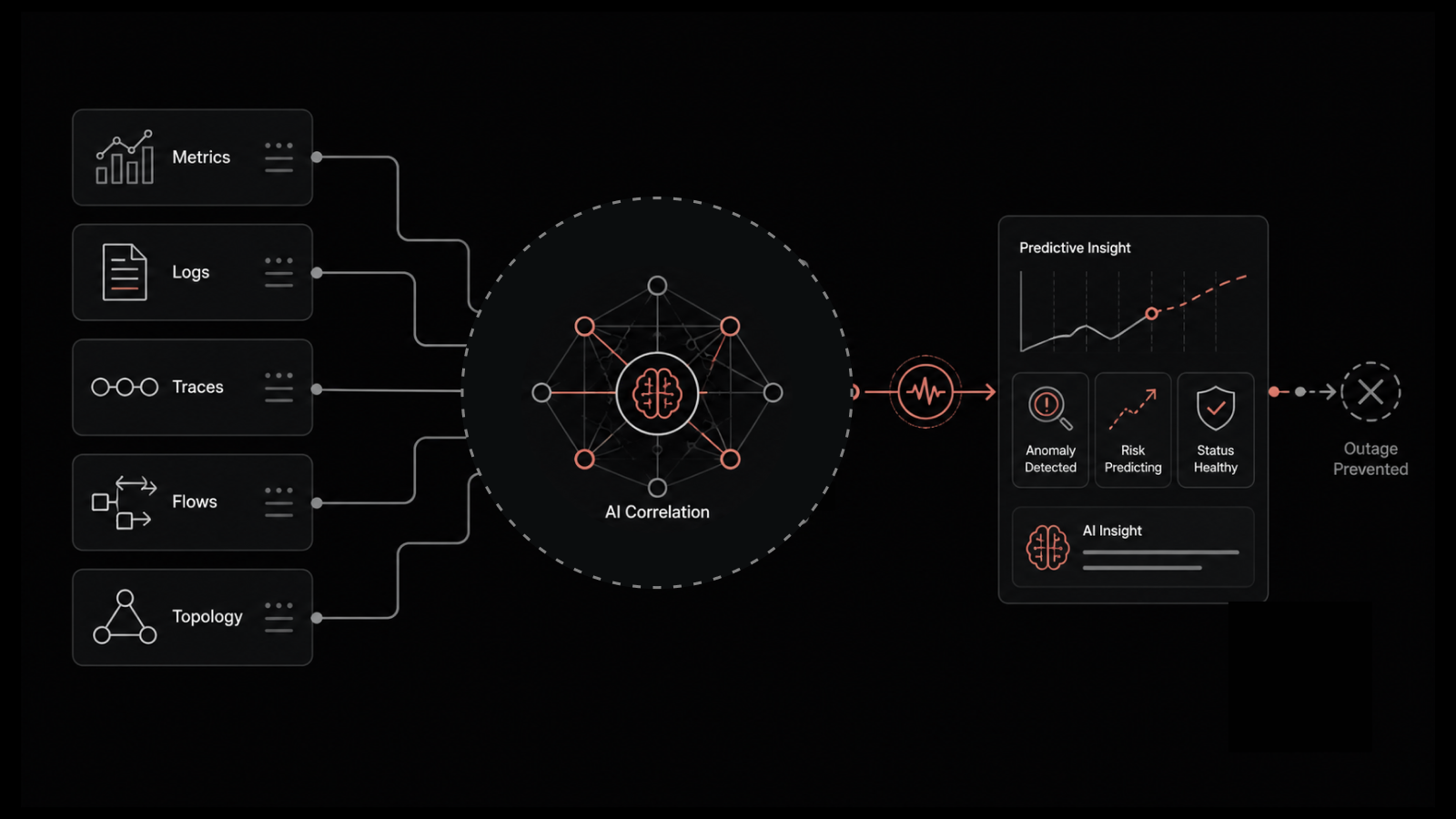
Contextual insights emerge when correlated data is mapped onto service topology and dependency models. Instead of viewing infrastructure, applications, and networks as separate domains, correlation unifies them into a single operational view. It brings together data with the real reason, making it easier for teams to understand how failures propagate across systems.
When a symptom appears, such as slow response times, correlation helps trace it back through contextual relationships to the root cause. There is no need for manually guessing the reason behind the problem in the code or infrastructure. Insights are embedded directly within existing workflows and applications. Correlation simply tracks the historical patterns and real-time dependencies.
Service topology maps further improve visibility by displaying how each component interacts in real time. When an event occurs, team members can review impacted downstream services immediately and track which upstream dependencies may be responsible. Access to these insights may help transform decision-making from reactive to proactive planning.
With contextual correlation, IT teams will also spend less time looking for answers. In short, investing more time executing solutions.
How Event Correlation Reduces Noise and Eliminates Alert Fatigue
Event correlation connects related alerts, adds context, and turns them into one clear, high-priority issue.
Traditional monitoring systems produced alerts every time a threshold limit was exceeded or a breach occurred. This resulted in alert storms which diverted team members’ focus from the real problem.
Event correlation changes this dynamic. Instead of producing hundreds of alerts for the same underlying issue, teams receive one correlated event that represents the true impact. Here is how the entire process works:
It collects data from various siloed monitoring tools into a single platform
Filters irrelevant, duplicate, or low-priority alerts
Use predefined rules or AI/machine learning to find relationships within the data
Tracks timing, patterns, and system dependencies to group this data into a single event.
In short, correlation suppresses the events that don’t contribute to operational risk. It helps with alert noise reduction by filtering out any low-value signal. With the help of this prioritization, team members can focus majorly on high-impact issues. By intelligently correlating alerts, IT operations platforms reduce excessive load on teams, reduce burnout, and improve response time.
How Correlation Improves RCA and Accelerates MTTR
DORA (DevOps Research and Assessment)
When something slows down or pauses in the IT environment, the clock starts ticking immediately. Users feel the impact, and to resolve the issue fast, operations teams rush to find solutions. In such moments, the real challenge is not fixing the problem but finding the root cause fast enough. Correlation, in such a case, improves RCA (Root Cause Analysis) and reduces MTTR (Mean Time to Resolution).
Today, with every system and operation interconnected, there is hardly a single cause behind an issue. A failure in one area often triggers problems across multiple systems. Without correlation, teams may end up chasing symptoms instead of solving the actual problem. Here is how with correlation, RCA becomes faster:
Maps Events to the Most Likely Source of Failure
In traditional monitoring tools, each alert seemed important to team members. What IT experts missed out was that the alerts were affecting not the causes. This lack of clarity resulted in teams guessing which signal represents the real source of failure.
Correlation changes this by mapping related events together and pointing toward the most likely root cause. Instead of treating alerts in isolation, correlated systems analyze patterns, dependencies, and behavior across the environment. When an incident happens, correlation identifies which event happened first and which components depend on it.
Identifies Patterns in Repeated or Linked Incidents
Some problems don’t happen just once. Without correlation, the problems are treated as new everytime. However, correlation tracks recurring failures after deployments or infrastructure changes. Thus, it allows the team to address systemic issues instead of repeated ones. This ability to learn from past incidents is a major advantage of correlation-driven IT operations analytics.
Speed Up Investigation Through Unified, Correlated Data
One of the main reasons RCA takes so long is the data silos. Correlation eliminates this friction by bringing all logs, metrics, and traces from different systems and presenting them in a unified form. Events from applications, infrastructure, networks, and cloud platforms are automatically linked based on context and dependencies. When an incident occurs, teams can see the full picture immediately. Thus, turning the RCA process faster.
Reduces Resolution Time With Predictive RCA Signals
Correlation constantly analyzes trends and historical patterns that help with predictive RCA signals. This predictive approach enables team members to act immediately and lower downtime. Over time, this leads to lower MTTR, fewer escalations, and more stable systems.
Real-World Scenarios: Where Event Correlation Delivers Maximum Value
Event correlation delivers value across different IT systems, but its impact is especially visible in complex and distributed environments. For example:
Cloud Environments
As per the reports, a Kubernetes-based microservices application experienced latency on public APIs that traditional monitoring couldn’t explain. Thanks to correlation, the organisation, instead of just alerting on slow response times, correlated resource spikes, container behaviour, and service-to-service interactions. This whole process hardly took any time. By tracing the data, the team adjusted the resource configuration and improved performance in minutes.
In cloud environments, correlation helps link latency issues to upstream or downstream services. A slowdown in one microservice may actually happen due to a shared database or third-party API. With correlation, you gain insights into these hidden relationships instantly.
DevOps & CI/CD Pipelines
In a DevOps workflow, teams push code changes multiple times a day. Many organizations integrate observability and correlation tools directly into their CI/CD pipelines so telemetry from deployments (logs, traces, metrics) feeds into a correlation engine.
When a performance drop occurs after a release, the system automatically links recent deployment events with downstream latency spikes or errors in production. Thus, it reduces rollback time and deployment risk.
Hybrid Infrastructure
Hybrid environments, where on-premise systems interact with public cloud services, tend to be full of blind spots.
Traditional siloed tools only show a part of the blind spots, making it nearly impossible to see how an upstream cloud load balancer issue might affect an on-prem database. These blind spots can impact the operations. Correlation solves this problem in hybrid environments by integrating events across these boundaries, showing how one domain’s issue cascades into another.
Network Operations
Network teams often see floods of alerts, such as link flaps, routing protocol resets, packet drops, or path latency increases, alongside application errors. Individually, none of these alerts offers a full picture.
Modern observability and correlation tools link network telemetry with application performance data. Instead of treating network alerts and application alerts separately, teams understand how network behavior directly impacts user experience.
Conclusion: Correlation Is the Future Currency of Intelligent IT Operations
The future of IT operations is no longer about collecting more data but about making better sense of the data we already have. As environments grow more complex and dynamic, isolated signals lose value. Event correlation sits at the heart of this transformation. By linking telemetry across domains, reducing alert noise, accelerating RCA, and enabling faster decisions, correlation is becoming the foundation of modern IT operations analytics.
Organizations that invest in correlation don’t just improve uptime but offer more clarity and control. In a world where every second of downtime matters, correlation is no longer just a technical capability but the new operational currency.
FAQs
What is Event Correlation?
Event correlation is the process that helps connect related alerts, events, and signals from different IT systems, making it easier for team members to connect data, understand it, and make informed decisions. Instead of juggling between hundreds of alerts, this feature helps find the real problem faster.
Why is correlation important?
Without event correlation in an IT environment, teams may miss important alerts in the noise. Furthermore, they will end up spending time resolving issues that are less important or missing security checks. Root cause might also become difficult to find and resolve. In short, implementing this reactive firefighting approach may result in higher costs.
How does event correlation reduce alert fatigue?
Event correlation groups duplicate and related alerts into a single incident and filters out low-priority noise. Thus, helping IT teams to focus on high-impact issues and perform RCA faster.
What are the different approaches to event correlation?
The common approaches for event correlation include time-based, rule-based, pattern-based, topology-based, domain-based, and history-based correlation. Each approach follows a different method to identify relationships and root causes.
Author
Arpit Sharma
Senior Content Marketer
Arpit Sharma is a Senior Content Marketer at Motadata with over 8 years of experience in content writing. Specializing in telecom, fintech, AIOps, and ServiceOps, Arpit crafts insightful and engaging content that resonates with industry professionals. Beyond his professional expertise, he is an avid reader, enjoys running, and loves exploring new places.