Top 9 ManageEngine Alternatives for Unified IT Visibility
A Guide for Decision-Makers Redefining IT Monitoring and Performance Management
In a world where digital experiences define business success, the ability to see, understand, and act on what happens within your IT environment has never been more critical. For many organizations, ManageEngine Applications Manager has long been a reliable solution for tracking performance, uptime, and system health.
But as technology has evolved, so have expectations. Hybrid infrastructures, cloud-native applications, and distributed systems have changed how IT operates. Teams today handle complex environments where data comes from thousands of interconnected sources, and real-time visibility determines resilience.
In this context, monitoring alone is no longer enough. IT leaders now need observability, a more intelligent, unified approach that connects insights, predicts failures, and drives proactive decisions.
This growing need has led many organizations to re-evaluate their monitoring stack and explore a ManageEngine alternative capable of delivering unified, context-aware visibility.
Why Unified Observability is the ‘Need of the Hour’?
Modern IT ecosystems are dynamic, interconnected, and constantly expanding. From hybrid cloud workloads to remote endpoints, every part of the digital infrastructure generates massive amounts of data. The challenge isn’t collecting that data—it’s interpreting it meaningfully.
Traditional monitoring tools, including ManageEngine, were designed for static environments. They track metrics and logs effectively but often lack the depth and automation needed to handle today’s complexity—highlighting the real difference in Motadata vs ManageEngine capabilities.
Why Teams Choose Motadata as Their ManageEngine Alternative
Discover how Motadata delivers stronger visibility, faster insights, and broader monitoring capabilities than ManageEngine
Decision-makers across industries are facing the same questions:
How can we connect performance issues with their business impact?
How do we move from alert-based monitoring to proactive problem-solving?
Can our current solution scale as our systems expand across clouds and regions?
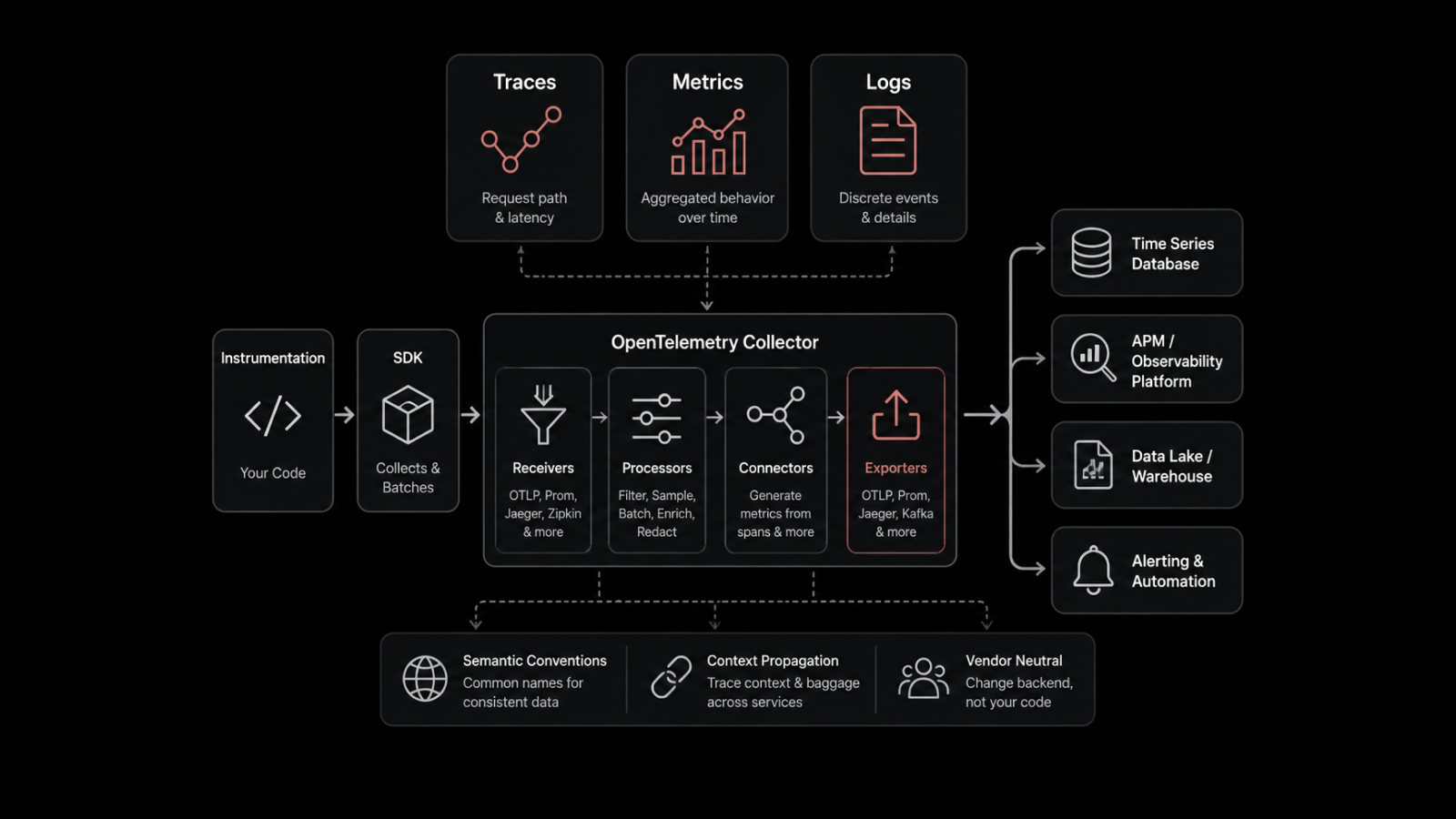
These questions have led to the rise of observability platforms—solutions that consolidate metrics, traces, and events across systems and correlate them through intelligence. Observability helps organizations see why issues happen, not just what is happening.
Why Businesses Need to Consider ManageEngine Alternatives?
ManageEngine Applications Manager remains a robust choice for basic IT monitoring, but several growing challenges are driving enterprises to seek alternatives:
1. Fragmented Visibility
ManageEngine divides monitoring functions across modules. Network, server, and application insights often exist in isolation. This fragmented view limits the ability to connect the dots between issues and outcomes.
2. Reactive Approach
Traditional setups are alert-driven. They tell teams when something breaks but not why or how to prevent it. Modern IT demands predictive, not reactive, problem-solving.
3. Manual Correlation
With separate dashboards and data points, teams spend time manually analyzing patterns. This slows response times and increases operational load.
4. Scalability Gaps
As infrastructure scales across multi-cloud and hybrid environments, maintaining consistent performance visibility becomes increasingly difficult.
5. Lack of Automation
In the age of automation, IT leaders expect systems to not only detect anomalies but also take intelligent actions. Manual processes create inefficiency and risk.
For many, these challenges mark a turning point. They recognize that improving visibility isn’t just a technical upgrade—it’s a strategic investment in operational efficiency, user experience, and resilience.
This is where next-generation ManageEngine alternatives come in—platforms that unify observability across infrastructure, applications, and users while embedding automation at their core.
Top 9 ManageEngine Alternatives
Below are the top platforms redefining how organizations approach IT observability, analytics, and automation.
1. Motadata Unified Observability Platform
Company Overview
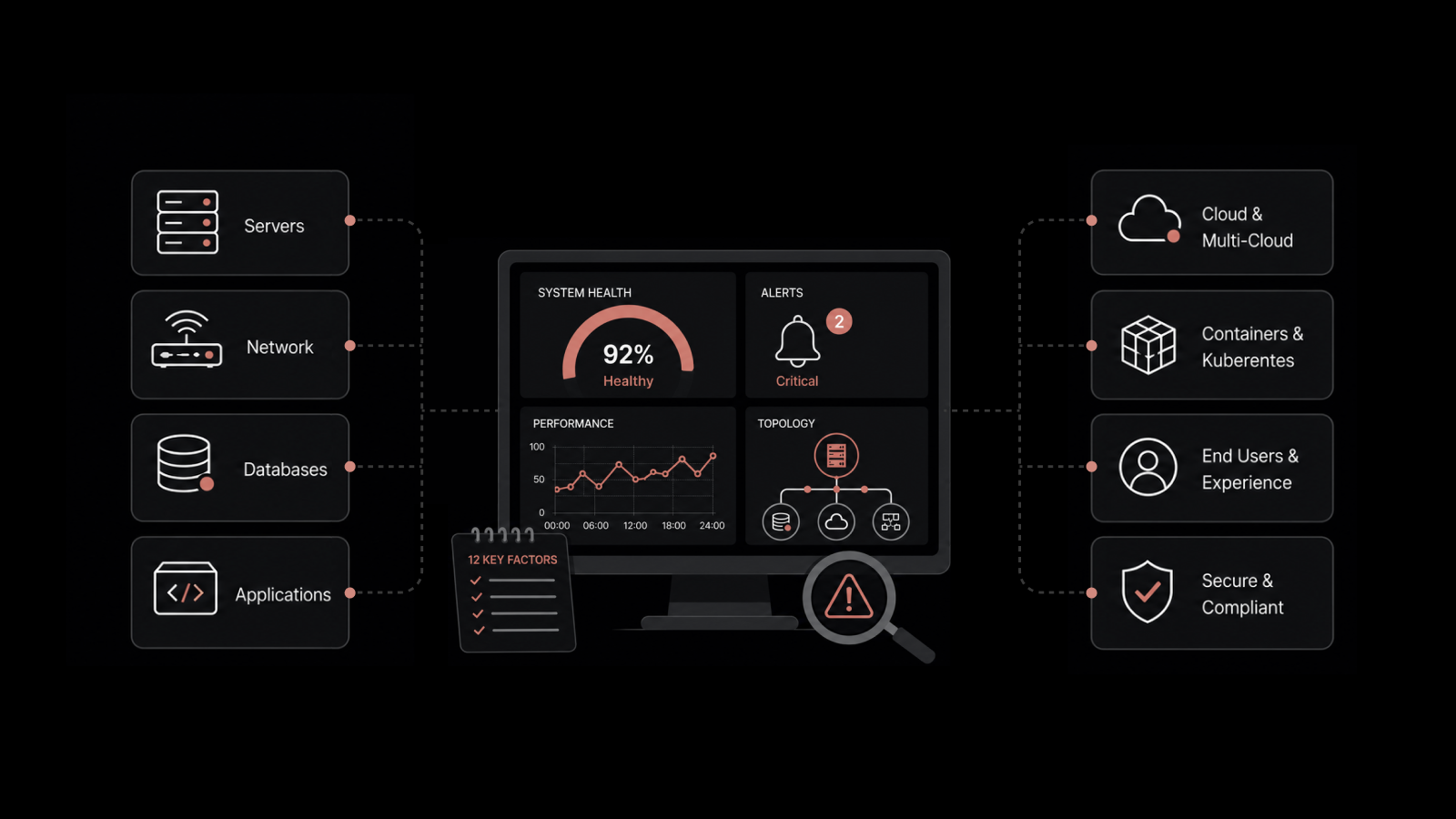
Motadata is a next-generation observability and automation platform built to help organizations solve real IT challenges with AI-native precision. It unifies performance insights across networks, infrastructure, applications, and user experiences , giving IT teams the visibility and intelligence they need to anticipate and resolve issues before they impact operations.
Where legacy monitoring tools operate in silos, Motadata enables connected visibility across every layer of IT. It moves organizations beyond reactive monitoring and toward proactive, data-driven operations, where problems are predicted, correlated, and remediated automatically.
In an era defined by hybrid and cloud-native ecosystems, IT leaders face complexity at an unprecedented scale, multiple tools, fragmented data, and rising operational noise. Motadata addresses this by offering a single AI-powered observability platform that brings together performance monitoring, event correlation, and intelligent automation in one unified system.
Highlights
End-to-end observability across hybrid and multi-cloud IT environments, networks, applications, servers, cloud workloads, and user experiences.
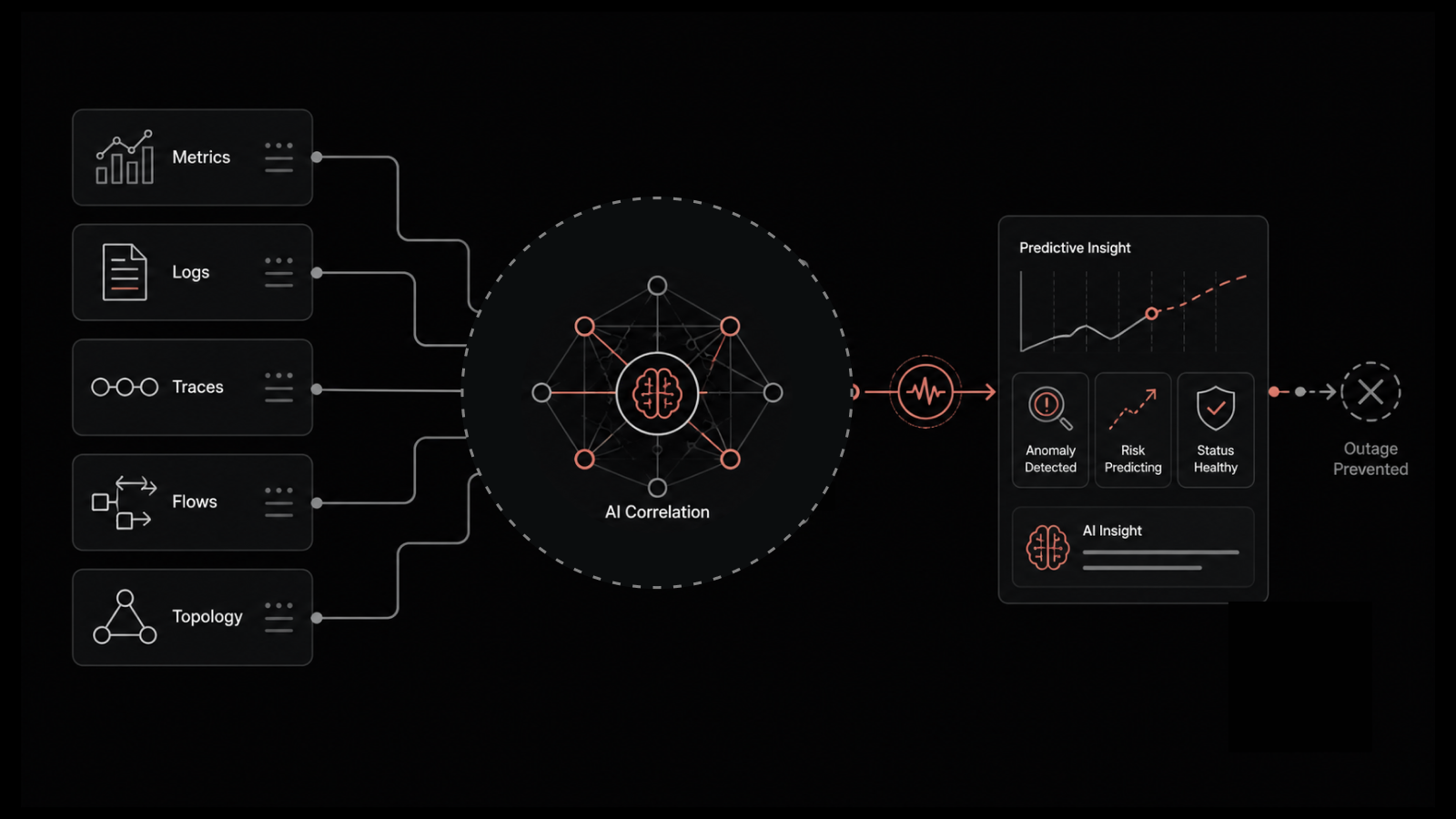
AI-powered correlation and anomaly detection for accurate root-cause identification.
ObserveOps automation that connects detection with remediation workflows to reduce MTTR.
Scalable multi-tenant architecture, designed for both enterprises and service providers.
Flexible deployment options — available as on-premises, hybrid, or fully cloud-hosted.
Unified data model and intuitive dashboards — all performance data visualized in one console, reducing operational silos and tool fatigue.
Strengths
1. Unified Visibility Beyond Modules
Unlike legacy suites such as ManageEngine OpManager Plus, which relies on multiple modules (OpManager, NetFlow Analyzer, Applications Manager, Firewall Analyzer, etc.), Motadata brings all monitoring domains under one unified architecture. This single-pane approach ensures consistent insights without the overhead of managing separate integrations.
2. Intelligence-Driven Observability
Motadata’s analytics engine leverages AI/ML models to correlate telemetry data (metrics, logs, and events) and identify root causes automatically. Where OpManager Plus depends heavily on static thresholds and manual correlation, Motadata learns patterns over time to predict anomalies before they affect users.
3. ObserveOps Automation
The platform’s ObserveOps layer integrates observability data with actionable workflows. When an issue is detected, predefined automation policies can trigger scripts, ticket creation, or workflow execution — closing the loop from detection to resolution. This results in reduced Mean Time to Detect (MTTD) and Mean Time to Resolve (MTTR).
4. Deep Integration with ITSM
Motadata integrates seamlessly with ServiceOps, its ITSM counterpart, enabling incident, change, and asset workflows to receive direct inputs from observability data. This integration provides business context to IT operations , helping organizations tie every alert to a service impact or SLA.
5. Scalable, Multi-Tenant Design
For enterprises managing large estates or MSPs managing multiple clients, Motadata offers horizontal scalability and tenant isolation without requiring separate infrastructure per environment, a major advantage over modular setups like OpManager Plus.
Best For
Motadata is ideal for:
Enterprises seeking a unified ManageEngine OpManager Plus alternative that bridges infrastructure, application, and network monitoring in one platform.
Service Providers (MSPs) managing multiple clients who need multi-tenant observability, performance reporting, and automated remediation.
CIOs and IT Operations Leaders who want to reduce tool sprawl, integrate monitoring with ITSM workflows, and shift from reactive to predictive operations.
Hybrid IT environments that combine on-premises systems with cloud workloads.
2) Dynatrace
Company Overview
Dynatrace began in 2005 and grew into a global observability vendor known for strong automation and deep analytics. The platform brings together application, infrastructure, and user experience insights, and is widely used in complex enterprise environments.
Highlights
Davis AI engine that builds service maps and points to likely root causes
Automatic discovery of services and dependencies across cloud and on-prem
Real user and synthetic monitoring for web and mobile journeys
Code-level insights for modern apps and legacy systems
Built-in anomaly detection with policy-based alerting
Executive dashboards that tie technical health to service outcomes
Strengths
Reliable at very large scale with many moving parts
Clear service maps reduce the time to understand incidents
Effective at tracking changes that trigger performance drops
Consistent views across teams reduce blame cycles
Mature role-based access and guardrails for big organizations
Weaknesses
Licensing and data retention decisions need careful planning
Requires skilled admins to tune alerting and ownership rules
Can feel heavy for small or mid-size estates
Advanced features may take time to adopt across teams
Best For
Enterprises with global footprints, strict reliability targets, and many interdependent services that need fast, credible root-cause guidance.
3) New Relic
Company Overview
New Relic started with application performance monitoring and expanded into a telemetry platform that collects data from many sources. It focuses on application behavior and how it affects the end user.
Highlights
One data platform for metrics, events, logs, and traces
Strong application insights with code-level detail
Real user monitoring for web and mobile
Query language for custom views and investigations
Guided install and quickstarts for popular stacks
Error tracking and release markers for change impact
Strengths
Clear application-centric story that developers understand
Good visibility into slow transactions and error patterns
Simple guided flows help teams get started
Custom queries support deep analysis for power users
Helpful for release reviews and performance budgeting
Weaknesses
Infrastructure and network coverage is not as deep as app views
Usage-based pricing needs close cost oversight
Advanced correlation across domains may require extra effort
Some teams outgrow starter dashboards and need expert tuning
Best For
SaaS companies and engineering-led teams that put application performance and user experience at the center of their operations.
4) IBM Instana
Company Overview
Instana, now part of IBM, focuses on automatic discovery and tracing for modern distributed apps. It aims to reduce manual setup by continuously mapping services as they change.
Highlights
Continuous discovery of services, APIs, and dependencies
High-fidelity tracing that follows requests through many services
Real-time impact analysis to see what is affected right now
Built-in release awareness to spot change-related issues
Good support for containers and orchestrators
Integrations with IBM automation and enterprise tools
Strengths
Low manual effort to keep service maps up to date
Precise request tracing helps isolate failures quickly
Useful in dynamic environments with frequent deployments
Clear visualization of what changed and when
Enterprise alignment for compliance and governance
Weaknesses
Licensing and procurement can be complex in large enterprises
May feel heavy for smaller teams with simple estates
Tighter value if paired with other IBM components
Requires disciplined ownership to get the most from insights
Best For
Large organizations run many containerized services that want always-current service maps and precise tracing without heavy setup.
5) LogicMonitor
Company Overview
LogicMonitor provides SaaS-based visibility for hybrid infrastructure. It is often used to monitor networks, servers, storage, and cloud platforms with agentless discovery.
Highlights
Agentless onboarding for quick inventory and metrics
Coverage for network devices, servers, cloud, and apps
Built-in dashboards and threshold templates
Topology maps to understand upstream and downstream impact
Role-based views for operations, network, and leadership
Multi-tenant options for service providers
Strengths
Strong fit for hybrid estates with many devices types
Quick rollout through discovery and predefined profiles
Clean reporting for capacity, availability, and trends
Easier learning curve for operations teams
Good for standardized runbooks and steady operations
Weaknesses
Application insight is shallower than app-first platforms
Custom metrics and complex alert logic need careful design
Costs can add up at very large scale
Deep developer workflows are limited
Best For
Organizations with mixed on-prem and cloud infrastructure that want reliable, broad coverage with minimal deployment friction.
6) Zabbix
Company Overview
Zabbix is an open-source platform with a strong community and flexible configuration. Many teams adopt it to retain control over their monitoring stack and costs.
Highlights
No license fees with optional commercial support
Templates, scripts, and checks shared by the community
Flexible alerting with escalation rules
Works well for classic server and network monitoring
Extensible for custom metrics and niche devices
Strong data collection performance on modest hardware
Strengths
Very cost-effective for capable in-house teams
Full control over deployment and data handling
Large ecosystem of community templates
Good for standard infrastructure checks and uptime views
Can be tuned to unique environments
Weaknesses
Setup and maintenance require skilled administrators
Limited built-in correlation and higher-level analytics
User experience can feel dated without customization
Scaling and high availability need careful design
Best For
SMBs and public sector teams that want open-source control, have the skills to maintain it, and need dependable infrastructure monitoring without high licensing costs.
7) PRTG
Company Overview
PRTG is known for simple deployment and a sensor-based approach to monitoring. It covers networks, servers, and devices with clear dashboards.
Highlights
Quick start with auto-discovery and sensible defaults
Sensor model makes coverage easy to understand
Maps and gauges for at-a-glance views
Alerting with schedules and escalation paths
Remote probes for distributed sites
Solid reporting for availability and capacity
Strengths
Easy to learn and operate for smaller teams
Good value for core network and server monitoring
Clear visuals that non-technical stakeholders can read
Works well in branch and multi-site scenarios
Predictable management overhead
Weaknesses
Sensor model needs planning to avoid license surprises
Limited depth for complex cloud and app tracing needs
Scaling to very large estates can be challenging
Fewer options for advanced automation
Best For
Mid-sized organizations that want dependable network and server monitoring with clear visuals and minimal learning time.
8) Riverbed Unified Observability
Company Overview
Riverbed has a long history in network performance and acceleration. Its unified observability focusses centers on network paths and digital experience to show how the network affects user outcomes.
Highlights
Deep flow and packet visibility for critical paths
Experience insights that link performance to user impact
Application delivery views across data centers and clouds
Diagnostics for latency, loss, and congestion
Branch and WAN performance analysis
Executive summaries for site and service health
Strengths
Exceptional network expertise for complex topologies
Clear link between network behavior and user experience
Valuable for troubleshooting hard-to-reproduce issues
Complements app-centric tools with path detail
Useful in regulated and distributed environments
Weaknesses
Narrower beyond the network and delivery layer
Requires network skill sets to get full value
May act as a complement rather than a single platform
Investment is best justified where network is the bottleneck
Best For
Enterprises where network health is the dominant risk to user experience, such as retail, banking, logistics, and global manufacturing.
9. SolarWinds Unified Monitoring
Every IT leader remembers the tool that helped them through their earliest firefights. For many, that tool was SolarWinds. When a switch misbehaved, a link dropped, or a server went silent, SolarWinds was often the first screen teams opened to make sense of the chaos. Over time, what began as a dependable network monitor evolved into a unified monitoring platform for servers, applications, and infrastructure across on-prem and hybrid setups.
Its long history and wide footprint make SolarWinds a familiar name, especially for teams that value stability and a monitoring setup that feels tried-and-tested.
Highlights
Strong network and infrastructure monitoring across diverse environments
Clear visibility into device performance, health, and utilization
Application monitoring for commonly used workloads
Built-in diagnostics for pinpointing system and hardware issues
Service maps that help teams understand dependencies
Automated discovery for network and server assets
Alerts, thresholds, and reporting for operational governance
Strengths
Well-established platform trusted across industries
Deep network monitoring backed by decades of use
Familiar workflows for organizations invested in SolarWinds modules
Consistent performance in traditional and hybrid setups
Detailed reporting for operational planning and compliance
Reliable choice for teams focused primarily on infrastructure health
Quick Comparison: ManageEngine Alternatives
Choosing the right ManageEngine alternative often comes down to clarity. With so many monitoring and observability platforms promising visibility, automation, and better control, the real challenge is understanding how each one aligns with your operational maturity and long-term strategy.
Some platforms excel in full-stack observability, others specialize in application performance, infrastructure, or network depth. The table below gives you a practical, side-by-side view of today’s leading options, making it easier to evaluate strengths, trade-offs, and where each solution delivers the most value depending on your environment and growth plans.
| Platform | Unified Observability | ITSM Integration | Deployment Options | Ease of Use | Scalability |
|---|---|---|---|---|---|
| Motadata Unified Observability Platform | Complete (Infra, Network, Apps, UX) | Native with ServiceOps | On-prem, Cloud, Hybrid | Simple unified UI | Enterprise-scale |
| ManageEngine Applications Manager | Partial, modular | Basic linkages | On-premises | Familiar | Moderate |
| Dynatrace | Full-stack | Partial | Cloud, Hybrid | Complex | Enterprise |
| New Relic | Application-centric | Via integrations | Cloud | Developer-friendly | Scalable |
| IBM Instana | Containers and microservices | Partial | Hybrid | Complex setup | Enterprise |
| LogicMonitor | Infrastructure & hybrid | API-level | Cloud, Hybrid | User-friendly | Scalable |
| Zabbix | Infrastructure only | None | On-prem | Technical | Limited |
| Paessler PRTG | Network & servers | Limited | On-prem | Easy to use | Limited |
| Riverbed | Network & UX | API-based | Hybrid | Specialized | Scalable |
| SolarWinds | Broad infrastructure & network coverage | Native with SolarWinds ecosystem | On-prem, Hybrid | Familiar for long-time users | Mid-to-large scale |
Why You Need to Consider Motadata as a Well-equipped ManageEngine Alternative?
While each platform offers unique strengths, decision-makers increasingly prioritize simplicity, scalability, and integration. Motadata combines these attributes in a way that fits the operational goals of modern IT organizations.
1. Unified Platform:
Motadata eliminates the need for separate tools by merging infrastructure, application, and network observability into a single system.
2. Intelligent Automation:
Through its ObserveOps capabilities, Motadata links observation with action—automating detection, correlation, and response.
3. End-to-End ITSM Integration:
Integration with ServiceOps ensures incidents move seamlessly from detection to resolution, enhancing accountability and visibility.
4. Business Alignment:
The platform doesn’t just show metrics; it aligns performance data with business outcomes—helping leaders make informed, measurable decisions.
5. Cost and Operational Efficiency:
Its transparent pricing and modular design make it scalable without spiraling costs, addressing one of the biggest gaps in legacy monitoring tools.
The Business Impact of Modern Observability
For CIOs and IT leaders, observability isn’t just a technical investment, it’s a driver of business performance.
The right platform delivers:
Reduced downtime through early detection and prevention.
Faster resolution via intelligent correlation.
Optimized resource usage leading to operational savings.
Improved customer experience through continuous performance.
Smarter strategic decisions with data-backed visibility.
As organizations continue to digitize, observability becomes a cornerstone of reliability, agility, and trust.
Final Thoughts: Moving from Monitoring to Meaningful Observability
The decision to explore a ManageEngine alternative reflects a broader shift, from reactive IT management to proactive intelligence. Modern enterprises need platforms that don’t just monitor but interpret, automate, and act.
Among the growing landscape of observability tools, Motadata Unified Observability Platform stands out as a solution that aligns technology with business goals. It offers the unified visibility and automation today’s IT leaders need to stay ahead of complexity, risk, and disruption.
Motadata represents not just an alternative, but a new standard in how organizations achieve clarity, continuity, and control in their IT operations.
Author
Arpit Sharma
Senior Content Marketer
Arpit Sharma is a Senior Content Marketer at Motadata with over 8 years of experience in content writing. Specializing in telecom, fintech, AIOps, and ServiceOps, Arpit crafts insightful and engaging content that resonates with industry professionals. Beyond his professional expertise, he is an avid reader, enjoys running, and loves exploring new places.