How Real-Time Monitoring Enhances IT Agility in Global Enterprises
The pace of digital business continues to accelerate, and global enterprises are expected to deliver consistent performance at every hour of the day.
Customers, employees, and partners rely on applications, networks, and cloud services that must function flawlessly. Any slowdown can disrupt productivity, weaken user trust, or interrupt critical services.
This environment has driven organizations to shift from traditional, reactive approaches to a more proactive model supported by real-time IT monitoring.
Real-time monitoring gives IT teams continuous awareness of what is happening across their infrastructure. It focuses on instant insight rather than delayed reporting and helps organizations respond quickly as conditions change.
For CIOs, CISOs, SOC managers, and IT directors, real-time visibility is becoming a fundamental requirement for maintaining agility in a world where operations are distributed, cloud dependent, and always active.
The Growing Need for IT Agility in Global Enterprises
IT agility refers to how quickly an enterprise can respond to changing demands, resolve disruptions, and scale services. Large organizations face unique pressures that make agility essential for both performance and business continuity.
The Complexity of Distributed and Hybrid Environments
Enterprises operate across multiple countries, time zones, and technology ecosystems. Data centers, cloud platforms, SaaS tools, and remote work environments all contribute to a vast and interconnected digital landscape.
Each region may rely on different networks, different resource loads, and different levels of user activity. Without real-time visibility, it becomes difficult to identify where issues originate or how they spread across dependent systems.
Downtime and Latency Become Costly at Scale
A single application slowdown in one location can cause delays across an entire chain of business processes.
In global customer-facing applications, performance problems can disrupt transactions, cause errors, or hurt the user experience.
Even internal applications are affected. For example, a slow internal database may reduce productivity across support teams or financial departments.
As organizations grow, the effect of downtime increases in proportion to the number of systems and users involved.
Digital Transformation Raises Operational Expectations
Enterprises are investing in cloud adoption, automation, microservices, and advanced analytics. These initiatives increase the rate of change within IT environments.
Deployments happen more frequently. Services scale more dynamically. Data moves between more locations. With so many moving parts, traditional scheduled monitoring cannot keep up. Real-time monitoring provides the continuous insight needed to support the faster pace of digital transformation.
What Real-Time Monitoring Really Means and How It Works
Real-time IT monitoring refers to the process of collecting, analyzing, and visualizing performance data the moment it is generated. It replaces periodic checks with continuous awareness. This approach creates a live view of how systems behave, and it helps teams detect irregularities before they become widespread issues.
Key Components of Real-Time Monitoring
1. Continuous Data Collection
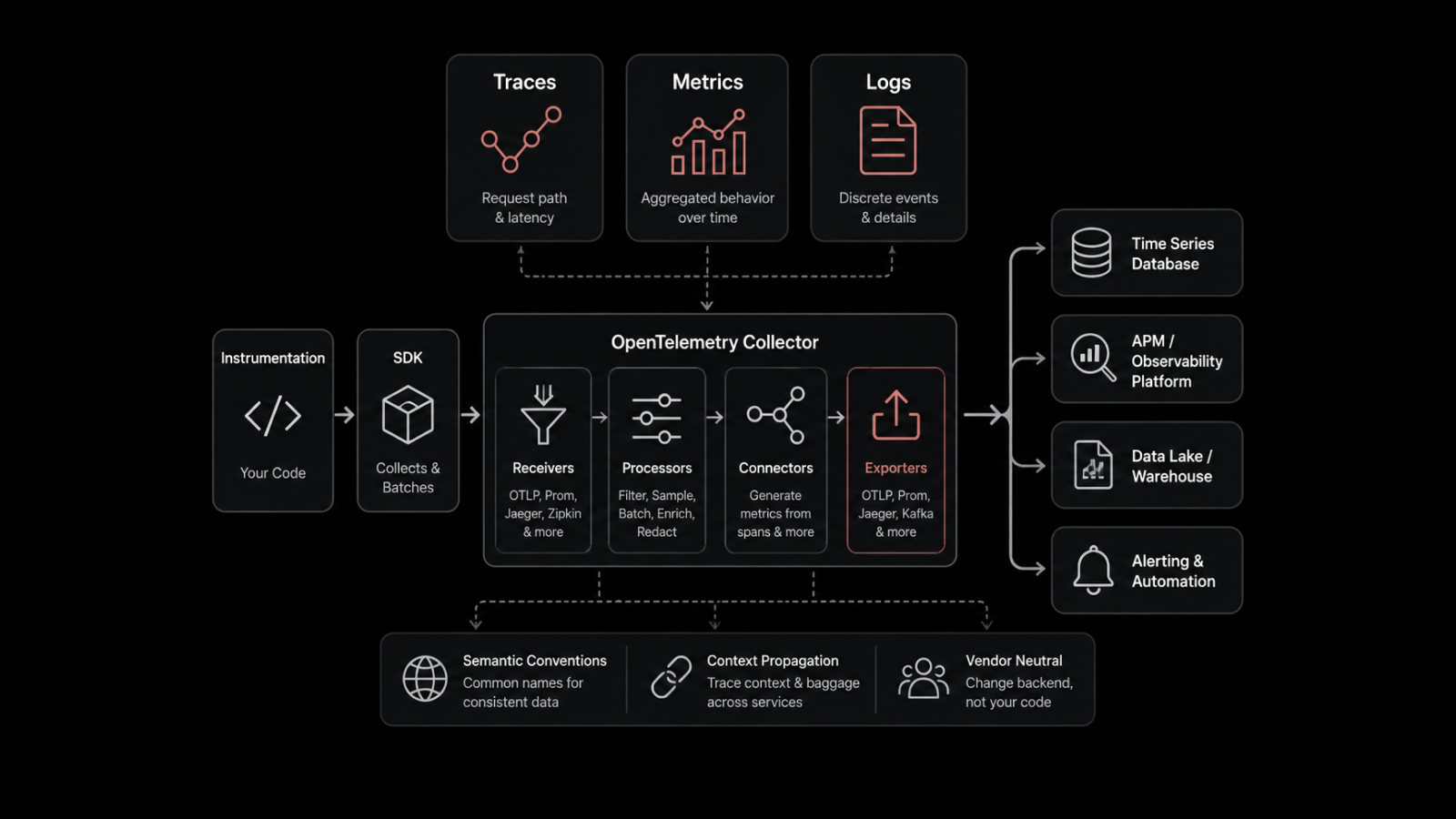
Monitoring tools collect data from various sources including logs, metrics, traces, events, cloud APIs, and network traffic. The information is gathered without interruptions, allowing the system to build a comprehensive picture of application and infrastructure health.
2. Instant Analytics
Incoming data is analyzed immediately. Anomalies, spikes in usage, security alerts, and performance degradation are flagged in real time. This enables IT teams to take action before end users experience a noticeable impact.
3. Unified Dashboards and Visualizations
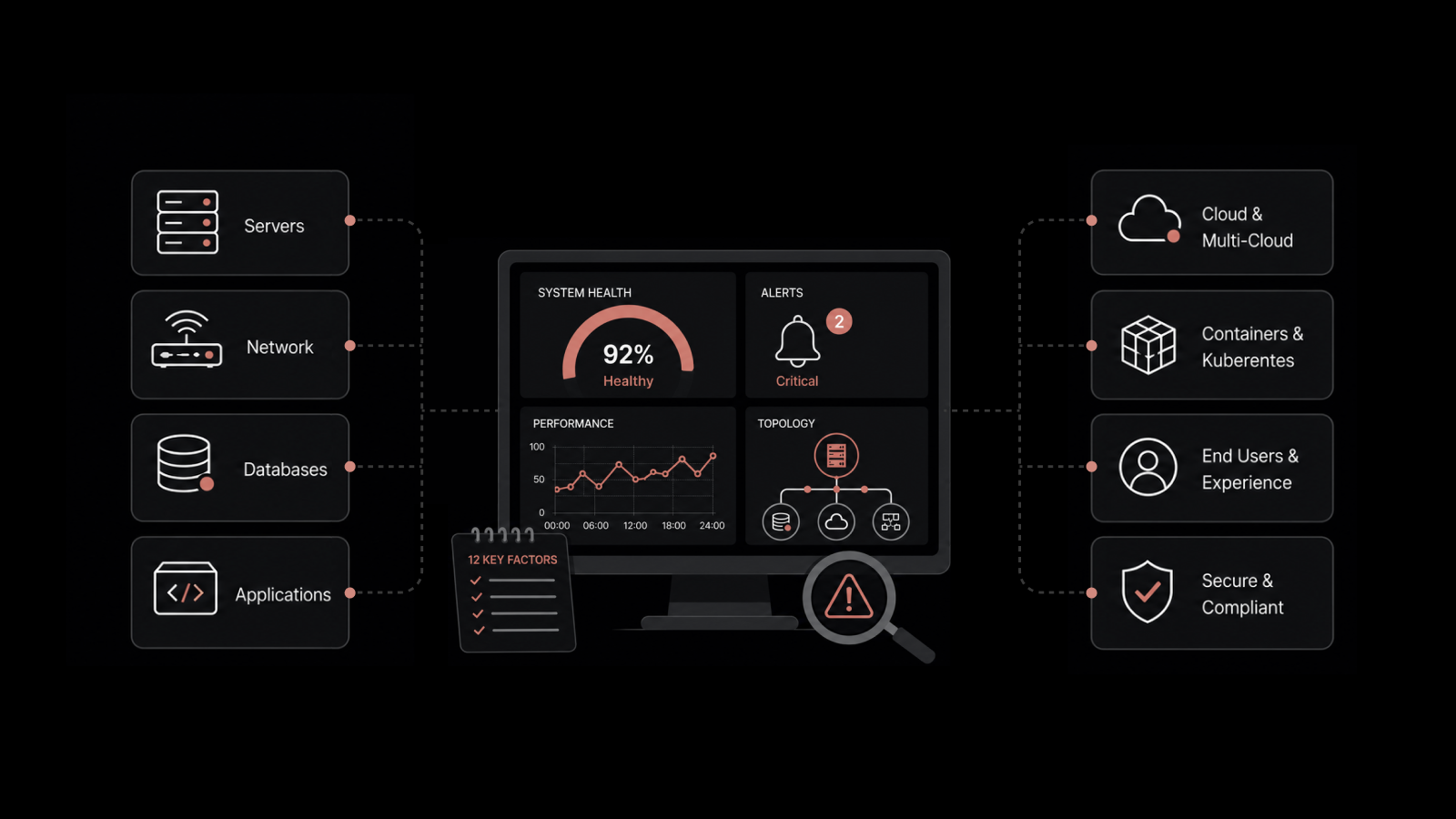
Dashboards show live data and provide a clear understanding of system performance. Instead of switching between multiple screens or tools, teams can follow all essential metrics from a single interface. This visibility improves communication and decision making.
4. Alerts and Notifications
Real-time monitoring platforms send alerts the moment they detect unusual activity. Alerts can be routed through ITSM tools, messaging apps, email, or incident response systems. This ensures that IT teams address issues as quickly as possible.
How Real-Time Monitoring Enhances IT Agility
Agility depends on the ability to respond quickly and adapt to changes in both internal and external conditions. Real-time monitoring enhances this capability across several dimensions.
Faster Detection and Resolution of Bottlenecks
Problems often begin with small and easily missed signals. A slight increase in CPU usage might indicate a growing load. A small spike in network traffic might signal a potential malicious attempt. A sudden drop in application throughput may forecast an outage. Real-time monitoring identifies these signals immediately. Early detection helps teams reduce mean time to detect and mean time to resolve issues.
Instant Visibility Improves Decision-Making
Live dashboards and analytics assist IT leaders in identifying trends, detecting potential risks, and making informed decisions. Whether the goal is improving application performance, shifting workloads between cloud regions, or adjusting capacity for high traffic periods, real-time data makes the process faster and more accurate.
Supports Automation and Self-Healing IT Systems
Many real-time monitoring platforms integrate with automation engines. When they detect a known issue, they can trigger automated workflows. Examples include restarting a failing service, scaling up cloud resources, clearing temporary storage, or isolating a misbehaving container. Some enterprises build self-healing systems that automatically resolve common issues without human involvement.
Strengthens Collaboration Between IT and Business Teams
Real-time insights simplify communication between technical and non-technical teams. Business leaders can see how IT performance affects customer experience, revenue, and operational efficiency. IT teams can better explain the reasons behind performance changes and demonstrate the value of proactive monitoring.
Benefits of Real-Time Monitoring for Global Enterprises
Enterprises experience multiple long-term benefits by incorporating continuous monitoring into their IT strategies.
1. Lower MTTD and MTTR
Real-time detection allows teams to identify and resolve problems faster than with periodic monitoring. Early action reduces the risk of downtime, service interruptions, and degraded performance.
2. Improved Service Reliability
Real-time visibility helps maintain high service availability. Consistent uptime enhances customer trust, supports SLA compliance, and strengthens the brand reputation of the organization.
3. Scalable Performance Across Regions
Global enterprises need monitoring tools that adapt as workloads increase. Real-time systems can track performance across multiple locations and provide insights that support scaling strategies.
4. Enhanced Security and Compliance
Real-time monitoring is also an important security tool. Continuous observation of logs, network activity, access patterns, and anomalies helps detect threats at an early stage. Compliance teams gain more control over configuration changes and policy violations across regions.
Real-Time Monitoring in Action: Practical Enterprise Use Cases
Real-time monitoring supports a variety of enterprise requirements across networks, cloud platforms, applications, and user experiences.
1. Network and Global Data Center Monitoring
Large enterprises rely on network performance monitoring to ensure stable and reliable connections between offices, data centers, cloud platforms, and remote users. Real-time insights help identify latency, packet loss, link saturation, or routing issues before they affect business operations.
2. Cloud-Native and Microservices Monitoring
Modern applications run on distributed microservices, containers, and dynamic cloud environments. Real-time monitoring tracks each service, helping teams understand dependencies and maintain performance during scaling, deployments, or resource fluctuations.
3. Incident Response and ITSM Integration
Real-time monitoring tools integrate with IT service management platforms. When they detect an issue, they can automatically open tickets, assign them based on severity, and escalate them to the appropriate teams. This improves response time and creates a more structured incident-handling process.
4. Monitoring User Experience Across Regions
Enterprises with global operations depend on consistent user experiences across different geographies. Real-time monitoring measures page load times, application responsiveness, and transaction performance for users in various regions. This helps identify regional issues quickly and ensures uniform service quality.
Key Features to Look for in a Real-Time Monitoring Solution
Selecting the right real-time monitoring tool depends on an organization’s size, infrastructure, and goals. The following features are especially important for global enterprises.
1. Unified Dashboards and Correlation Features
A unified view consolidates data from networks, cloud platforms, applications, and servers into a single interface. Correlation features help teams understand how an issue in one area affects others.
2. AI and ML Driven Anomaly Detection
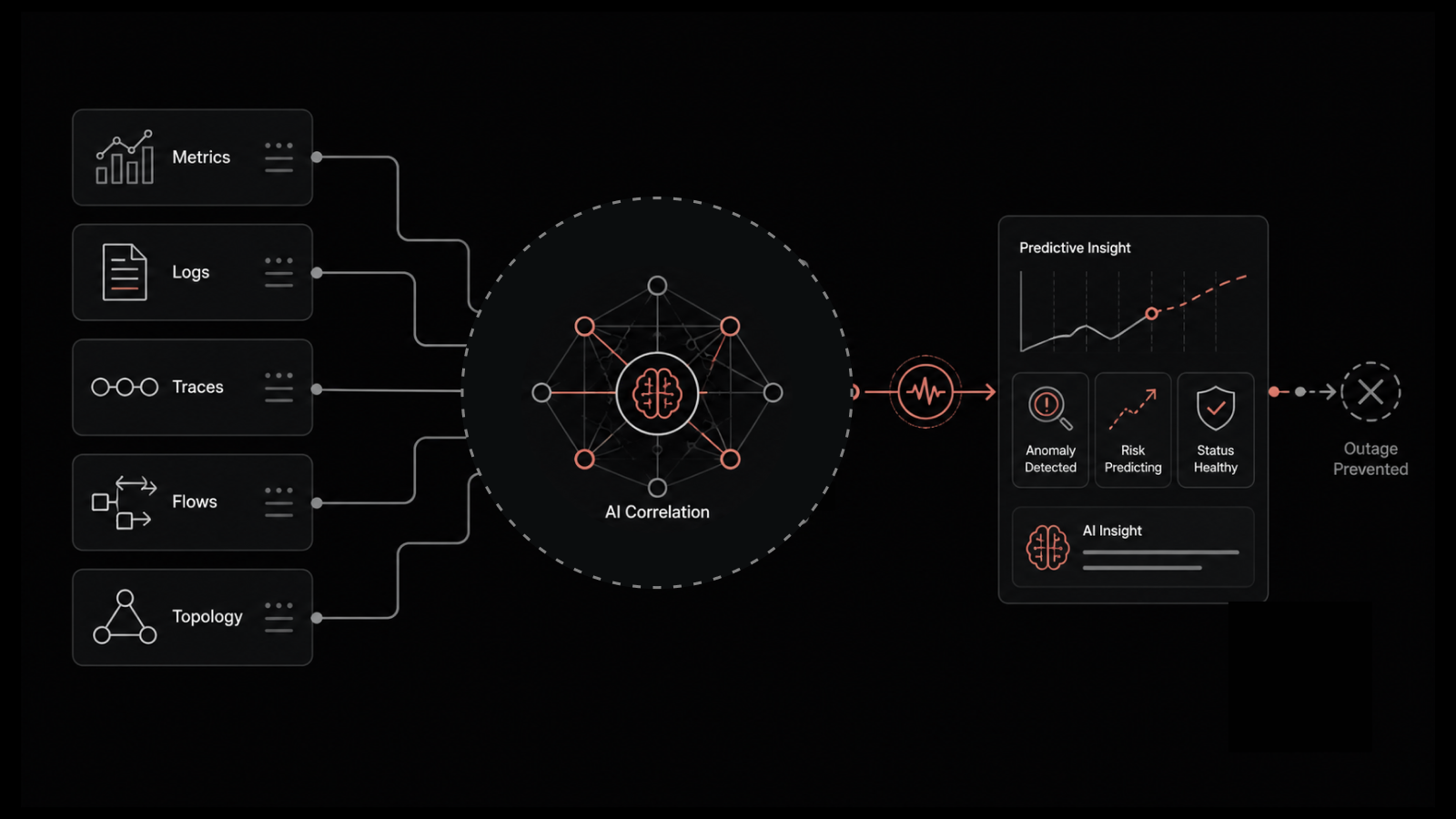
AI powered monitoring identifies patterns that traditional systems might overlook. Machine learning models improve detection accuracy over time, which helps identify unusual behaviors or failures before they escalate.
3. Automated Alerts and Workflow Integration
A strong platform should support integrations with ITSM systems, cloud automation tools, chat systems, and incident response platforms. Automated alerts ensure that the right people are notified instantly.
5. Scalability and Multi-Location Support
Enterprises need monitoring tools that maintain performance even when thousands of metrics are processed across several regions. Multi-location support ensures that teams can view regional performance without switching between different tools.
Integrating Real-Time Monitoring Into IT Operations Strategy
Real-time monitoring is most effective when it becomes part of a broader IT strategy rather than a standalone solution.
Best Practices for Adoption
Successful adoption begins with defining the most critical services and identifying key metrics related to performance, health, and security. Enterprises should map dependencies between systems and create a unified monitoring architecture. Continuous tuning of alerts and dashboards ensures that the system remains useful as environments evolve.
How to Overcome Common Challenges
Large organizations sometimes face challenges such as alert fatigue or integration complexities. Proper configuration of thresholds and the use of AI driven alerting helps reduce noise. Using cloud-native monitoring tools can simplify scaling and lower the effort required for integration.
The Role of Observeops in Enhancing Agility
Observeops platforms use real-time data to power predictive analytics, automated responses, and workflow optimization. As enterprises mature in their automation journey, AIOps becomes an important driver of agility, allowing systems to anticipate issues rather than react to them.
Future Outlook: Real-Time Monitoring and the Next Phase of IT Agility
The future of IT operations is moving toward deeper automation and intelligent insights. Real-time monitoring will play a crucial role in this evolution.
Predictive Analytics Becomes Central to Operations
Predictive models will use real-time data to forecast failures and performance degradation. This will allow teams to prevent issues before they impact users.
Move Toward Autonomous IT Operations
Automation engines will continue to evolve, allowing systems to make decisions and carry out corrective actions without human involvement. Real-time monitoring will provide the data required for these autonomous workflows.
Continuous Innovation for Enterprise Resilience
As enterprises adopt new technologies such as edge computing and multicloud ecosystems, the need for real-time observability will only grow. Continuous visibility ensures resilience even as IT environments become more complex.
Conclusion
Real-time monitoring is no longer a technical add-on. It has become a strategic enabler for global enterprises that need agility, consistent performance, and rapid response capabilities. Continuous visibility allows IT teams to spot early warning signs, eliminate performance bottlenecks, and maintain stability across complex hybrid and cloud environments. It also strengthens decision making by providing trustworthy, up-to-date intelligence that reflects the true state of systems and services.
As digital transformation reshapes how organizations operate, the ability to respond instantly to change becomes a competitive advantage. Real-time monitoring creates the operational foundation for automation, intelligent incident response, and future-ready IT architectures. Enterprises that embrace this approach gain the resilience to support new technologies, scale confidently across regions, and deliver uninterrupted experiences to users everywhere. In a world defined by speed and unpredictability, real-time visibility is the key to staying adaptive, reliable, and prepared for what comes next.
FAQs
What does real-time monitoring mean in IT operations?
It involves continuous collection and analysis of data from IT systems in order to detect and respond to issues as soon as they appear.
How does real-time monitoring improve agility?
It provides instant visibility that helps teams identify problems early, automate responses, and adjust quickly to business needs.
What are the main benefits for global enterprises?
Key advantages include reduced downtime, consistent service quality, better scalability, improved security, and faster incident response.
How does real-time monitoring support AIOps?
Real-time data enables AI models to identify anomalies, predict failures, and trigger automated or self-healing actions.
What challenges do enterprises face when adopting real-time monitoring?
Common challenges include integrating data from multiple environments, managing alert noise, scaling tools, and maintaining security across regions.
Author
Motadata Team
Content Team
Articles produced collaboratively by our engineering and editorial teams bear the collective authorship of Motadata Team.