CMDB vs. ITAM: What’s the Difference and Why Does It Matter to Your IT Strategy?
Introduction
Every large organization runs on a mix of servers, cloud services, devices, applications, and networks that must remain healthy and connected at all times. Managing this environment requires clear and accurate information. Without it, teams face longer downtime, higher costs, and more security risks. CMDB and ITAM help solve these challenges in different but complementary ways.
CMDB provides visibility into how systems interact, while ITAM provides visibility into what assets exist and how they are used throughout their lifecycle.
Understanding these two areas helps IT leaders avoid confusion, build stronger processes, and guide their teams toward more reliable operations.
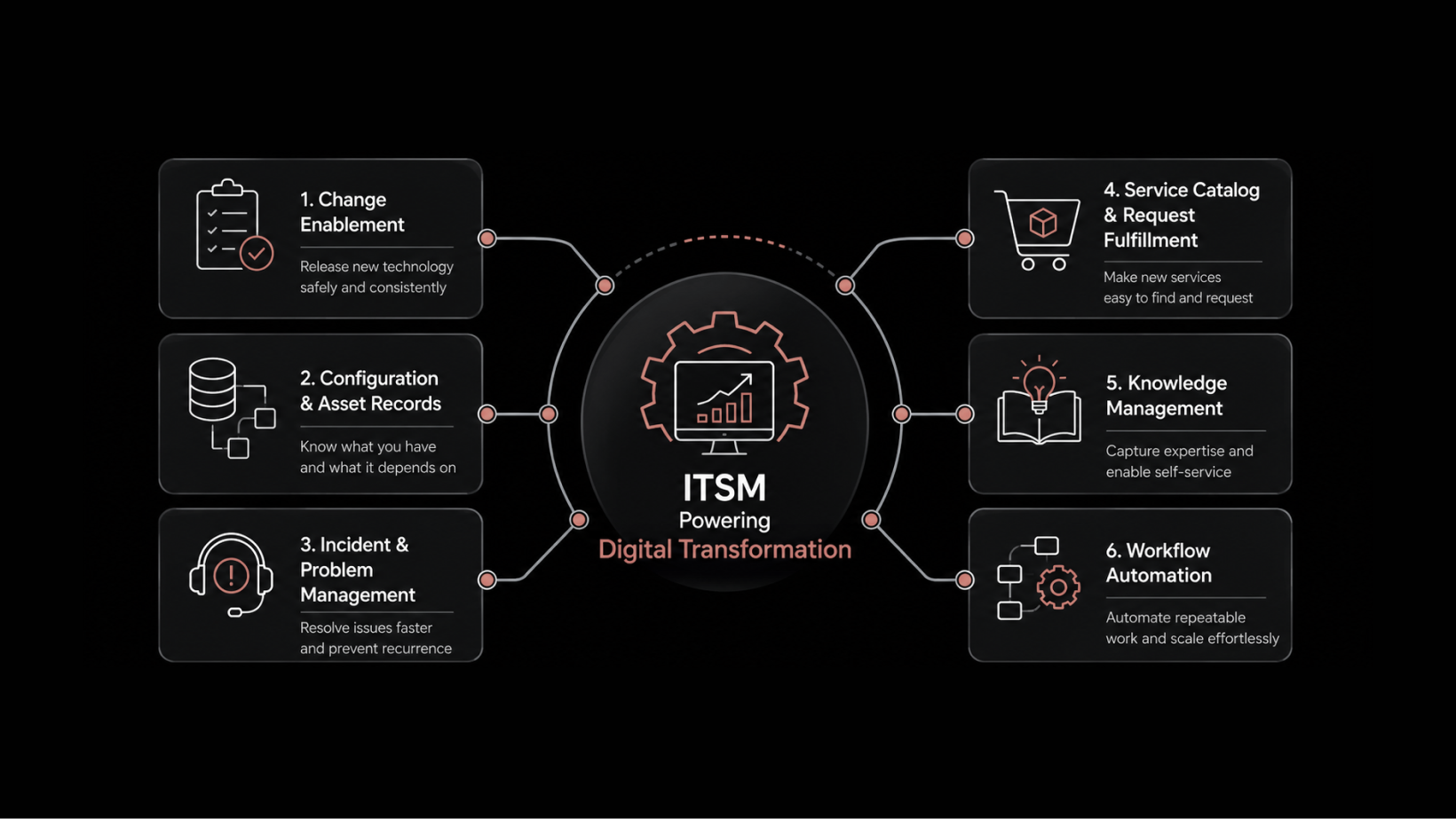
Clarity between CMDB and ITAM also ensures that enterprises can adapt to new technologies, manage costs effectively, and support digital transformation without losing control of their IT environment.
Understanding CMDB: The Foundation of IT Configuration Management
A Configuration Management Database, or CMDB, serves as the central system for storing detailed information about technology components across the organization. These components—often called configuration items—include servers, applications, cloud systems, networks, databases, and many other parts of the environment.
The CMDB keeps track of the technical details of each item, but its true value lies in revealing how everything is connected and how those connections affect daily operations. For example, when a server goes offline, the CMDB shows which applications or services will be impacted, helping teams respond quickly and accurately.
CMDB also plays an important role in preventing problems. By understanding relationships between systems, teams can predict the impact of changes before they happen. This makes change management safer and more controlled. When a problem occurs, CMDB helps teams identify the root cause by showing which systems are linked.
CMDB also supports documentation by providing an always-updated map of the IT environment. For IT leaders, this level of visibility improves decision-making and reduces the risk of unexpected outages.
Understanding ITAM: The Core of Asset Lifecycle Management
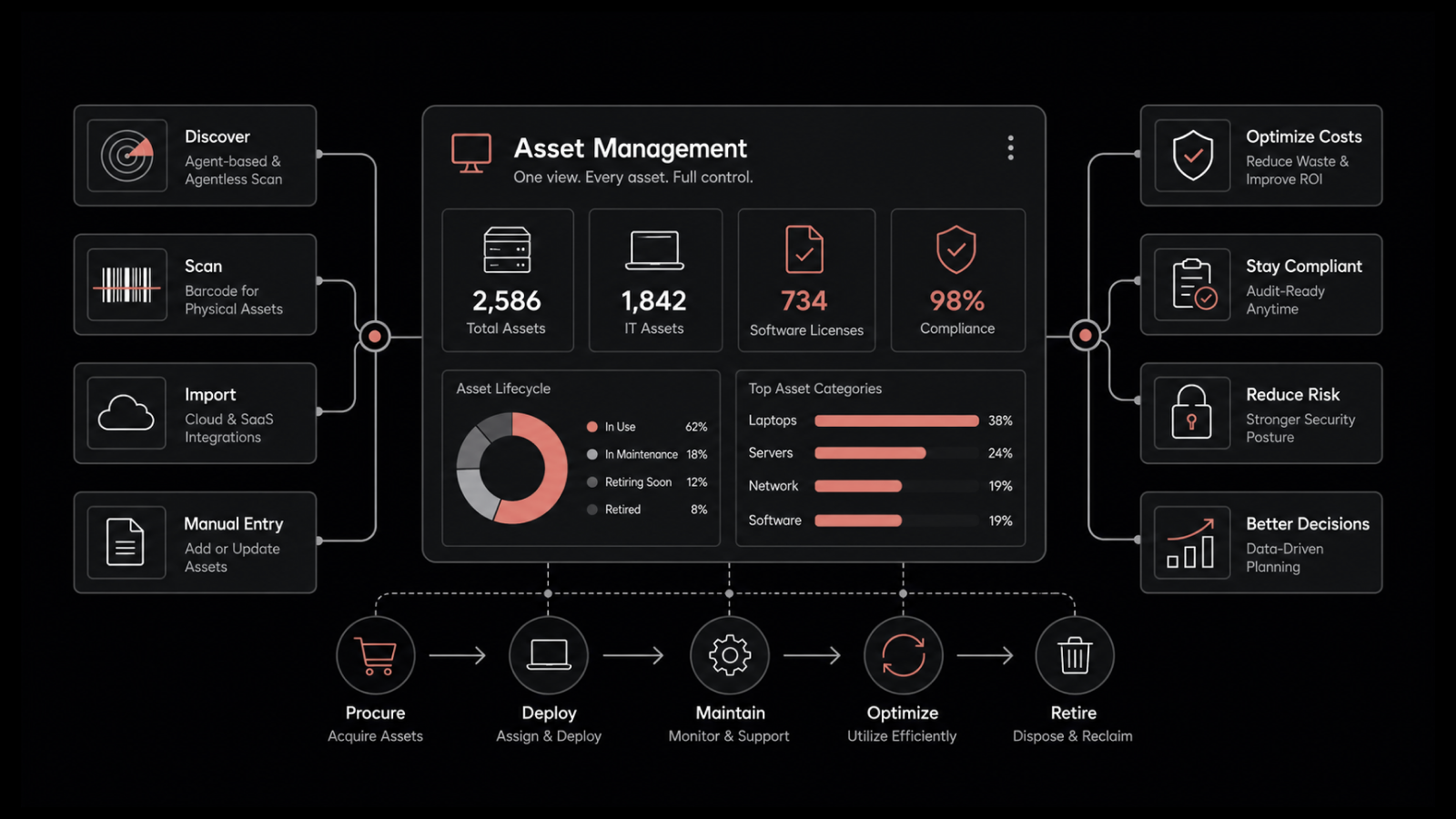
IT Asset Management, or ITAM, focuses on the entire journey of an asset from the moment it is planned and purchased to the moment it is retired.
An asset may be a laptop, server, piece of software, license, subscription, or network device. ITAM helps organizations understand what assets they own, who uses them, where they are located, how much they cost, and whether they are compliant with licensing or contracts. Unlike CMDB, which looks at the technical side of systems, ITAM looks at the financial and ownership side.
ITAM plays a major role in reducing waste. Many organizations pay for software they no longer use or keep devices longer than they should. ITAM helps eliminate unnecessary spending by showing exactly which assets are needed and which are not. It also helps avoid compliance penalties by tracking license usage accurately.
In addition, ITAM strengthens security by identifying outdated, lost, or unused assets that may pose risks. Because ITAM connects the operational world of IT with the financial world of procurement, it helps leaders plan budgets more effectively and make confident decisions about future investments.
CMDB vs. ITAM: Key Differences
Although CMDB and ITAM both track information about IT components, they focus on different aspects of those components. CMDB concentrates on the technical relationships between systems, showing how the environment is structured and how changes in one area may affect another.
It answers questions such as: “If this server goes down, which services will break?” or “What components make up this application?” ITAM, on the other hand, focuses on ownership, cost, contracts, and the overall lifecycle of assets. It answers questions such as: “How much did this server cost?” “When does this software license expire?” and “Who is responsible for this laptop?”
The two systems are also used by different teams. CMDB is primarily used by operations teams, service desk teams, and security teams who need to understand how systems behave behind the scenes. ITAM is used by procurement, finance, compliance teams, and asset managers who need visibility into spending and asset usage.
The tools they integrate with also differ. CMDB usually connects with monitoring tools, cloud systems, and workflow platforms, while ITAM integrates more with procurement systems and financial tools. These differences make it clear that CMDB and ITAM support different goals, even though they reference some of the same items.
How CMDB and ITAM Work Together
Even though CMDB and ITAM are different, they become far more powerful when connected. Many of the same items appear in both systems, but the information captured about them differs. When the two systems exchange information, the organization gains a more complete and accurate view of its environment.
For example, if ITAM marks a device as retired but the CMDB still shows it as active, teams may waste time investigating issues related to an asset that no longer exists. When both systems are synchronized, such discrepancies are removed.
Integrated CMDB and ITAM also improve the speed and accuracy of operations. When an incident occurs, the CMDB provides technical details, while ITAM provides ownership and usage details. Together, these systems help teams resolve issues faster. Integration also helps during audits and compliance checks.
ITAM ensures assets meet licensing rules, while CMDB ensures configuration data is correct. Both systems contribute to stronger security by exposing gaps, outdated components, and inconsistencies that attackers might exploit. In short, the two systems complement each other and create a single source of truth that everyone can rely on.
Why This Distinction Matters to Your IT Strategy
Knowing the difference between CMDB and ITAM helps IT leaders build a stronger IT strategy. When leaders clearly understand what each system provides, they can improve governance, reduce risks, and save significant costs. CMDB strengthens governance by giving teams accurate information about dependencies and configurations.
This reduces errors during changes and ensures that incidents are handled with full understanding of their impact. ITAM strengthens governance from the financial side by ensuring that assets are used properly, licenses are compliant, and costs are tracked correctly.
The distinction also plays an important role in reducing risk. CMDB helps identify weak points in the system architecture, while ITAM identifies outdated or unused assets that may introduce security risks. Together, they help IT leaders create a safer environment. Cost optimization is another major benefit.
ITAM helps eliminate unnecessary spending, while CMDB helps avoid costly outages caused by incorrect changes. The two systems also support automation and AI tools, which depend on accurate data. Finally, both systems play a major role in digital transformation, helping organizations modernize with confidence.
Common Challenges in Managing CMDB and ITAM
Managing CMDB and ITAM becomes difficult when data is spread across multiple teams, tools, and processes. As technology environments grow, keeping information accurate and consistent becomes even more challenging. The points below highlight the most common issues organizations face while maintaining these systems.
Data becomes outdated quickly because many organizations still rely on manual updates, which cannot keep up with frequent changes.
Duplicate records appear when different teams use different tools to track similar items.
Inconsistent formats and naming styles make it hard to integrate information cleanly between CMDB and ITAM.
Unclear ownership leads to missing updates because it is not defined who is responsible for maintaining specific records.
High manual effort is required when automation is missing, making it difficult to keep both systems up to date.
Limited visibility into cloud and remote assets creates information gaps that affect accuracy.
Difficulty in syncing changes across systems leads to mismatched data and confusion during incidents or audits.
Lack of real-time discovery results in slow updates, causing both systems to fall behind quickly.
Modern IT platforms reduce these challenges through automated discovery, cloud-based tracking, and continuous synchronization, which keep both CMDB and ITAM accurate without depending heavily on manual effort.
Best Practices for Aligning CMDB and ITAM
To get the most value from CMDB and ITAM, organizations must manage both systems in a coordinated and consistent way. This requires clear processes, automation, and shared ownership. The best practices below help create a strong foundation for aligning the two systems effectively.
Use a common data model so both systems follow the same naming rules, categories, and asset types.
Automate discovery and updates to reduce manual work and maintain accuracy as the environment changes.
Synchronize both systems regularly so any change in one is reflected in the other without delays.
Define clear ownership by assigning responsibility for specific data fields and asset categories.
Establish validation routines to check records regularly and correct inconsistencies.
Track lifecycle and configuration changes together to avoid mismatched records between the technical and financial sides.
Use unified dashboards that show CMDB and ITAM information in one place for easier decision-making.
Review processes periodically to ensure they continue to support growth, new tools, and new asset types.
Future Outlook: CMDB, ITAM, and the Rise of Unified IT Visibility
The future of IT management is moving toward a single, unified view of systems and assets. Instead of treating CMDB and ITAM as two separate modules, organizations are beginning to combine them through modern platforms that use automation and intelligence.
These platforms can automatically discover assets, identify dependencies, calculate costs, and present real-time insights in a single dashboard. This shift is happening because hybrid and multi-cloud environments require far more visibility than traditional systems provide.
Future IT platforms will use automation and AI to create near real-time accuracy. They will identify incorrect records, suggest updates, and map dependencies without human involvement. They will track usage, cost, performance, and health in a unified way.
As organizations continue adopting cloud services and distributed systems, this unified approach will become not just convenient but essential for maintaining reliability, performance, and cost control.
Conclusion
CMDB and ITAM are two essential systems that help organizations understand and manage their technology environments. Although they track some of the same items, they serve different purposes and are used by different teams.
CMDB focuses on how systems work and how they are connected, while ITAM focuses on the lifecycle, cost, and ownership of assets. Both systems are valuable on their own, but when combined, they provide a complete and accurate picture that helps IT leaders make better decisions, strengthen security, reduce costs, and support long-term growth.
For CIOs, CISOs, SOC Managers, and IT Directors, the message is clear: CMDB and ITAM are not competing systems. They are complementary parts of a strong IT strategy. When aligned properly, they help create a more stable, predictable, and efficient IT environment that is ready for automation, digital transformation, and future innovation.
Take the next step toward smarter IT operations with Motadata. Our platform brings CMDB and ITAM together in one place, giving you clear visibility, accurate data, and easy control across your IT environment. Reduce manual work, avoid costly mistakes, and stay ready for growth with automated discovery and real-time insights. See how Motadata can help your team work faster and make better decisions. Start your journey with us today.
Author
Arpit Sharma
Senior Content Marketer
Arpit Sharma is a Senior Content Marketer at Motadata with over 8 years of experience in content writing. Specializing in telecom, fintech, AIOps, and ServiceOps, Arpit crafts insightful and engaging content that resonates with industry professionals. Beyond his professional expertise, he is an avid reader, enjoys running, and loves exploring new places.