What’s New?
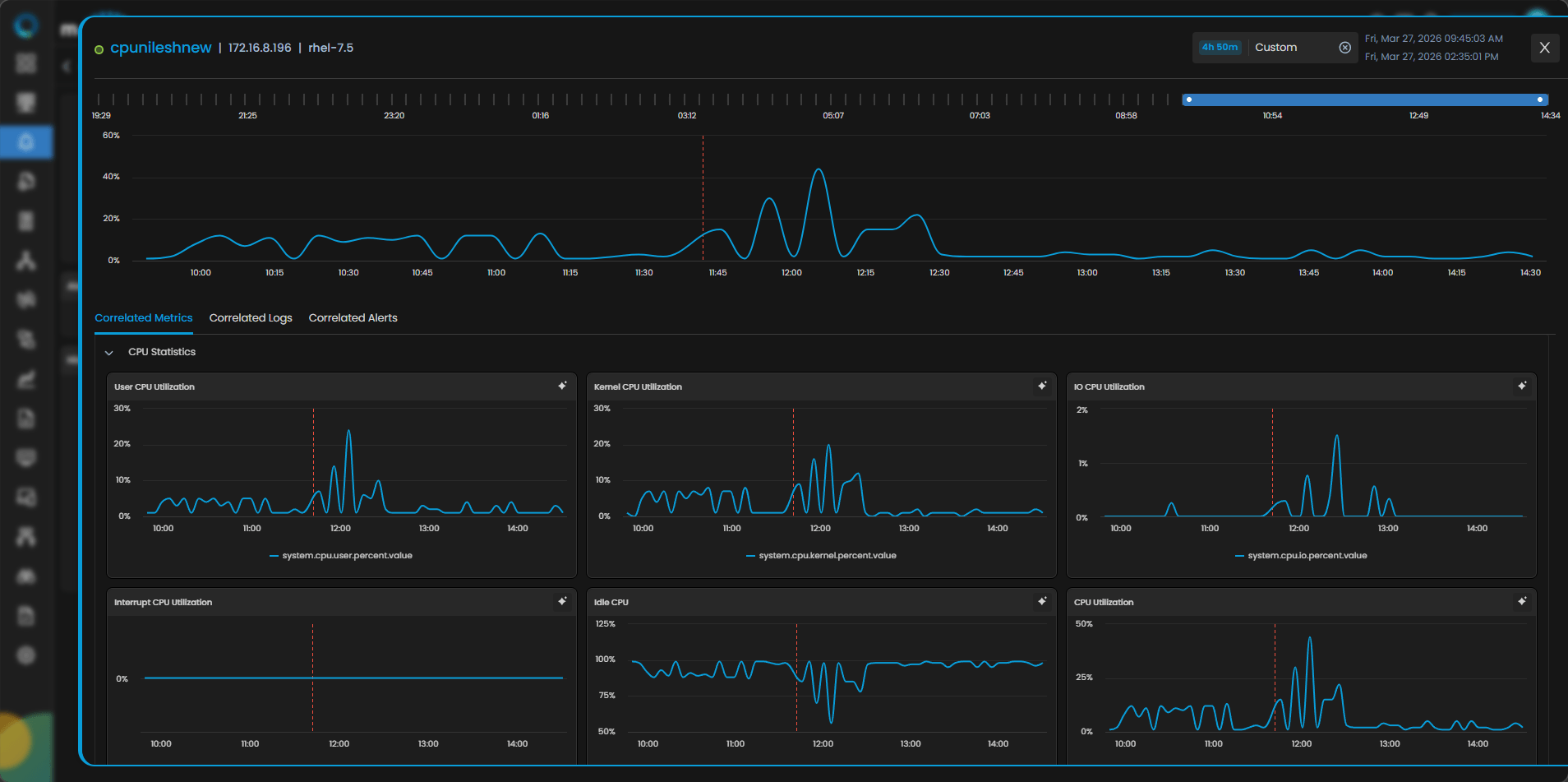
Metric Trend Statistical Analysis Added
With this release, Metric Trend Statistical Analysis has been added as a new feature. This capability provides deeper insights into metric trends, enabling more accurate forecasting and anomaly detection in system performance.
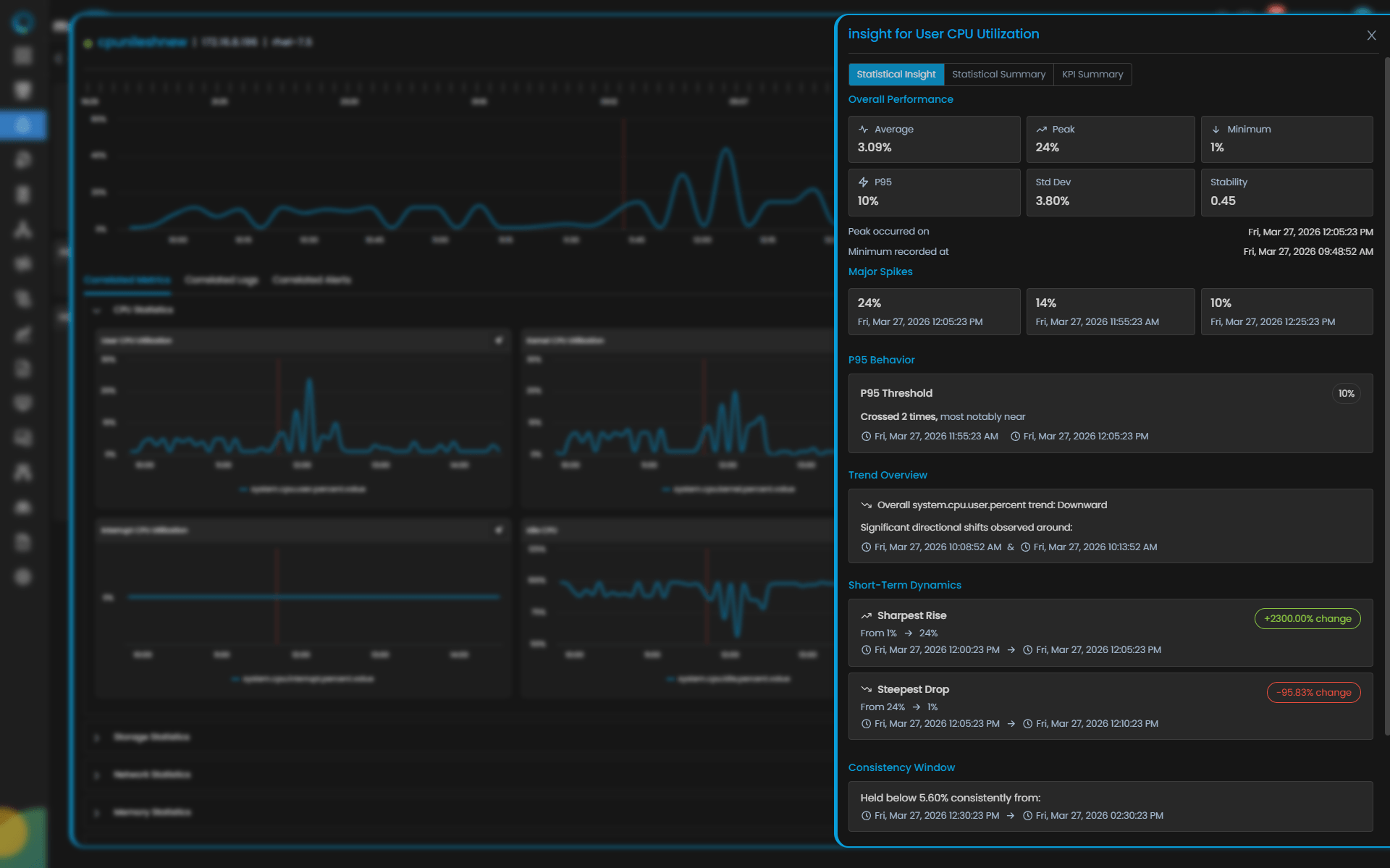
Next.js and React Support Added to RUM
With this release, Motadata AIOps brings Next.js and React support to Real User Monitoring (RUM). This enhancement allows for better monitoring and analysis of web applications built with these popular frameworks, providing more comprehensive performance data.
OpenShift Application Instrumentation Support Implemented
Application Instrumentation support for OpenShift has been implemented. This new feature enables better monitoring and management of applications deployed on OpenShift platforms, enhancing observability in containerized environments.
Error and Exception Tracking Added to APM
Motadata AIOps introduces Error and exception tracking capabilities to APM. This new feature allows for more detailed monitoring of application errors and exceptions, facilitating faster issue identification and resolution.

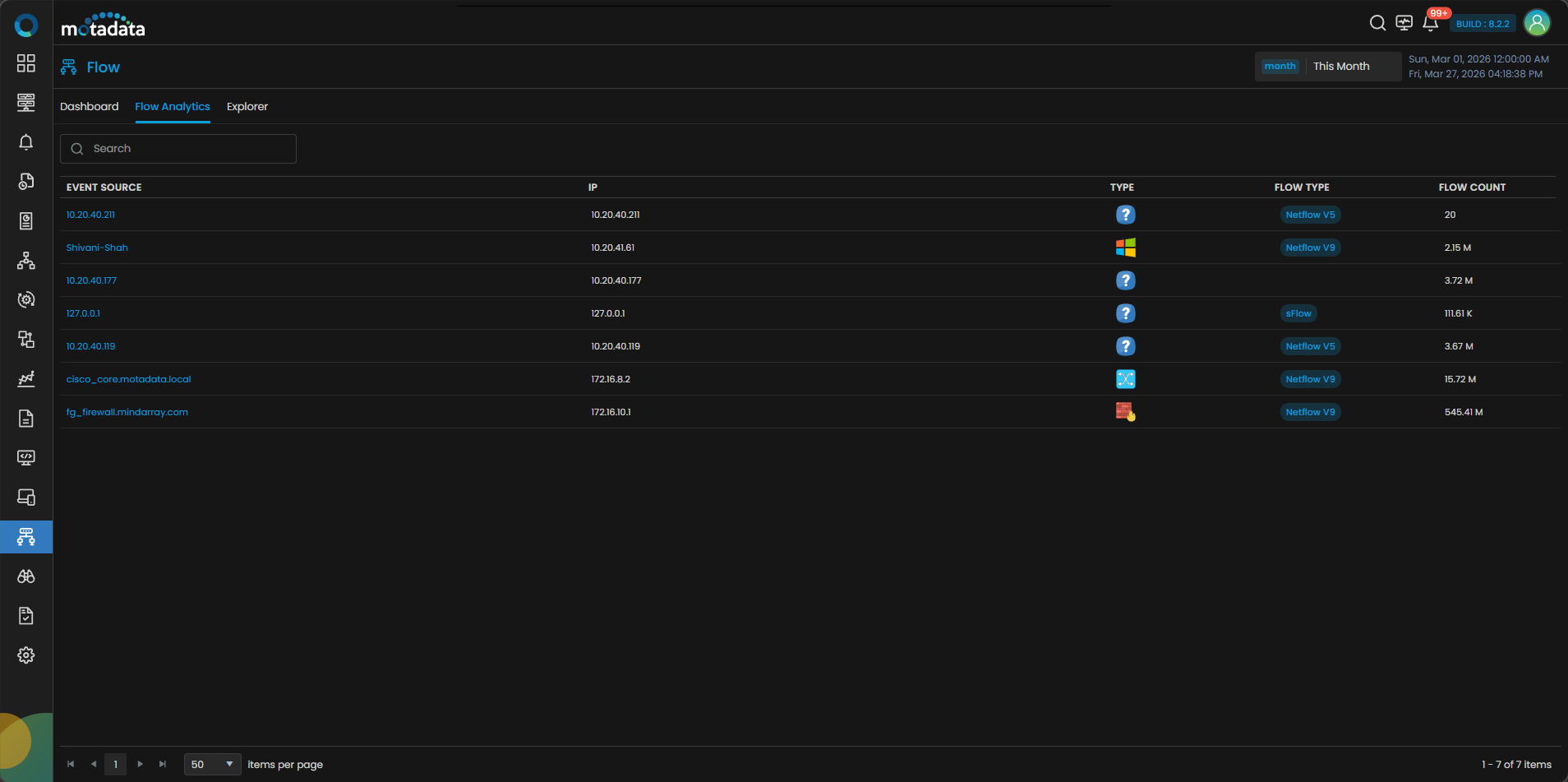
Flow Analytics Introduced in Flow Explorer
Flow Analytics has been introduced in Flow Explorer. This new analytical capability provides deeper insights into network flows, enabling better understanding and optimization of network traffic patterns.
New SLO Widget Introduced
With this release, a new SLO Widget has been introduced to the platform. This widget provides a quick and easy way to visualize Service Level Objective performance, enhancing the ability to track and maintain service quality.
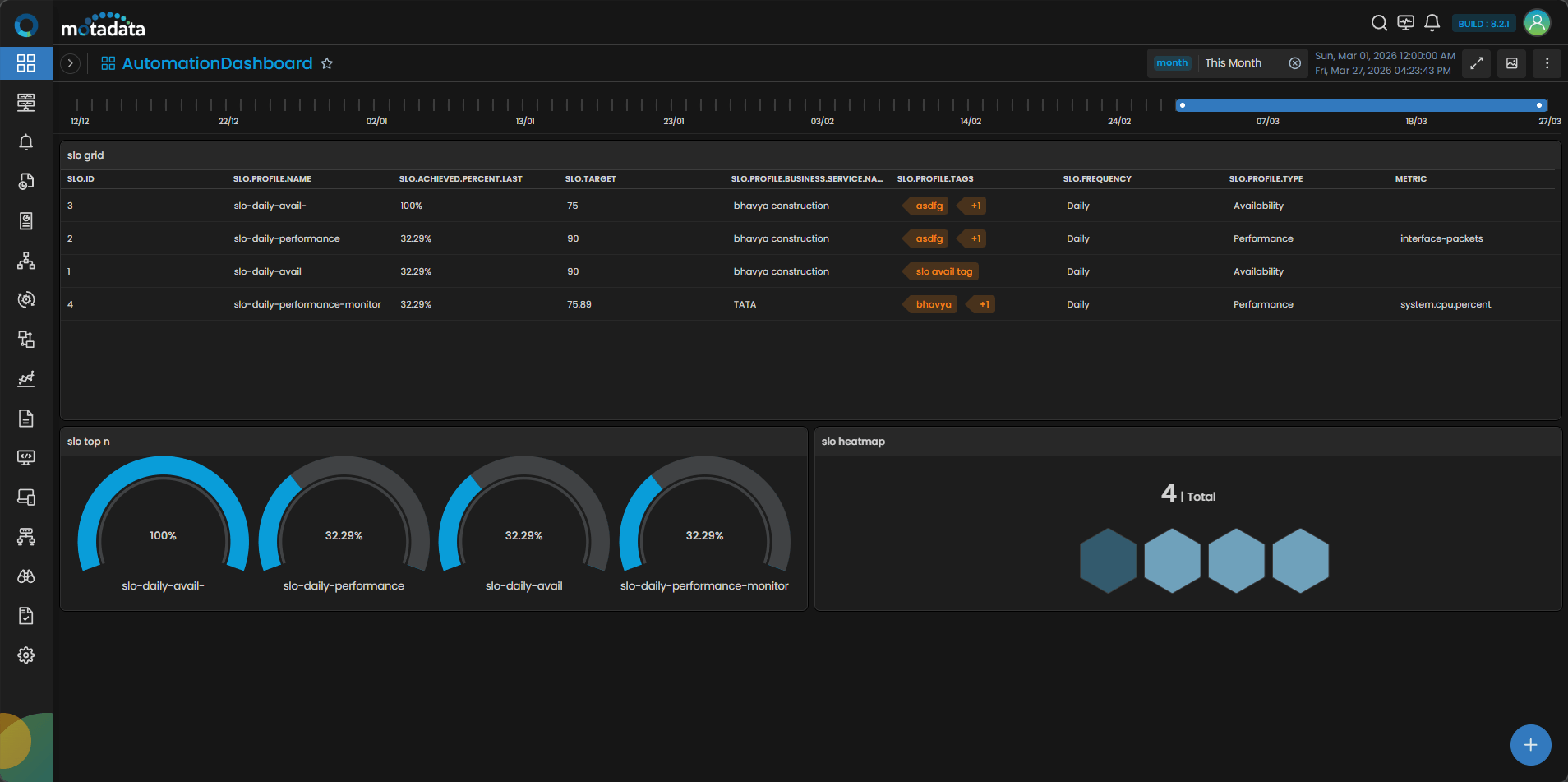
SLO Report Support Introduced
Support for SLO Report has been introduced, enhancing the ability to track and analyze Service Level Objectives. This new feature will provide valuable insights into service performance and help maintain service quality standards.
New RUM Alert Widget Introduced
With this release, Motadata AIOps introduces a new RUM alert widget to the platform. This widget enhances the visibility of Real User Monitoring alerts, allowing for quicker identification and response to performance issues affecting end-users.
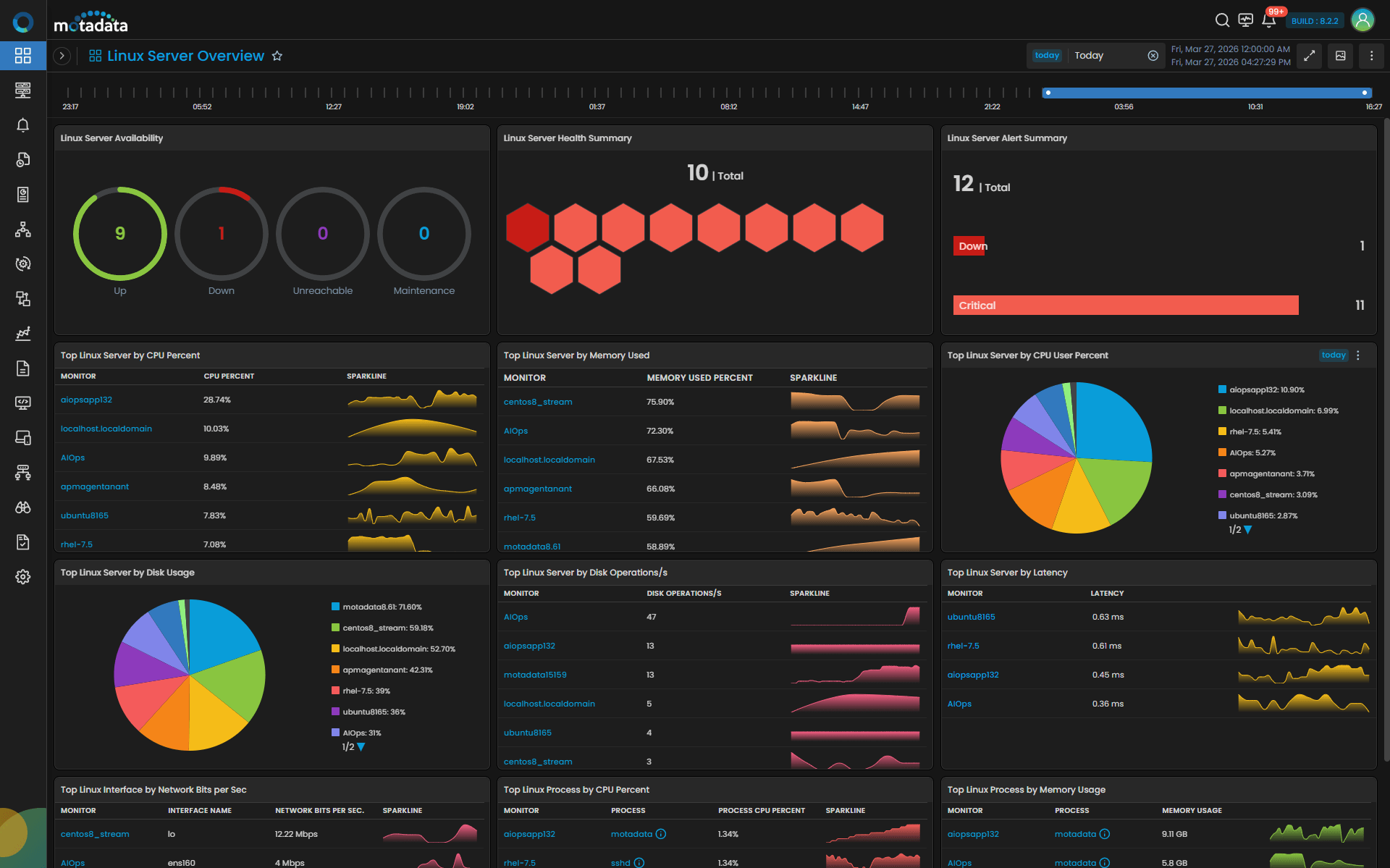
Widget Design Revamped for Better Visualization
With this release, the Widget design has been revamped for better visualization. This update improves the overall user experience by enhancing the clarity and effectiveness of data presentation across the platform.
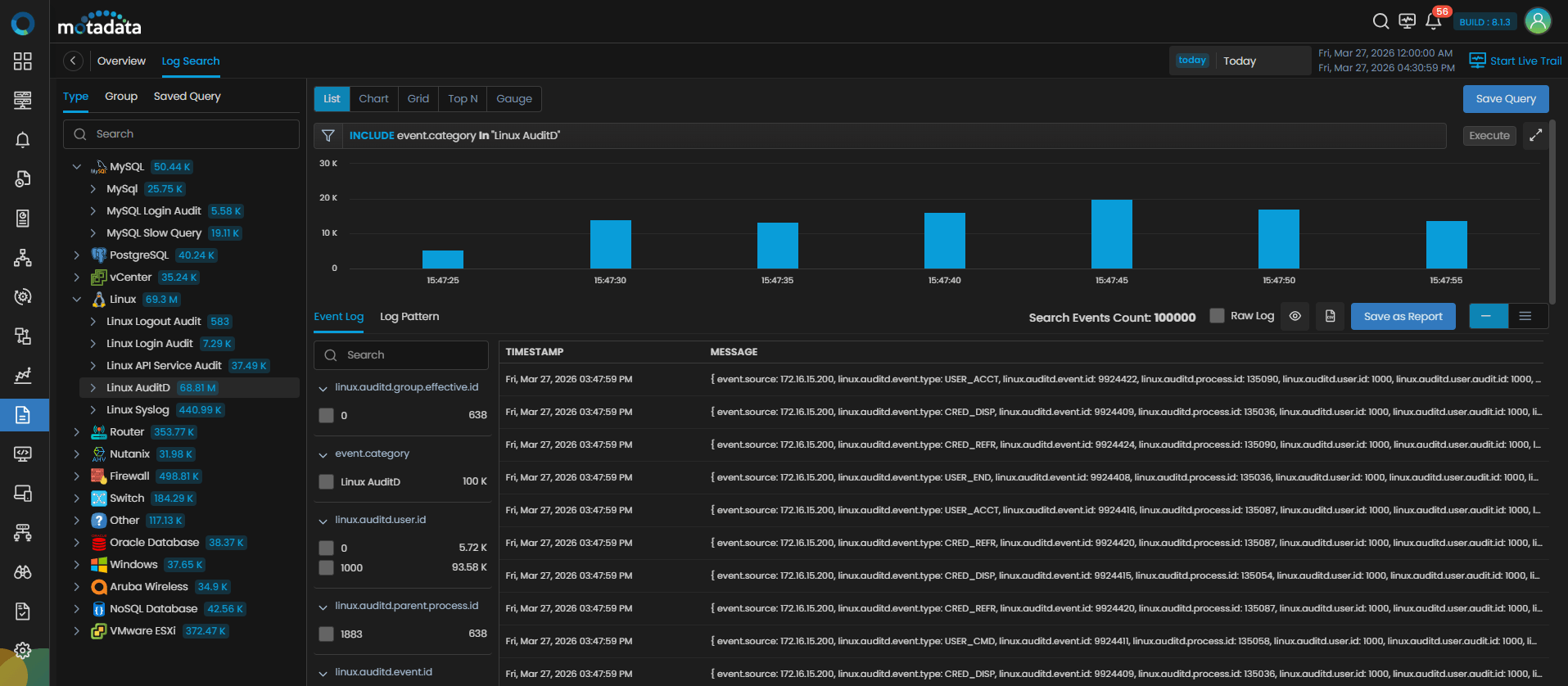
OOTB Log Parser Introduced for Linux AuditD
An Out-of-the-Box (OOTB) Log Parser for Linux AuditD has been introduced. This new parser simplifies the process of analyzing Linux audit logs, making it easier to track system events and maintain security compliance.
Config Change Summary Added to NCCM Alerts
Config change summary has been integrated into NCCM Alert. This new feature provides a quick overview of configuration changes, improving visibility and facilitating faster troubleshooting of network issues.
OOTB Dashboards Now Editable as Private or Public
With this release, users can now edit OOTB dashboards to set them as Private or Public. This new functionality offers greater flexibility in dashboard management and sharing, allowing for better control over who can access specific monitoring information.
Runbook Results Added to ITSM and Notification Channels
Runbook results can now be extended to ITSM Incidents and Notification channels. This enhancement improves the integration between automated runbooks and incident management processes, streamlining IT operations.
C++ Instrumentation Support Added to APM
With this release, Motadata AIOps brings C++ Instrumentation support to Application Performance Monitoring (APM). This new capability allows for more comprehensive monitoring of C++ applications, providing deeper insights into their performance and behavior.
Support Added for Multiple Trap Listeners
Support for multiple trap listeners has been added to the system. This new feature allows for more flexible and robust network monitoring setups, enabling the capture of SNMP traps from multiple sources simultaneously.
Maintenance Mode Enabled for Agent-Based Monitors
A maintenance mode for agent-based monitors has been enabled. This new functionality allows users to temporarily suspend monitoring during planned maintenance periods, reducing false alarms and improving overall system management.
Access Point Mapping Integrated into Network Topology
With this release, Access Point mapping has been integrated into Network topology. This new feature enhances network visibility by providing a clear view of access point locations and relationships within the network infrastructure.
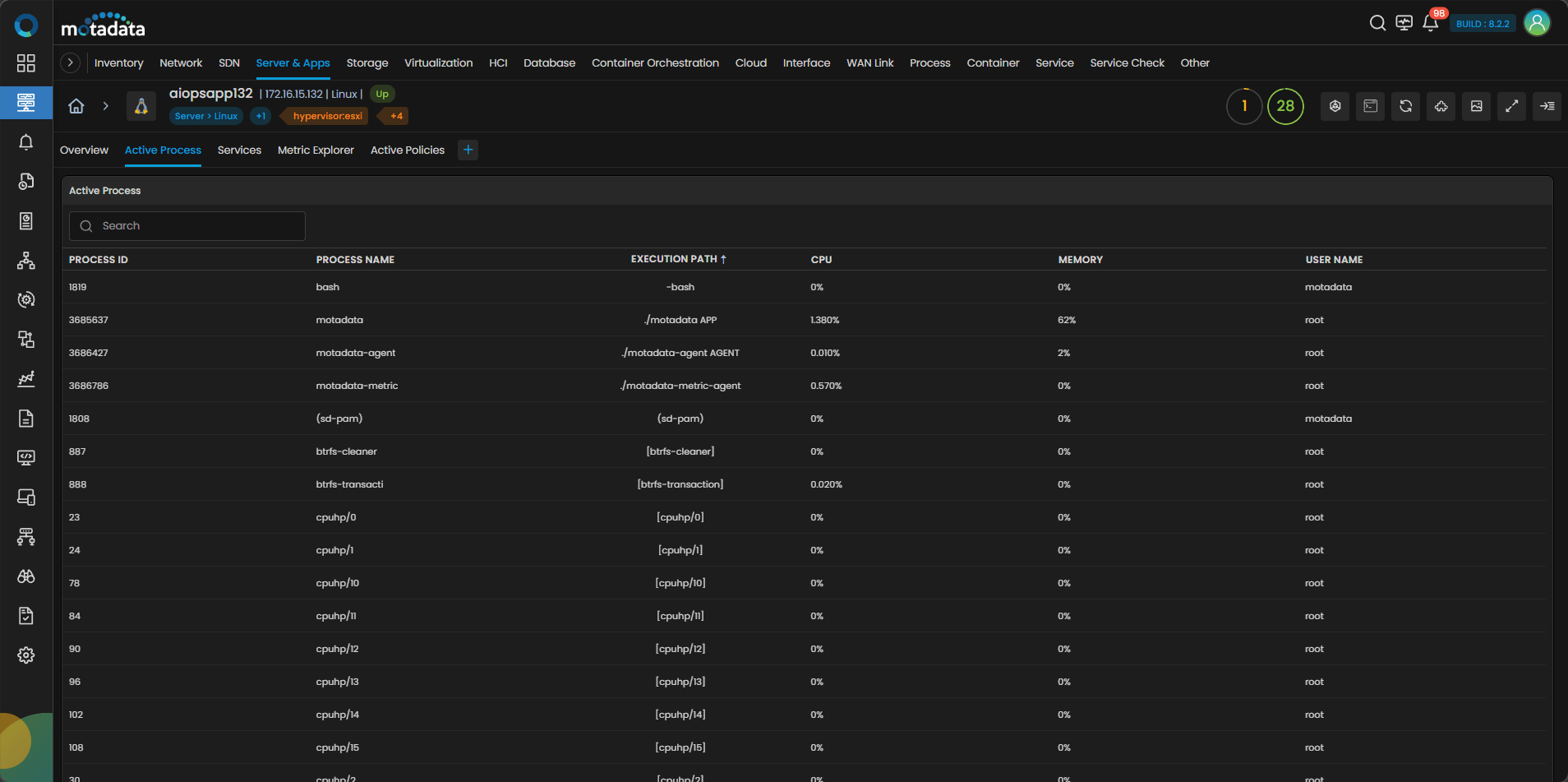
Active Service and Process Support Added for Windows and Linux
Active service and Process support has been implemented for both Windows and Linux systems. This new feature provides enhanced visibility into running services and processes, allowing for more effective system monitoring and management.
Synology NAS Monitoring Support Implemented
With this release, Monitoring support for Synology NAS has been implemented. This new capability allows users to monitor and manage Synology Network Attached Storage devices, ensuring optimal performance and availability of storage resources.
Harmonic Storage Monitoring Support Added
Monitoring support for Harmonic Storage has been added to the platform. This new feature enables users to monitor and manage Harmonic storage systems, providing better visibility into specialized storage infrastructure.
AWS EFS Monitoring Support Added
Monitoring support for AWS EFS (Elastic File System) is now available. This new capability enables users to track and manage the performance of their AWS EFS resources, ensuring optimal file system operations in cloud environments.
OOTB Alert Introduced for App and DB Time Sync Issues
With this release, Motadata AIOps introduces an OOTB alert for time sync issues between app and DB in distributed deployment. This new alert helps quickly identify and resolve time synchronization problems in complex, distributed environments.
Declare Incident Support Added to Trap Policy
With this release, Declare incident support has been added to trap Policy. This new feature allows for automatic incident declaration based on specific SNMP trap conditions, streamlining the incident management process.
Event Correlation Implemented in Alert
Event Correlation in Alert has been implemented as a new feature. This capability helps identify relationships between different alerts, reducing alert noise and providing more context for faster problem resolution.