6 Problems Your IT Service Desk Should Solve
Introduction
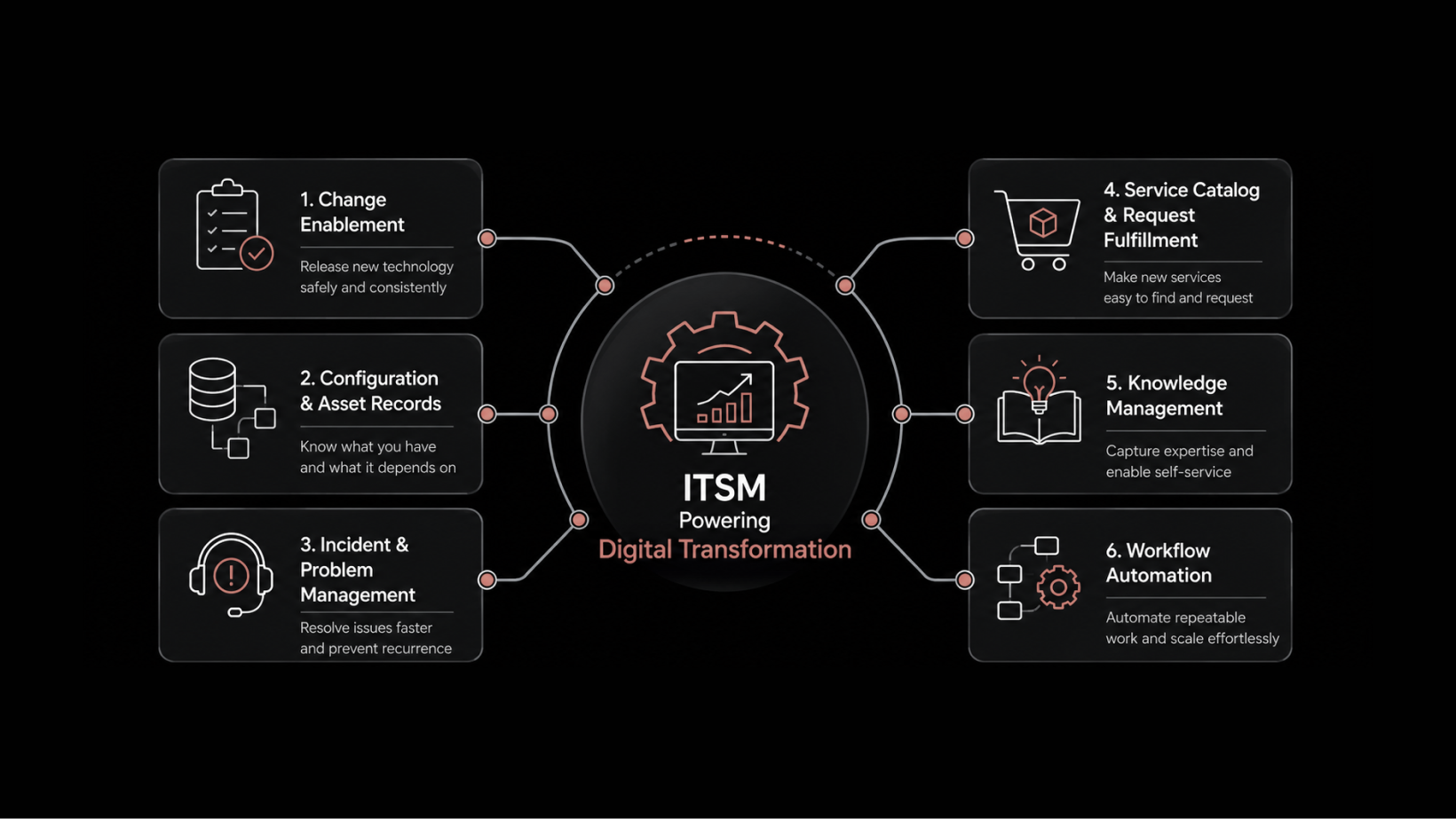
An effective IT service desk is no longer a simple ticket-logging function, it has become the operational heartbeat of modern IT. As organizations expand their digital ecosystems, employees expect faster support, seamless communication, and proactive problem-solving that keeps work moving without interruption. This evolution shifts IT service management from reactive troubleshooting to a strategic capability that protects productivity and business continuity.
In the modern era, most competitive enterprises expect far more from their service desks. They rely on them to resolve incidents quickly, automate routine tasks, uphold strict SLA management, provide real-time visibility into IT operations, and consistently elevate the end-user experience. In this environment, a high-functioning service desk is not just a support layer, it is a core driver of operational maturity.
The following six problems represent the essential areas every modern service desk must address to deliver measurable value and support long-term organizational growth.
Problem 1: Slow Incident Response and Resolution Times
The first sign of trouble is a flood of frustrated messages, employees unable to access systems, deadlines slipping, customers waiting. What begins as a small glitch can quickly snowball when the service desk is slow to react. This is the moment when IT is tested: can the team respond fast enough to keep the business running, or will a minor issue become a major interruption?
Why Incident Delays Hurt Business Performance?
When incident resolution lags, the impact spreads across the organization, lost productivity, delayed projects, and declining customer satisfaction. A simple login issue or system slowdown, if left unaddressed, can grow into a larger operational bottleneck. These delays often stem from outdated workflows, unclear prioritization, and technicians lacking the context needed to act quickly.
How a Modern Service Desk Speeds Up Resolution
A modern IT service desk transforms this dynamic by:
Using automated incident routing and prioritization
Providing technicians with complete historical and asset context
Leveraging AI to suggest fixes or deliver automated responses
Reducing manual effort through pre-built service workflows
The outcome is a faster, more accurate response—fewer escalations, smoother operations, and uninterrupted business continuity.
Problem 2 – Lack of Visibility Into IT Issues and Requests
A surprising 80% of organizations report network complexity and visibility blind spots as a major operational challenge. In an era where IT service management drives business continuity, limited transparency becomes a critical roadblock. Without clear insights, teams struggle to spot patterns, detect repeat incidents, or understand actual service demand. This lack of visibility also affects resource planning and prevents IT from proactively preventing failures.
For users, the impact is equally frustrating, they expect real-time updates, not the need to chase the IT service desk for status checks.
How Centralized Dashboards Improve Visibility
Modern ITSM platforms now offer real-time dashboards that include:
Full request tracking
Live incident status
Technician workloads
SLA countdown timers
Trend and root-cause analytics
These capabilities transform visibility gaps into proactive, data-driven service delivery.
Problem 3 – Inefficient Ticket Handling and Repetitive Work
On a typical Monday morning, the IT service desk at a growing mid-size company is flooded with requests—password resets, access permissions, software installs. By 10 a.m., technicians are buried under repetitive tasks, leaving little room for meaningful incident resolution. This scene is common across organizations, where manual triage drains productivity and inflates operational costs within IT service management teams.
The Cost of Manual, Repetitive IT Tasks
High ticket volume and repetitive issues slow service delivery and overwhelm technicians, preventing them from addressing critical incidents.
How Automation and AI Reduce Technician Workload
A modern service desk eliminates inefficiencies using:
Automated ticket categorization and assignment
AI-driven virtual agents for common requests
Workflow automation for approvals and provisioning
Knowledge-base suggestions for self-service
This shift frees IT teams to focus on high-impact work.
Looking to Reduce Costs, Boost Productivity, and Deliver Better User Experiences?
Motadata ServiceOps helps IT teams simplify operations, improve service quality, and modernize ITSM without the heavy cost or complexity.
Problem 4 – Poor Communication and User Experience
In many organizations, user frustration doesn’t begin with the issue itself—it begins with silence. An employee submits a request, waits for updates that never come, and eventually follows up multiple times, unsure whether the IT service desk even saw the ticket. This breakdown in communication creates friction long before incident resolution ever starts, shaping a negative user experience that undermines trust in IT.
How Communication Gaps Impact End Users
When users don’t receive timely updates, confidence in IT drops. Communication gaps lead to duplicated requests, unnecessary follow-ups, and a growing perception that IT support is slow or unreliable. Over time, these issues erode the credibility of IT service management efforts and drain productivity across teams.
How a Service Desk Streamlines Interactions
A mature, user-centric service desk improves communication by:
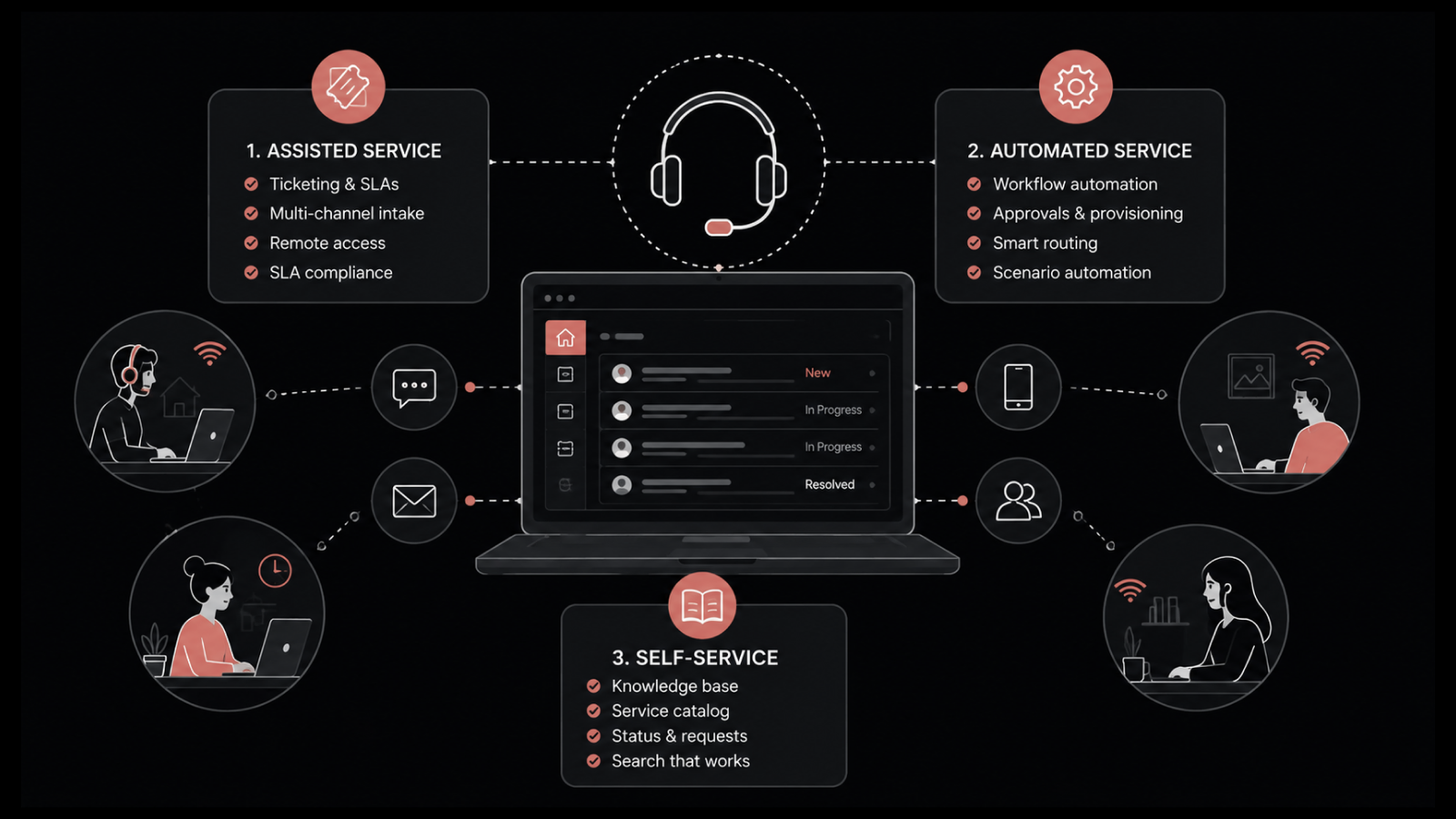
Sending automated status updates
Offering omnichannel support (email, portal, chat)
Providing self-service portals for real-time request tracking
Enabling conversational interfaces for fast resolutions
Clear communication and transparent progress significantly enhance user satisfaction and overall workplace efficiency.
Problem 5 – Difficulty Managing IT Assets and Dependencies
In a large healthcare organization, a routine software patch unexpectedly brought a critical patient-monitoring system offline. The root cause wasn’t the patch itself, it was an outdated driver on a specific device model. Because the IT service desk lacked clear asset visibility, technicians spent hours diagnosing an issue that could have been prevented with accurate dependency mapping. This scenario is common across industries where complex infrastructures make IT asset management essential for smooth IT service management operations.
Why Service Desk Teams Struggle Without Asset Visibility
Many incidents are directly tied to hardware, software, or configuration changes. Without real-time asset data, technicians lack the context needed for accurate diagnosis. This results in extended resolution times, recurring incidents, and reactive firefighting instead of proactive prevention.
The Power of Integrated ITAM and CMDB
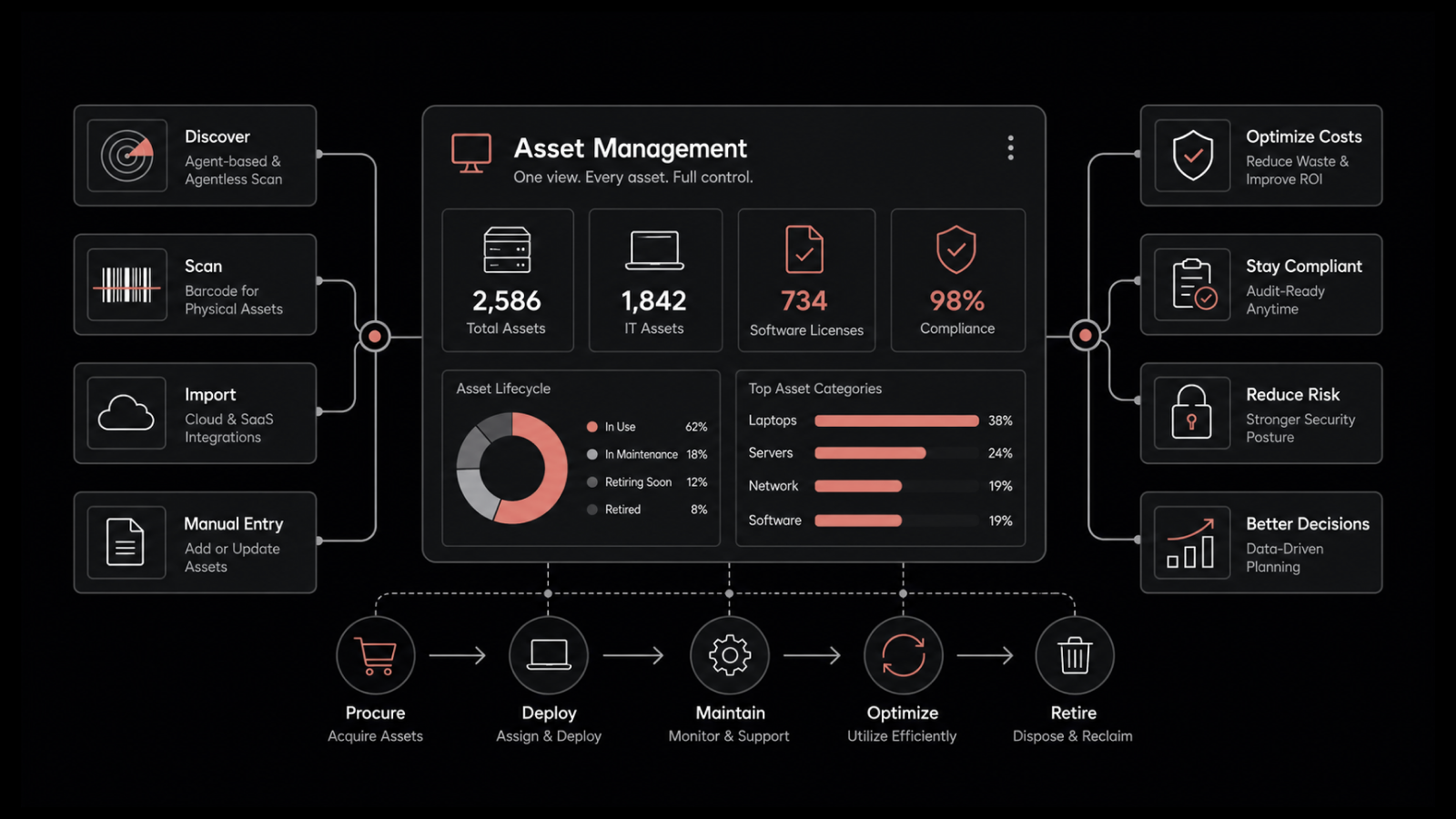
Integrating ITAM and the CMDB into the service desk provides:
Complete visibility into asset status and dependencies
Impact analysis before changes or deployments
Faster troubleshooting with linked asset histories
Reduced compliance and audit risks
With strong asset intelligence, the service desk becomes proactive, predictive, and significantly more effective.
Problem 6 – Inconsistent Service Levels and SLA Violations
Every user expects timely support, but behind those expectations are formal SLAs that define how quickly IT must respond and resolve issues. When these commitments are missed, the impact is immediate, frustrated users, delayed projects, and potential financial or contractual penalties. That’s why consistent SLA performance is a critical pillar of effective IT service management.
What Causes Frequent SLA Breaches
Common drivers include:
Manual prioritization
Lack of automated reminders
Poor workload distribution
Weak escalation paths
Incorrect incident classification
These gaps erode trust and reduce organizational productivity.
How SLA Policies and Automation Improve Service Quality
Strong SLA management requires:
Automated SLA timers and escalations
Priority-based routing
Defined service policies per request type
Compliance dashboards for real-time tracking
With the right automation and oversight, IT can deliver reliable, predictable service at scale.
How Motadata ServiceOps Helps You Solve These Problems?
Modern businesses need far more than a basic ticketing system—they need an intelligent, unified engine that transforms the IT service desk into a strategic driver of operational excellence. Motadata ServiceOps is purpose-built to address the six most common service-desk challenges by integrating ITSM, automation, asset intelligence, and SLA governance into one cohesive platform. Instead of juggling disconnected tools, IT teams gain a single environment that is faster, smarter, and purposefully designed for high-performance IT service management.
Unified ITSM Platform for Faster Service Delivery
Motadata centralizes incidents, problems, changes, and service requests into a single, unified console. This eliminates silos, standardizes processes, and ensures technicians always have the information they need. The result is improved collaboration, reduced context switching, and consistent service delivery across the organization.
Smart Automation and AI Capabilities
At the heart of ServiceOps lies intelligent automation. AI-driven routing, categorization, and virtual agents handle routine queries instantly—freeing IT teams from repetitive work. This automation significantly accelerates incident resolution, lowers operational overhead, and reduces dependency on manual intervention. Teams can finally focus on strategic, high-impact tasks instead of drowning in ticket queues.
Built-In ITAM and CMDB for Better Context
ServiceOps integrates IT asset management and a robust CMDB to provide full visibility into asset lifecycles, dependencies, and configurations. This helps technicians diagnose issues faster, understand potential impacts before rollout, and prevent recurring incidents. For audits and compliance reporting, this unified asset intelligence is invaluable.
SLA Management and Reporting for Consistency
Motadata elevates SLA management with automated timers, escalations, and priority-based routing. Real-time reporting dashboards allow IT leaders to track SLA trends, identify bottlenecks, and continuously improve service quality. Predictable and consistent performance becomes the norm—not the exception.
Self-Service and Knowledge Management
With a powerful self-service portal and AI-assisted knowledge base, users can resolve common issues instantly. This dramatically reduces ticket volume and increases user satisfaction while giving IT teams breathing room to focus on complex challenges.
With Motadata ServiceOps, your IT service desk becomes a proactive, analytics-driven, and resilient operational engine—one that delivers measurable value, drives efficiency, and elevates the user experience across the enterprise.
Conclusion
A modern IT service desk must serve as more than a ticket-processing function—it should act as a core enabler of operational resilience. When equipped to solve these six critical challenges, the service desk becomes a powerful catalyst for reducing downtime, accelerating incident resolution, strengthening SLA management, and elevating the overall user experience. The result is greater control, higher productivity, and measurable cost efficiency across the organization.
By adopting a robust, intelligent IT service management platform, one that integrates automation, asset visibility, and consistent SLA governance, businesses can evolve their service desk into a future-ready powerhouse. This shift empowers IT teams to work proactively rather than reactively, driving continuous improvement and long-term value.
Author
Arpit Sharma
Senior Content Marketer
Arpit Sharma is a Senior Content Marketer at Motadata with over 8 years of experience in content writing. Specializing in telecom, fintech, AIOps, and ServiceOps, Arpit crafts insightful and engaging content that resonates with industry professionals. Beyond his professional expertise, he is an avid reader, enjoys running, and loves exploring new places.