How to Survive SOX Compliance Season Without Rebuilding Your Records
Why does SOX season turn into a hunt for screenshots and forwarded approval emails? The controls were almost certainly running all year. The record of them running is scattered across a ticketing tool, an identity directory, a backup console, and someone's inbox.
SOX compliance puts financial reporting under a legal standard, and the IT team ends up carrying a large share of the proof. Change approvals, user access lists, backup jobs, and batch schedules all become audit evidence. Finance signs the certification, and your team supplies what holds it up.
Most guides on the Sarbanes-Oxley Act stop at the statute and the section numbers. This one starts where the IT work starts, at the general controls an auditor will actually test, and connects to the wider cybersecurity compliance posture your organization already maintains.
In this blog, you will see what SOX compliance means in practice, which sections apply to IT, how ITGCs are scoped and tested, how to run change control and access reviews that survive sampling, what a failed control costs the business, and what a defensible evidence package contains.
What Is SOX Compliance and Why Does It Matter to IT Teams?
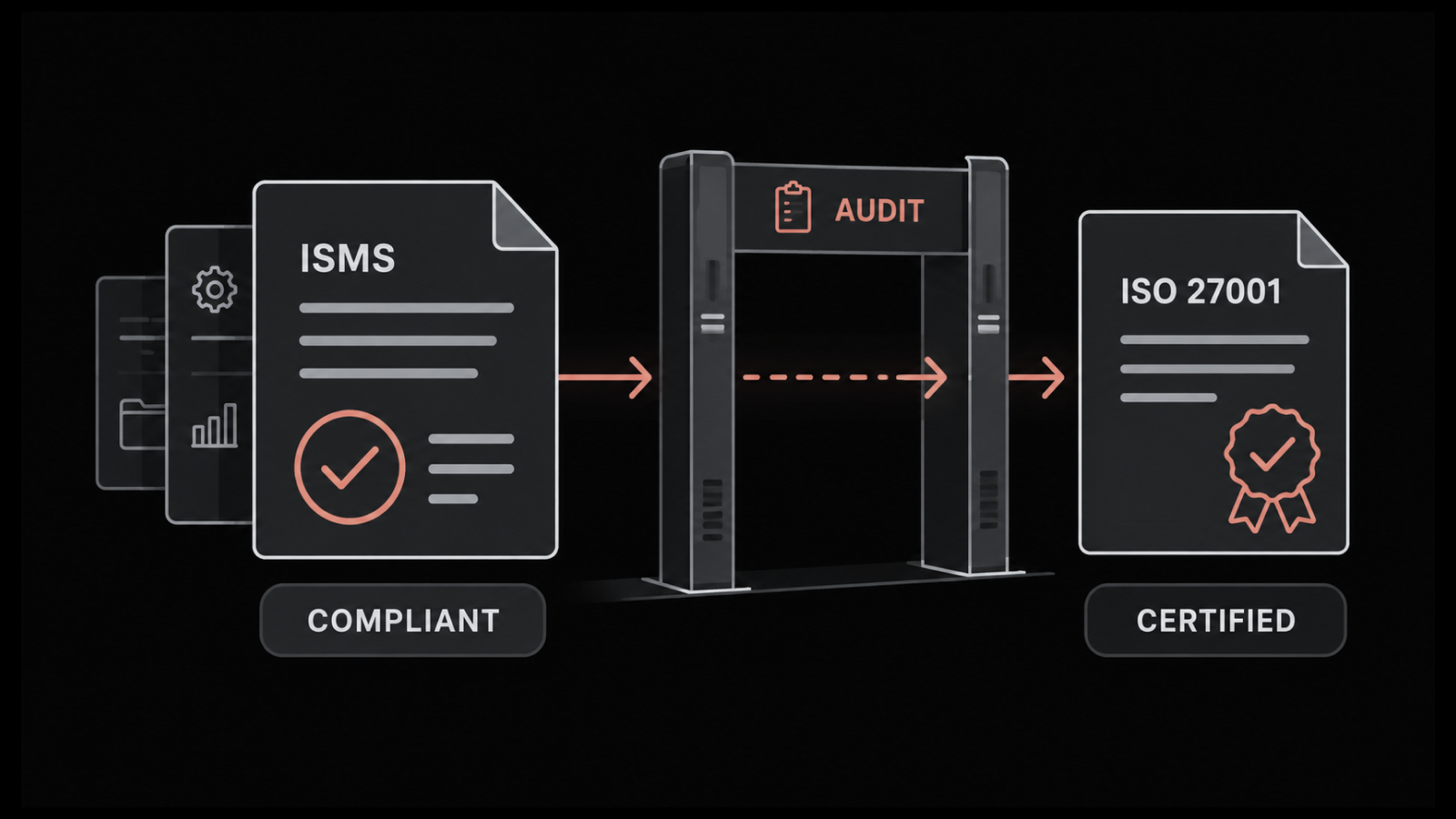
SOX compliance is the practice of proving that a public company's financial statements are supported by internal controls that operate as described, including controls over the IT systems that create, store, and move financial data. Management asserts that those controls work. An external auditor tests whether the assertion holds.
That assertion breaks into three parts, and each one carries a separate burden of proof:
Controls exist: Documented rules governing access, change, and operations for every system that touches a financial number
Controls operate: Records showing each rule ran on schedule across the full reporting period, with exceptions handled through a defined path
Controls withstand testing: Independent sampling by an external auditor, judged against the design management documented
The Sarbanes-Oxley Act passed in 2002 after the Enron and WorldCom collapses wiped out shareholder value and exposed audit failures. Congress responded with mandatory executive certification, mandatory assessment of internal control over financial reporting, and a new regulator for audit firms, the Public Company Accounting Oversight Board.
IT matters here because almost no material number is produced manually anymore. A revenue figure passes through an order system, an ERP, a data warehouse, and a reporting layer before it reaches the 10-K. If access to any of those systems is uncontrolled, the number downstream carries the same doubt.
What Does SOX Stand for?
SOX stands for the Sarbanes-Oxley Act of 2002, named for Senator Paul Sarbanes and Representative Michael Oxley, who sponsored the bill. It was signed into law on July 30, 2002. Practitioners shorten it to SOX in conversation and in audit documentation.
The SOX compliance meaning for an IT director is narrower than the full statute. Nine of the eleven titles concern auditor independence, analyst conflicts, and corporate responsibility. The IT workload comes from a handful of sections that require controls and records.
Who Has to Comply with SOX?
SOX compliance applies to companies that raise capital from US public markets and to the firms that audit them. Coverage extends further than most teams expect.
US public companies: Every issuer registered with the SEC, regardless of headcount or revenue
Foreign private issuers: Non-US companies whose shares or ADRs trade on a US exchange
Subsidiaries and shared services: Any entity whose systems feed the consolidated financial statements, including offshore IT operations
Public accounting firms: Auditors of issuers, which fall under PCAOB registration and inspection
Pre-IPO companies: Private firms preparing to list, which usually start ITGC remediation a year or more ahead
Coverage often surprises teams operating outside the US. An IT function in Bengaluru or Manila supporting a US-listed parent falls in scope on the same terms as one in Boston. Regional privacy regimes such as POPIA compliance run on a separate track, so most global organizations end up maintaining both at once.
Knowing you are in scope is the easy part. The harder question is which parts of the act generate work for your team.
Which Sarbanes-Oxley Act Sections Apply to IT Teams?
The SOX compliance requirements that reach IT come from four sections of the Sarbanes-Oxley Act, with a fifth adding the criminal penalty that makes executives take the first two seriously. Everything else in the act is finance, legal, or audit-firm territory.
Section | What it requires | What IT supplies |
Section 302 | CEO and CFO certify each quarterly and annual report, and certify that disclosure controls were evaluated | Evidence that access, change, and operations controls ran during the period |
Section 404 | Management assesses internal control over financial reporting, and in many cases the auditor attests to it | ITGC design documentation, control testing evidence, remediation records |
Section 409 | Rapid public disclosure of material changes in financial condition | System availability and data integrity for the close process |
Section 802 | Records retention and criminal penalties for altering or destroying records | Immutable log retention, backup integrity, restricted deletion rights |
Section 906 | Criminal certification of periodic reports, with penalties up to twenty years | The same evidence base as Section 302, held to a higher stake |
Section 404 splits into two parts, and the distinction changes your workload considerably:
Section 404(a): Management's own assessment of internal control over financial reporting, owed by every issuer without exception
Section 404(b): The external auditor's attestation on those same controls, owed by a narrower group of filers
Not every filer carries 404(b). Non-accelerated filers are exempt, emerging growth companies can defer it for up to five years, and since 2020 smaller reporting companies with annual revenue under one hundred million dollars are also excluded. Teams that fall outside 404(b) still need the underlying controls, because management still signs 404(a).
Section 404 is where the IT workload concentrates, and it points at one specific control set.
What Are ITGCs and Why Do Auditors Start There?
ITGCs, or IT general controls, are the controls over the environment in which financial applications run, rather than the controls inside any single transaction. Auditors start there because ITGCs decide whether anything else can be trusted.
The scoping question is always the same. If a system can create, change, or report a number that lands in the financial statements, it is in scope. That usually pulls in the ERP, the billing platform, the payroll system, the consolidation tool, and the databases and operating systems underneath them.
There are four ITGC domains that auditors test, and every SOX control matrix maps back to them:
Access to programs and data: Who can log in, what they can do, how access is granted, reviewed, and removed
Program change: How changes to in-scope applications and infrastructure are requested, approved, tested, and deployed
Program development: How new systems and major implementations are built, tested, and migrated into production through a defined release management process
Computer operations: Job scheduling, batch monitoring, backup, restore, and incident handling for in-scope systems
Most organizations describe these controls using COSO for the overall framework and COBIT for the IT layer, because auditors recognize both. The label on the cover matters less than the coverage underneath it. Every SOX ITGC matrix has to account for the same four domains regardless of which framework the company adopted.
Control ownership usually maps onto the ITSM processes a team already runs, which is why change and access are the two domains that get automated first.
The consequence of an ITGC failure is what makes this worth budget. When ITGCs are reliable, an auditor can rest on automated application controls and system-generated reports, which keeps testing sample sizes small. When ITGCs fail, that reliance is withdrawn and the audit shifts to substantive testing across far larger populations.
Three things follow from that shift, and all of them land on your team:
Audit fees rise: Substantive testing takes more auditor hours, billed at partner and manager rates
Evidence requests multiply: Larger samples mean more extracts, more reconciliations, and more turnaround under deadline
Deficiency risk climbs: Bigger populations surface more exceptions, which raises the chance of a reported finding
Two of the four domains carry most of the testing effort. Change and access are where auditors sample hardest, so both are worth working through in detail.
How Does SOX Change Management Work in Practice?
SOX change management works by making every change to an in-scope system traceable to a request, an approver who is not the implementer, a test record, and a deployment record. The control rests on proving that the approval happened before the change reached production.
Auditors test this by pulling a sample from the full population of production changes during the period. For each sampled change, they expect the record to answer four questions:
Who requested it: A named requester with a stated business reason and the affected system identified
Who approved it: An approver distinct from the person who implemented the change
What was tested: Evidence of testing appropriate to the risk, including a rollback plan for higher-risk work
When it went live: A deployment timestamp that falls after the approval timestamp
That last one decides more audits than the other three combined. A single change with an approval logged after the deployment is an exception, and enough exceptions become a deficiency.
How Should Emergency Changes Be Handled?
Emergency changes should proceed without prior approval when service is at risk, then go through retrospective review and sign-off inside a defined window. Teams that skip the retrospective step turn a legitimate exception path into an uncontrolled one.
Consider a listed manufacturer that pushes a firewall rule change at 11pm to restore order processing before quarter-end close. The work was correct and the outage was avoided. With no retrospective approval logged inside the policy window, the auditor records an unapproved production change and widens the sample.
What Makes Change Evidence Hold Up?
Change evidence holds up when the workflow produces it automatically, instead of when someone assembles it after the auditor asks. Three habits carry most of the weight:
Approval routing: Change management software captures CAB records, planned windows, and rollback plans as the change moves through its stages
Asset linkage: Every change tied to its CMDB record, so nobody reconstructs scope from memory when the auditor asks which financial system was affected
Standard change templates: Low-risk repeatable work pre-approved as a category, which shrinks the population needing individual sign-off
Teams building this discipline usually start with the fundamentals covered in ITIL change management practice.
Approval evidence is worth more when it exists before anyone asks for it.
Change control answers half the ITGC question. The other half is who could have made that change in the first place.
How Do You Run a SOX Access Review Without Losing a Month?
You run a SOX access review by pulling the complete user list for each in-scope system, routing it to the business owner who understands the job function, and tracking every revocation to closure as a ticket. The review closes when the removals are proven.
Three habits cause most of the pain:
Incomplete extracts: Directory exports that miss application-level roles inside the ERP
Wrong reviewer: Lists routed to IT instead of the manager who knows what the role should allow
Informal removals: Access revoked over chat or a corridor conversation, with no record of when it ended
Termination timing carries its own control. Auditors reconcile the HR leaver list against the access list and measure the gap between last working day and disable date. A defined window, commonly twenty-four hours for in-scope systems, gives you something testable to point at.
The cycle should treat these account categories separately:
Privileged accounts: Domain admins, DBAs, and application superusers reviewed more often than standard users, often monthly
Service accounts: Every non-human account assigned a named human owner, with password rotation and interactive login disabled
Emergency access: Firecall or break-glass credentials issued through a request, time-boxed, and reviewed after use
Terminated users: Reconciled against the HR leaver feed each cycle, with disable timestamps captured
Role changes: Movers treated as a leaver plus a joiner, so old entitlements are removed rather than accumulated
Which Segregation of Duties Conflicts Do Auditors Flag?
Segregation of duties, or SoD, keeps one person from completing a financially sensitive transaction end to end. Auditors flag it inside the application as well as at the infrastructure layer, and these five combinations come up most often.
Developer with production write access: The same person can write code and push it live without review
Vendor create plus payment approve: A user who can add a supplier and release funds to it
DBA with log deletion rights: Direct table edits combined with the ability to clear the trail
Shared administrator credentials: Actions that cannot be attributed to an individual
Reviewer approving own access: A system owner who signs off on entitlements they personally hold
SoD is where questions about SOX compliance in SAP usually originate. Large ERP deployments carry thousands of transaction codes and composite roles, so conflicts arise from role combinations rather than from any single grant. The same principle applies to any application with layered permissions, and the fix is always role redesign rather than case-by-case exception.
Access reviews collapse when the cycle depends on someone remembering to start it.
How Does a SOX Compliance Audit Run Through the Year?
A SOX compliance audit runs across the whole financial year rather than as a single event at the end of it, which is why teams that treat it as a Q4 exercise are always behind. The external auditor works in phases, and each one asks for something different from IT.
Scoping and planning: The auditor sets materiality, confirms which systems are in scope, and reviews your control matrix for changes since last year
Control walkthroughs: Each control owner talks the auditor through how the control operates, usually mid-year, with a sample document or two as illustration
Interim testing: Samples drawn from the period completed so far, which is where most exceptions first surface
Roll-forward testing: The remaining months tested after year end, checking that nothing changed in design or operation
Evaluation and reporting: Exceptions aggregated, severity assigned, and the opinion issued alongside the annual report
The filing calendar sets the pressure. Large accelerated filers have sixty days after fiscal year end to file the 10-K, accelerated filers seventy-five, and non-accelerated filers ninety, so roll-forward testing and remediation compete for the same weeks.
Interim testing is the phase worth preparing for hardest. An exception found in July can usually be remediated and retested inside the same year, while the same exception found in February has no runway left. Running your own asset audits ahead of each phase is the cheapest way to find those exceptions first.
Why Do IT General Controls Fail a SOX Compliance Audit?
IT general controls fail a SOX compliance audit far more often for missing evidence than for missing controls. The team did the work. Nobody can prove when it happened or who did it.
Auditors classify what they find on a three-step ladder, and the labels carry different consequences:
Control deficiency: A control that does not operate as designed, or is missing, but with limited impact
Significant deficiency: Less severe than a material weakness, yet important enough to report to the audit committee
Material weakness: A reasonable possibility that a material misstatement would go undetected, which must be disclosed publicly
The patterns that produce these findings repeat across almost every environment:
Retroactive tickets: Changes logged after deployment to satisfy the paper trail, visible in the timestamp comparison
Approver equals implementer: One name in both fields, which voids the control regardless of intent
Orphaned accounts: Active credentials for people who left, found during the leaver reconciliation
Untested restores: Backups that run nightly with no restore test on record for the period
Unreviewed emergency changes: Break-fix work that never received the retrospective approval the policy promises
Incomplete populations: A change list pulled with a filter applied, so the sample was never drawn from everything
Population completeness is the one that catches experienced teams. An auditor who cannot confirm that your change list covers every production change will reject the sample and expand testing. Configuration drift on network and infrastructure devices creates the same problem, which is why network compliance management baselines belong in the ITGC conversation alongside application changes.
Findings do not stay inside IT. They move up to the audit committee and out to the market, which is where the numbers get uncomfortable.
What Does a SOX Compliance Failure Cost the Business?
A SOX compliance failure costs the business in three currencies: cash, executive exposure, and market confidence. The deficiency starts as an IT record-keeping gap, and the expense shows up on the finance side.
Certification exposure: SOX Section 302 and Section 906 put CEO and CFO signatures on the line, and willful false certification carries fines up to five million dollars and up to twenty years in prison
Record penalties: Section 802 makes altering or destroying records to obstruct an investigation a criminal offense, with sentences of up to twenty years
Public disclosure: A material weakness has to be disclosed in the annual report, where investors, lenders, and prospective acquirers will read it
Higher audit cost: Withdrawn reliance on SOX internal controls expands testing, and the resulting fee increase usually carries into the following year
Remediation drag: Closing a change or access deficiency takes several quarters, because the auditor needs a full clean operating period before removing the finding, and gaps in asset management usually extend that further
The upside is easier to argue internally than the penalty list. Controls that produce their own evidence shorten the financial close, cut the hours finance spends chasing IT for extracts, and make due diligence considerably less painful during a capital raise or an acquisition.
A useful number for any CIO building this case is the total internal hours spent on audit support last year, counted across IT, finance, and internal audit. When that figure runs into the hundreds, the cost of manual evidence collection is already larger than the cost of automating it.
How Do You Produce SOX Evidence That Survives Testing?
You produce SOX evidence that survives testing by treating every report you hand over as information produced by the entity, which the auditor must validate for completeness and accuracy before relying on it. This is the step most internal teams underestimate, and it is where audit cycles stretch from days into weeks.
A report you extract yourself carries no inherent credibility. The auditor needs to see that the report covers the full population and that the data in it was not filtered, edited, or reconstructed. Screenshots pasted into a document rarely satisfy this on their own.
A defensible evidence package for each key report contains the following:
Source and query: The system it came from and the exact filter or report parameters used
Run details: Date, time, and the user account that generated the extract
Full population: Record counts visible, with any exclusion explained rather than silently applied
Reconciliation: A tie-out to an independent source, such as a directory count or a general ledger balance
Retention: Storage that prevents post-hoc editing for the full retention period
Retention rules under Section 802 are more layered than the commonly quoted figure suggests. Two separate requirements apply, and they carry different periods:
The statute: Accountants who audit an issuer must retain audit and review workpapers for five years
SEC Rule 2-06 of Regulation S-X: Extends that retention period to seven years for the same workpapers
Issuers set their own retention by policy on top of this. Most align to the seven-year mark so the two never conflict, and so a single storage rule covers every in-scope system.
Log evidence carries its own requirement, because a log that can be edited proves nothing. Three properties turn a log into a usable audit artifact:
Write-once storage: Entries cannot be altered after they are written, by anyone
Restricted delete rights: Removal requires privileges no operational account holds
Documented periods: A log retention policy that states how long each system class is kept and why
Motadata ObserveOps covers this side for organizations that need observability across servers, network devices, and applications, holding logs, metrics, and traces in one platform rather than in per-tool silos. Correlating a configuration change against the events that followed it answers the auditor's question and the operations question in the same query.
With the evidence standard settled, the remaining work is sequencing.
What Does a SOX Compliance Checklist Look Like for IT?
A SOX compliance checklist for IT works through scoping, control design, operation, and evidence, in that order. Teams that jump straight to control design end up testing systems that were never in scope and missing ones that were.
Scope the systems: List every application, database, operating system, and interface that touches a financial number
Build the control matrix: Map each in-scope system to controls across the four ITGC domains
Assign named owners: One accountable person per control, documented, with a backup
Define evidence upfront: Decide what artifact proves each control before the period starts
Automate the recurring cycles: Access reviews, change approvals, patch cycles, and backup verification on a schedule
Test internally first: Run your own sample mid-year so exceptions surface before the external auditor arrives
Track remediation to closure: Every finding gets an owner, a date, and a closing artifact
Retain and index: Store evidence so it can be retrieved by system, control, and period without a search party
Step one is where an accurate asset inventory pays for itself. You cannot scope what you cannot see, and unmanaged devices and unlicensed software both create scope gaps that surface during testing. Broader ITAM compliance discipline supports this directly, and software license management records give finance the entitlement picture they need for the same systems.
Steps four and five are the ones that decide how heavy next year feels, and both come down to tooling.
How Does SOX Compliance Software Support ITGC?
SOX compliance software supports ITGC by generating control evidence as a side effect of normal operations, so nothing has to be reconstructed at year end. The value comes from the record being complete and timestamped, not from a dashboard that reports a percentage.
ITGC domain | Motadata module | Evidence it produces |
Access to programs and data | ServiceOps service desk and workflows | Access request approvals, revocation tickets with closure timestamps, leaver task records |
Program change | ServiceOps change management | Full change population with requester, approver, affected asset, and deployment date |
Program development | ServiceOps release and project records | Test sign-off, migration approval, and the asset each release touched |
Computer operations | ServiceOps patch and asset manager, ObserveOps | Patch status by asset, job and incident records, configuration change history |
One scoping note worth making plainly. ServiceOps holds the approval and removal record an auditor samples, and entitlement certification inside an ERP or identity platform stays with your IAM tooling.
What Else Feeds the Same Evidence Base?
Evidence under computer operations also comes from outside the service desk, and auditors treat each of these on the same terms as an application change:
Patch cycles: Patch compliance records showing known vulnerabilities on in-scope servers were closed within policy
Configuration hardening: CIS benchmarks giving you a documented standard to test each server build against
Device configuration: A network automation approach capturing every change as it happens, which is the network equivalent of a change ticket
Network segments: Cisco switch management and router changes on segments carrying financial traffic, recorded with before-and-after states
Does Your Vendor Fall Inside Your SOX Scope?
Your vendor falls inside your SOX scope whenever their platform holds or processes data that supports financial reporting, which is why your auditor will ask for the vendor's own attestation before relying on anything the tool produces. This question comes up late in most selection processes and stalls deals when the answer is unclear.
The report that matters here is SOC 1, which covers controls at a service organization relevant to its customers' internal control over financial reporting. SOC 2 compliance speaks to security and availability instead, and auditors treat the two as answering different questions.
Attestations Motadata maintains: SOC 1, SOC 2 Type II, SOC 3, along with GDPR and CIS alignment
Process certification: ServiceOps follows ITIL 4 practice for change and incident workflows, so control design maps to a recognized standard
Deployment choice: On-premises deployment keeps evidence inside your own environment where retention policy already applies
Ask any shortlisted vendor for their SOC 1 before the control matrix is signed off. Discovering the gap during fieldwork means either an exception on the record or an unplanned migration mid-period.
Build SOX Evidence as You Work with Motadata ServiceOps
Most tools in this category answer the compliance question after the fact. They produce a score and leave your team assembling the underlying proof from four other systems when the auditor samples a change from March.
Motadata ServiceOps makes the operational record the evidence record instead. Change approvals carry the approver, the affected asset, and the deployment window as part of the workflow, and access revocations close as tracked tickets with timestamps. Patch and asset data reconcile against the same inventory used for scoping.
A fair concession about the category. No platform makes you SOX compliant on its own, because that depends on control design, management judgment, and finance-side processes no IT tool governs. What software removes is the manual assembly work and the timing arguments, which is where most audit hours go.
The teams that find audit season quiet set their controls up to leave a trail in January. That is the change worth making before the next cycle starts.
FAQs
What is a SOX compliance audit?
The external auditor's examination of whether internal controls over financial reporting worked during the period. For IT, that means sampling changes, access records, and operations evidence against the documented control design.
What are the 4 SOX controls?
Usually the four ITGC domains auditors test: access to programs and data, program change, program development, and computer operations. Some teams use the phrase for Sections 302, 404, 409, and 802 instead, so confirm which one your auditor means.
What is SOX 404 compliance?
Management's annual assessment of internal control over financial reporting under 404(a), plus the auditor's attestation on those controls under 404(b) where it applies. Smaller reporting companies are often exempt from 404(b) and still owe 404(a).
How do you implement SOX compliance in an IT team?
Scope every system that touches a financial number, map controls across the four ITGC domains, and give each control a named owner. Platforms such as Motadata ServiceOps then capture the approvals, revocations, and asset records as the work happens.
Does SOX compliance apply to private companies?
The act covers public issuers, foreign private issuers on US exchanges, and their auditors, so most private companies fall outside it. Pre-IPO firms and subsidiaries feeding a public parent's statements are the two exceptions worth planning for.
Author
Poonam Lalani
Content Strategist
Poonam Lalani is a B2B content strategist and writer with a background in computer engineering and experience across enterprise technology domains, including AI, cloud, DevOps, data engineering, and IT operations. She specializes in creating research-driven content that simplifies complex ideas and supports product education, thought leadership, and business growth.