OBSERVEOPS
Log Monitoring
From events to insights, from noise to knowledge, assuring context, compliance, and control across every layer of your infrastructure.
Motadata ObserveOps Log Monitoring unifies machine data from servers, applications, databases, and devices into one intelligent pipeline. Collect, parse, analyze, and correlate logs in real time to detect anomalies, enforce compliance, and uncover operational intelligence — powered by Motastore and AI-driven analytics that transform raw events into actionable foresight.
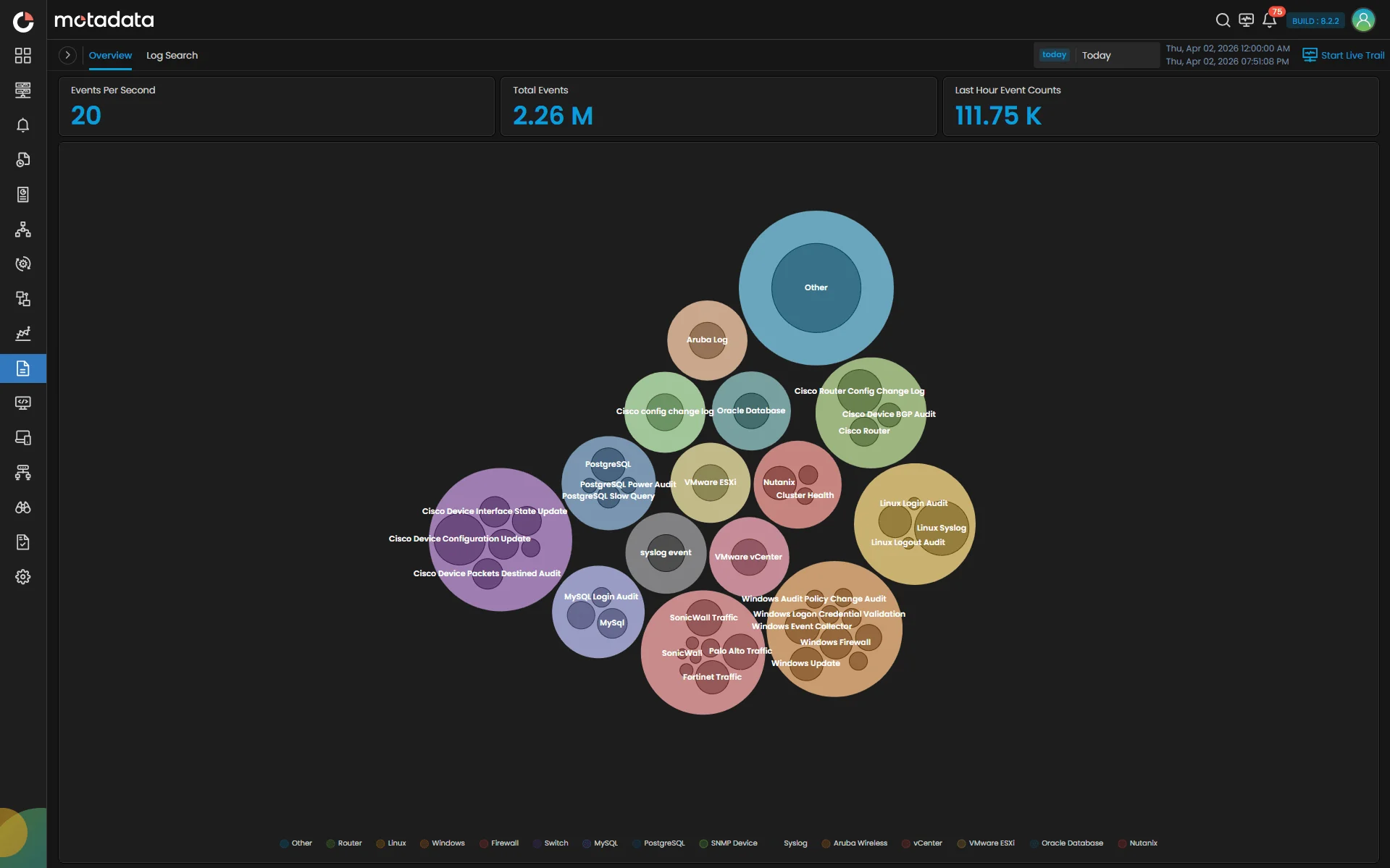
Core Features
Built for Clarity, Control, and Context
Log monitoring that transforms raw events into structured intelligence — giving you complete visibility into system behavior, security posture, and operational health.
Unified Log Intelligence
Collect and centralize logs from infrastructure, applications, databases, and devices into a single, searchable view.
Real-Time Event Visibility
Stream and analyze logs as they are generated to detect issues, anomalies, and failures without delay.
Intelligent Log Parsing
Convert unstructured logs into meaningful, structured data with dynamic parsing and adaptable pipelines.
Advanced Search & Pattern Insight
Quickly identify patterns, anomalies, and recurring issues through powerful search and analysis capabilities.
Compliance & Data Governance
Maintain control over log retention, access, and reporting with policies designed for regulated environments.
Cross-Domain Correlation
Connect logs with metrics, traces, infrastructure, and network data to understand the full context behind every incident.
Every Event. Every Insight. Complete Operational Clarity.
Capabilities
Log Monitoring Capabilities
Complete Hybrid Infrastructure Intelligence
Ingest logs from any source, any format, and any environment with the flexibility of agent-based, agent-less, and custom collection methods.
Key Highlights
Multi-Source Collection: Syslog, Windows Event, application, database, security, and custom logs.
Hybrid Flexibility: Agent-based for deep visibility; agent-less for lightweight collection.
Cross-Platform Compatibility: Collect from Linux, Windows, network devices, and SaaS apps.
Custom Pipelines: Build log pipelines for filtering, transformation, and routing before indexing.
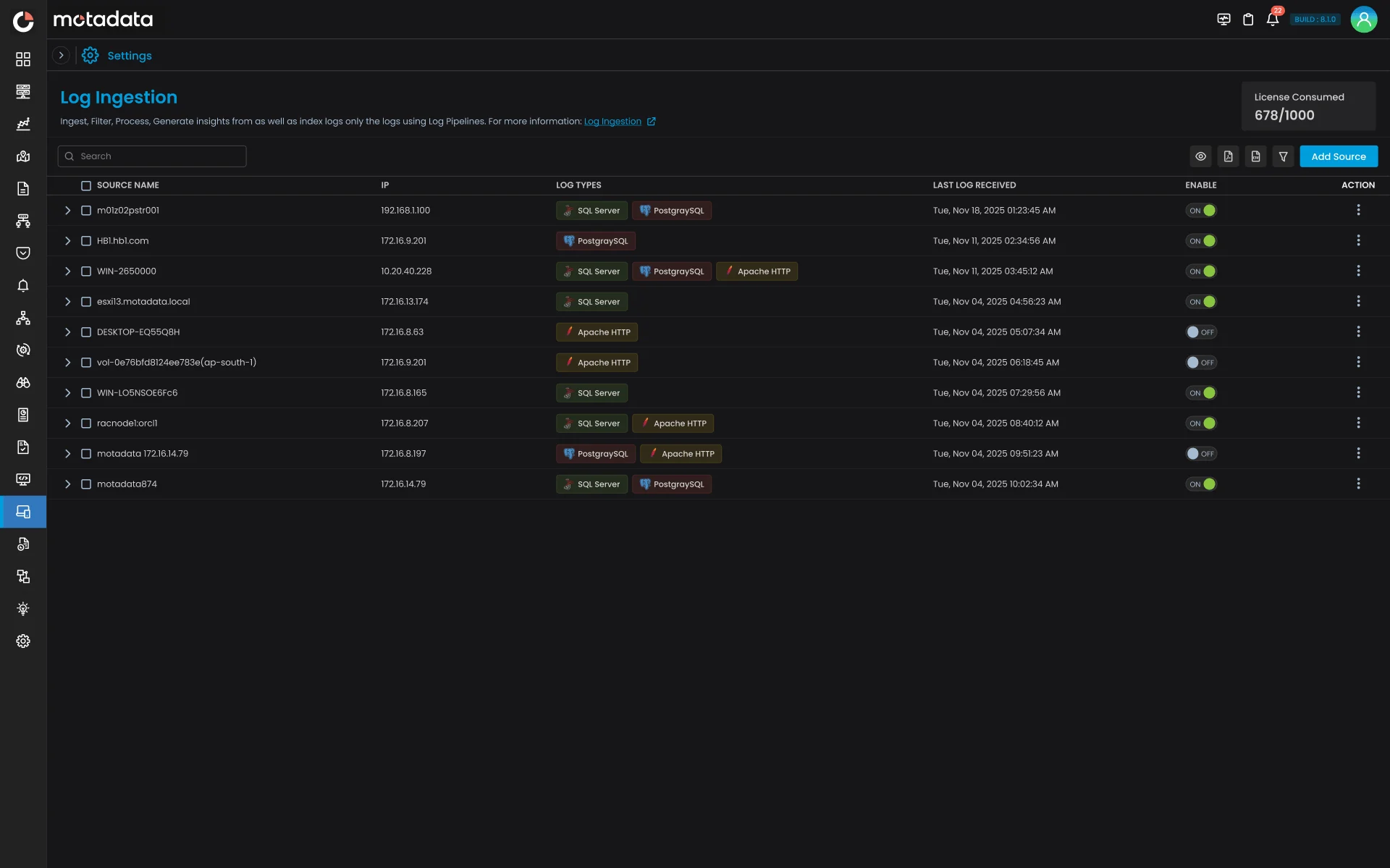
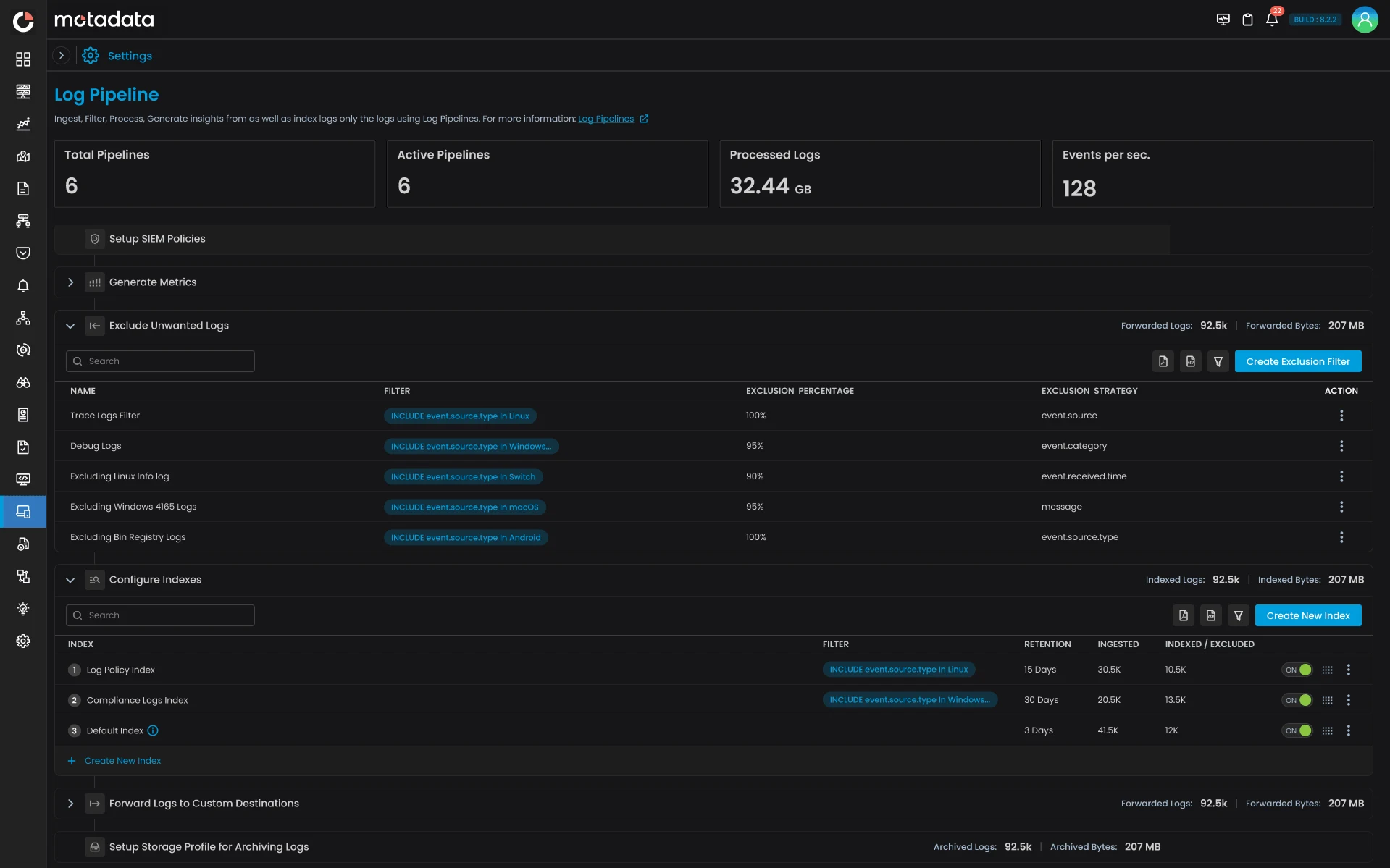
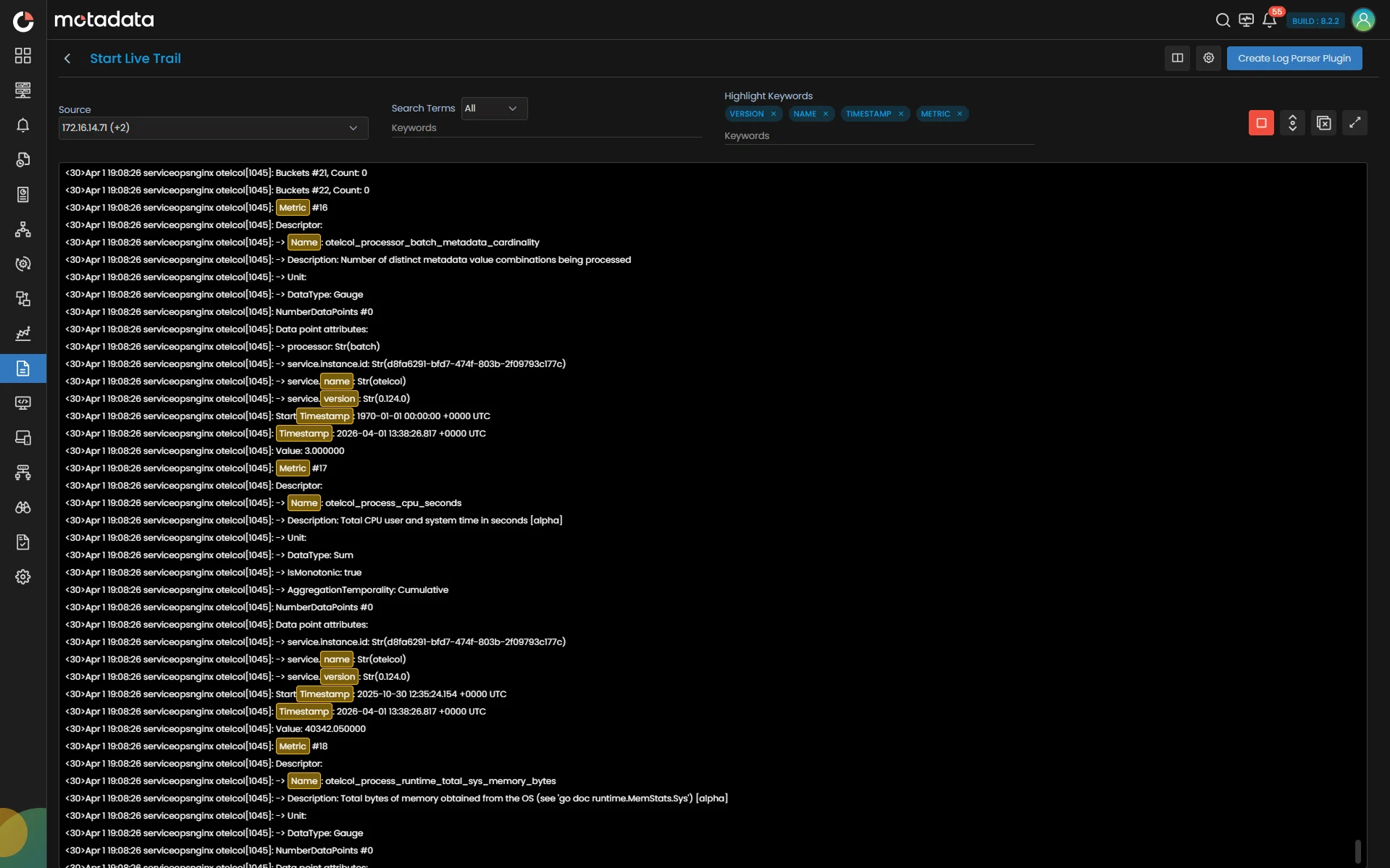
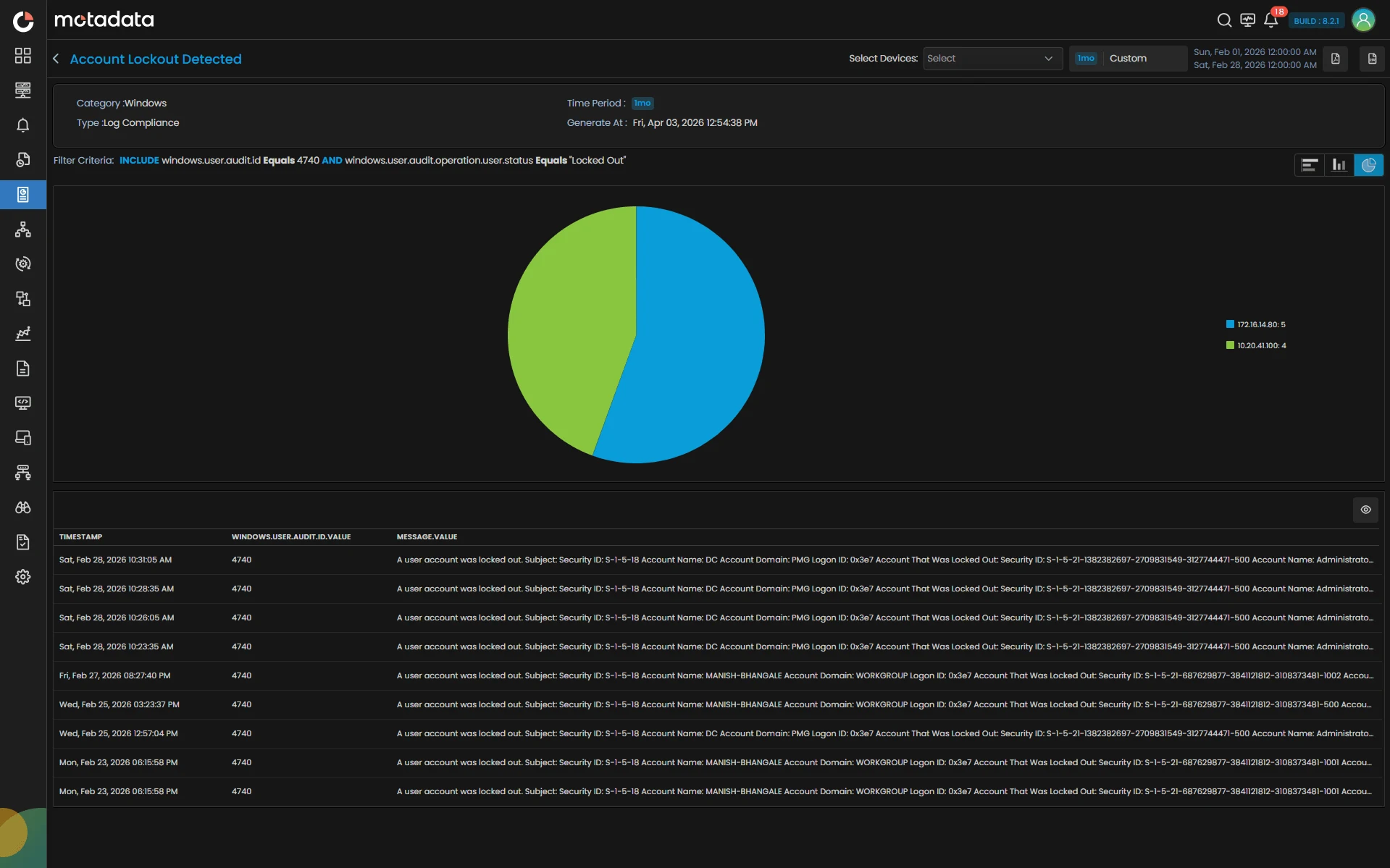
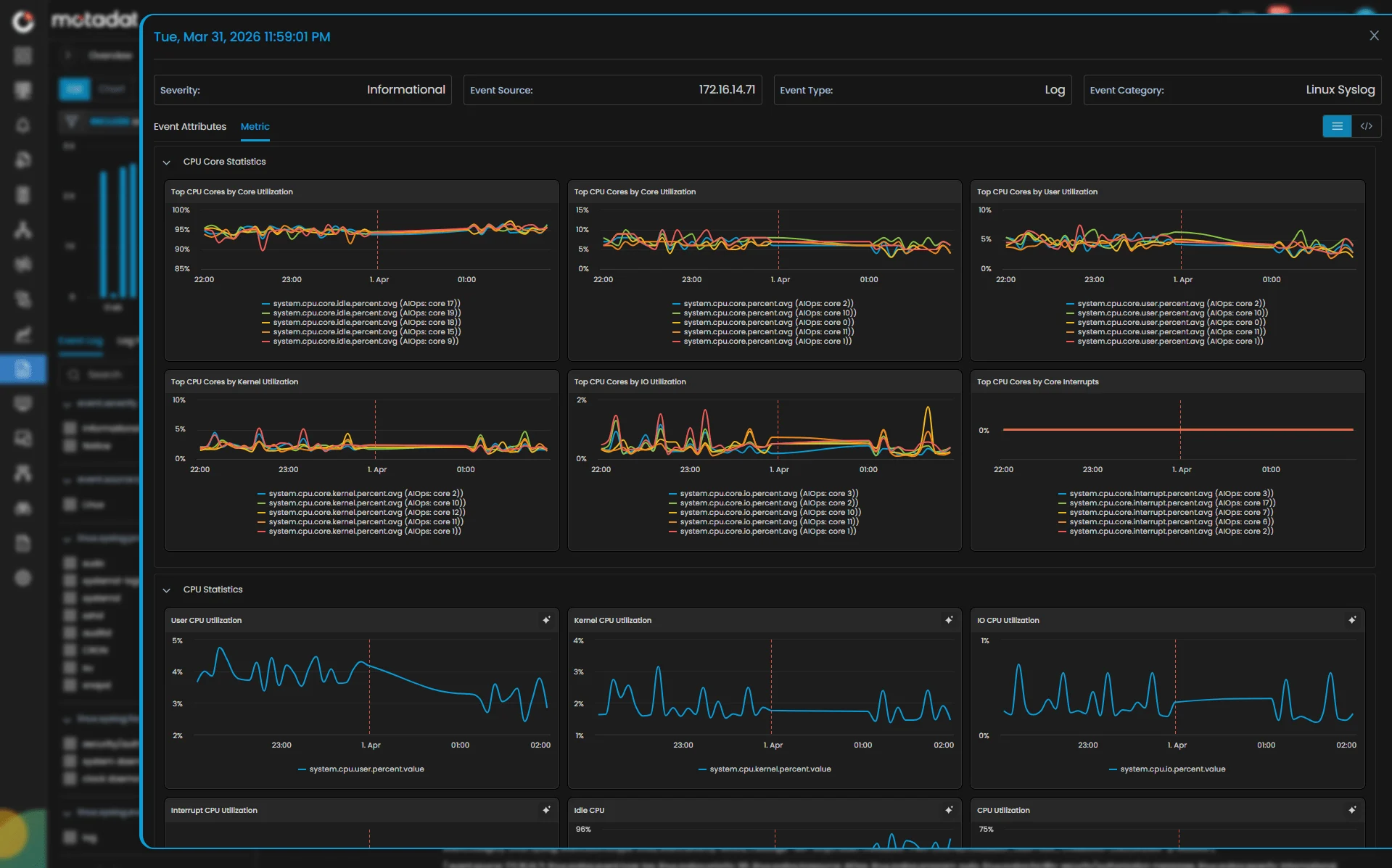
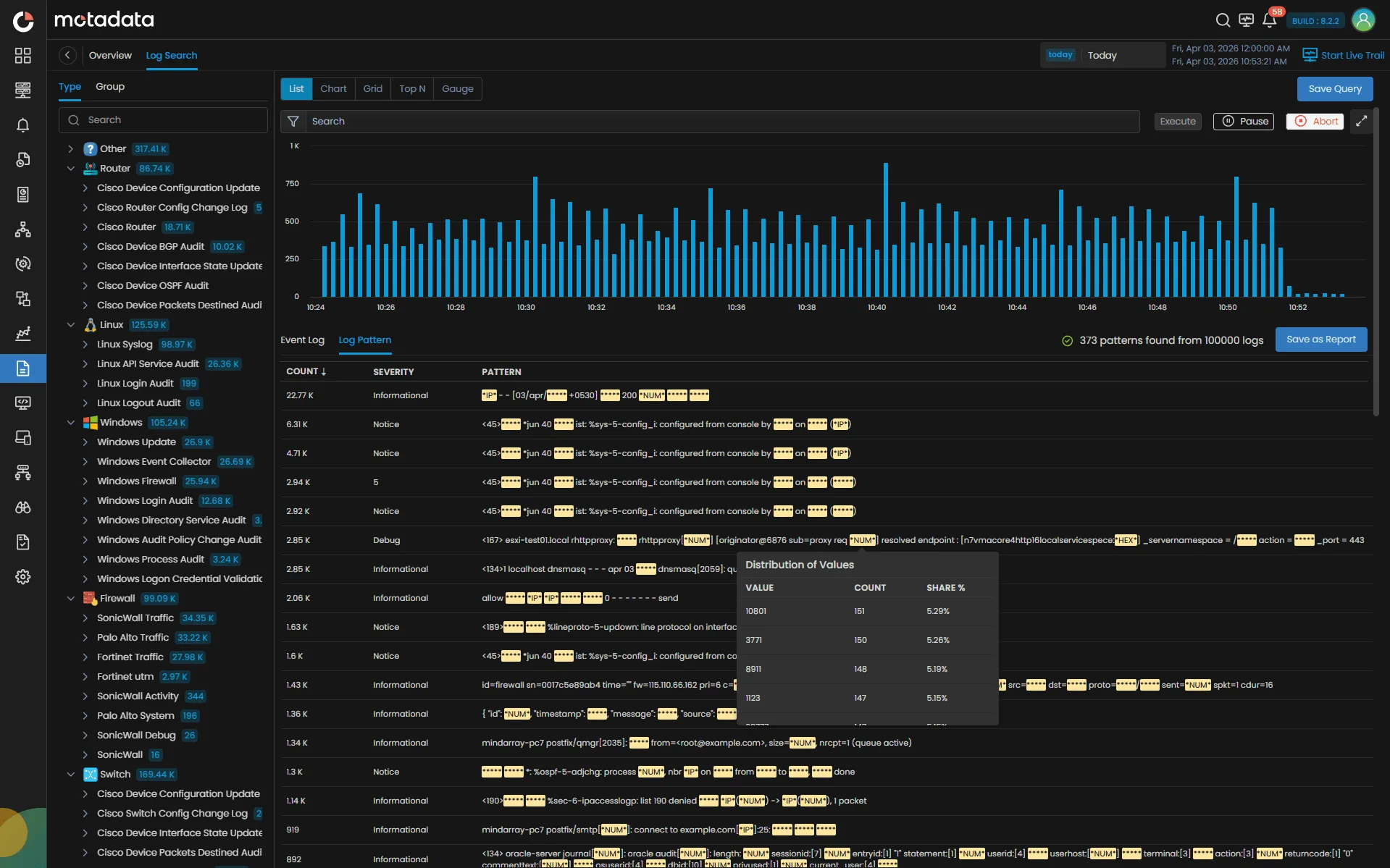
From Syslog to Windows Events — Every Source Captured.
Metrics & Differentiation
0%
reduction in troubleshooting time through centralized log visibility.
0%
faster compliance reporting with automated policy-based retention.
0%
improvement in mean time to detect (MTTD) with AI-driven anomaly identification.
Why Motadata
Why Motadata Leads
From Infrastructure to Intelligence — Motadata Powers Unified Performance.
Motastore-Powered Scale
Handles petabytes of log data with lightning-fast queries.
Dynamic Parsing Engine
Adjusts in real time, no downtime, no reconfiguration.
AI-Native Analytics
Forecast trends, detect anomalies, and correlate seamlessly.
Unified Telemetry Fabric
Logs, metrics, traces, and topology, one contextual platform.
Built-In Compliance & Governance
Security and audit readiness by design.
Enterprise Ready
Centralized Log Intelligence for a Connected Enterprise
From collection to correlation, from compliance to clarity — delivering enterprise-wide insight that turns raw events into reliable, accountable, and actionable intelligence.
Unified Log Intelligence Across a Fragmented Landscape
Large enterprises generate logs from thousands of sources, servers, applications, databases, firewalls, APIs, containers, cloud services, and custom systems. Motadata consolidates all of them into a single, normalized pipeline with real-time ingestion, parsing, and correlation. CIOs get a single source of truth; operations teams eliminate tool sprawl; MSPs manage multi-tenant environments with confidence.
Large enterprises generate logs from thousands of sources, servers, applications, databases, firewalls, APIs, containers, cloud services, and custom systems. Motadata consolidates all of them into a single, normalized pipeline with real-time ingestion, parsing, and correlation. CIOs get a single source of truth; operations teams eliminate tool sprawl; MSPs manage multi-tenant environments with confidence.
AI-Powered Analytics for Faster Detection & Diagnosis
Enterprises cannot afford long detection windows or slow investigations. Motadata applies AI-driven anomaly detection, automated pattern recognition, and intelligent log-to-metric conversion to highlight deviations before they escalate. SREs and NOC teams find root causes faster; performance degradation is caught early; and service disruption is minimized.
Enterprises cannot afford long detection windows or slow investigations. Motadata applies AI-driven anomaly detection, automated pattern recognition, and intelligent log-to-metric conversion to highlight deviations before they escalate. SREs and NOC teams find root causes faster; performance degradation is caught early; and service disruption is minimized.
Compliance-Ready Governance & Data Control
Regulated industries require logs to be collected, retained, masked, and reported with precision. Motadata provides structured retention policies, RBAC, immutable storage, dynamic parsing, and audit-ready compliance reports for standards like PCI-DSS, HIPAA, ISO, and CIS. Compliance leaders gain control, auditors gain clarity, and enterprises stay protected without operational friction.
Regulated industries require logs to be collected, retained, masked, and reported with precision. Motadata provides structured retention policies, RBAC, immutable storage, dynamic parsing, and audit-ready compliance reports for standards like PCI-DSS, HIPAA, ISO, and CIS. Compliance leaders gain control, auditors gain clarity, and enterprises stay protected without operational friction.
Vendor, Format & Protocol Agnostic Freedom
Your enterprise evolves, and your log ecosystem evolves with it. Motadata supports syslog, Windows Event logs, cloud logs, application logs, database logs, security logs, multiline logs, and custom logs without format dependencies. Custom parser plugins, dynamic UI-based parsing, and multi-protocol ingestion ensure future-proof adaptability across toolchains and technology stacks.
Your enterprise evolves, and your log ecosystem evolves with it. Motadata supports syslog, Windows Event logs, cloud logs, application logs, database logs, security logs, multiline logs, and custom logs without format dependencies. Custom parser plugins, dynamic UI-based parsing, and multi-protocol ingestion ensure future-proof adaptability across toolchains and technology stacks.
Industry Solutions
Industry-Proven Infrastructure Solutions
Tailored for Your Infrastructure Challenges
BFSI
Guarantee real-time visibility across trading, core banking, and digital payments — ensuring compliance, security, and always-on service.
Telecom
Monitor multi-gigabit networks, correlate NetFlow data with subscriber QoE, and prevent outages before they scale.
Healthcare
Safeguard critical patient systems and comply with HIPAA through secure, low-latency observability.
Government & Public Sector
Achieve transparency, security, and control with on-premise observability supporting strict data sovereignty.
Manufacturing
Integrate IT and OT data to prevent production downtime and improve predictive maintenance accuracy.
Retail & eCommerce
Deliver frictionless digital experiences, monitor transactions in real time, and optimize site reliability at global scale.
ObserveOps Platform
Continue Your ObserveOps Journey
Unify every signal. Correlate every insight. Perform without compromise.
Network Observability
Unite flows, packets, and paths into real-time clarity with intelligent alerting at scale.
Network Configuration & Compliance Management
Automated config backups, compliance checks, and drift detection across your network.
Hybrid Infrastructure Monitoring
Monitor on-premise, cloud, and hybrid environments with unified visibility, AI-driven alerts, and real-time insights.
Log Monitoring
Cut through endless logs to reveal root cause with search, correlation, and analytics.
Application Performance Monitoring
Trace every transaction from frontend to backend with distributed tracing and service mapping.
Real User Monitoring
Capture every click and page load with web vitals, experience scores, and session replay.
FAQ
Frequently Asked Questions
Find answers to common questions about Infrastructure Monitoring and our capabilities.
Log monitoring is the continuous process of collecting, parsing, analyzing, and correlating log data generated by servers, applications, databases, network devices, and cloud services. For enterprises, it is critical because logs contain the earliest signals of performance degradation, security threats, and compliance violations. Without centralized log monitoring, IT teams are left reacting to incidents after they occur rather than detecting and resolving them proactively.