OpenText Pricing in 2026: Plans, Costs and What You'll Pay
OpenText brings service management, monitoring, AIOps, discovery, and automation together, but finding out what it costs is not as easy.
There is no public price for the main platform. You need to contact OpenText for a quote, while pricing for its ITSM software as a service is listed separately. That means you have to look at the different products to get a realistic idea of the total cost.
In this guide, we will go through the available OpenText pricing, look at the different products and options, and help you work out what you could pay in 2026.
So, how much could OpenText cost you in 2026?
Let’s get started.
OpenText Pricing at a Glance
If you are short on time, here is the structure before the detail.
Product | What it covers | Price |
OpenText Service Management, Express | ITSM service desk | From $79 per agent a month |
OpenText Service Management, Premium | ITSM plus project and asset management | From $99 per agent a month |
OpenText Asset Management X | IT asset management | From $79 per agent a month |
OpenText Universal Discovery | Discovery and CMDB for assets | From $1.25 per server a month |
Observability products | Application, infrastructure, and network monitoring | Quote only |
AI Operations Management | AIOps and event correlation | Quote only |
DevOps products | Testing, performance, delivery | Quote only |
Note: the ITSM rates are OpenText's own published software as a service prices, quoted for the first year on a 36 month contract billed annually. The observability, AIOps, and DevOps products carry no published price.
Only part of the platform has a price you can look up. The service desk and asset management rates are on the website. For monitoring, AIOps, and the DevOps tools, you have to ask for a quote.
You only pay for your agents. The employees who raise tickets and the managers who approve them do not need a license, so they cost you nothing.
Universal Discovery works on servers instead. At $1.25 per server a month, this part of your bill goes up when you add servers, not when you add people.
What Is OpenText Observability and Service Management?
OpenText is a large software company, best known for its content and document products. Observability and Service Management is a separate part of the business that deals with IT operations.
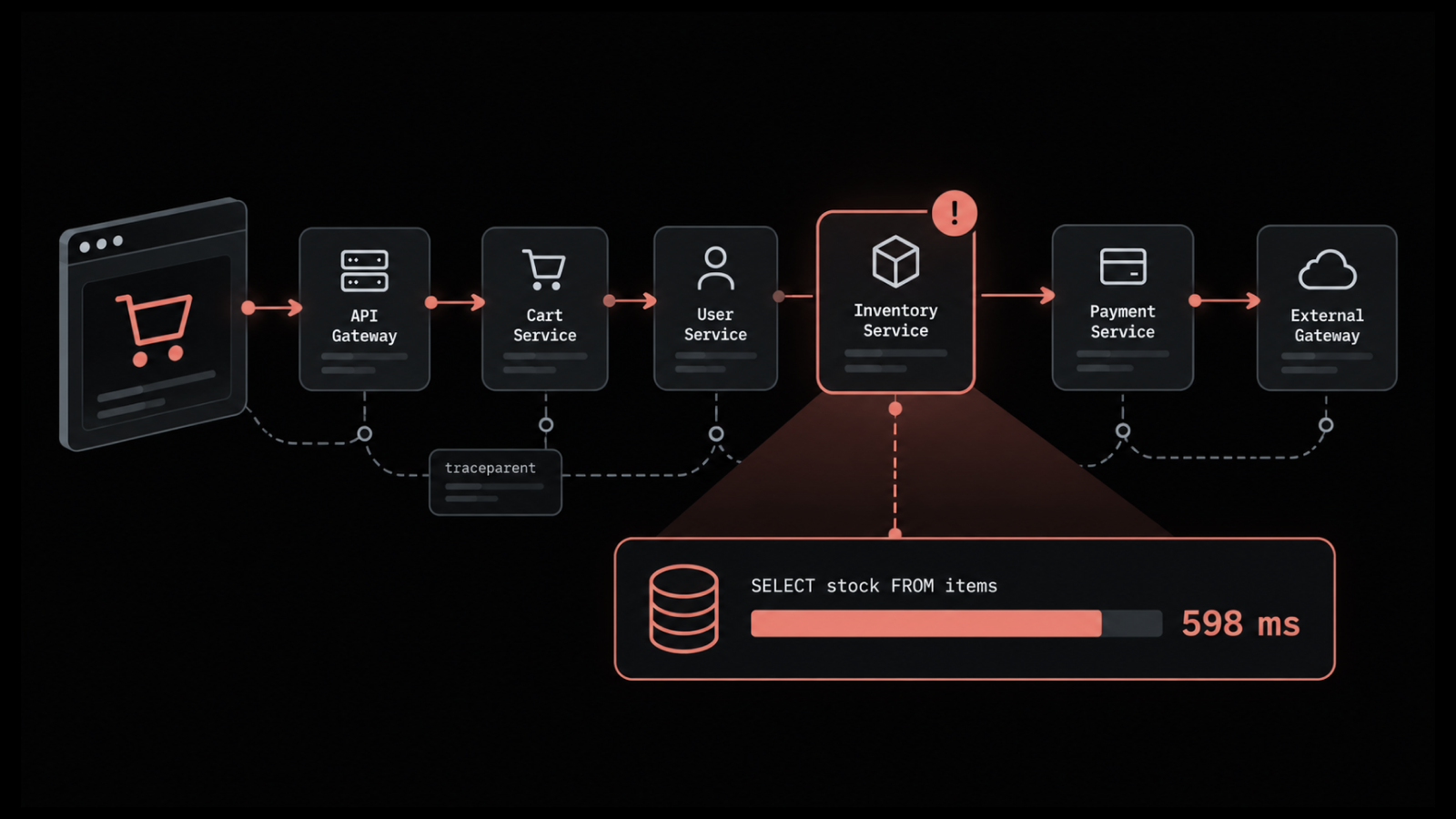
It is built on the OpenText Operations Platform. That puts discovery, monitoring, AIOps, automation, and the service desk in one place, with AI working across all of them.
There are five parts to it. Service Management runs your service desk. Observability watches your applications, infrastructure, and networks. AI Operations Management spots problems early. Automation Center fixes known issues on its own. Universal Discovery and CMDB keeps track of what you have.
Verizon, Achmea, Istanbul Grand Airport, Vancity, and NOS all use it. OpenText says Verizon cut its repair times from hours to seconds, and that Turk Telecom had 49 percent fewer service outages.
The thing to keep in mind is how you buy it. Each part is licensed on its own, and they are not all charged the same way, so a full setup means paying for several products instead of one.
How OpenText Pricing Works
OpenText pricing comes down to three things: which products you buy, what each one is charged on, and where you run it.
Each product is charged in its own way. You pay per agent for the service desk, per server for discovery, and a quoted price for the monitoring tools.
The length of your contract matters too. The published ITSM prices are for the first year of a three year deal, so a shorter contract will probably cost you more per agent.
Where you run it also changes the bill. You can use OpenText as a cloud service or install it on your own servers. If you pay once to own the software, you then pay a support fee every year instead of a subscription.
Named and Concurrent Licenses
OpenText sells you a number of licenses and lets you decide how each one is used, so it helps to know the difference.
A named license belongs to one person. It suits administrators, service desk agents, and integration engineers, since those people are in the system every day.
A concurrent license is shared by a group and counts how many people are logged in at the same time. It suits staff who only use the system now and then, and teams working in different time zones.
You can change the split whenever you like. OpenText says you can move licenses between named and concurrent as often as you want, at no extra charge.
OpenText ITSM Pricing
This is the part of the platform with published rates. OpenText Service Management, still widely known by its old name SMAX, comes in two editions.
Edition | Price | What you get |
Express | $79 per agent a month | Service desk, staff portal, reporting, mobile app, no-code workflows |
Premium | $99 per agent a month | Everything in Express plus project, demand, and hardware asset management |
Note: these are first year prices on a three year contract, paid yearly. Check the current figures with OpenText, because published prices change.
Express gives you the service desk. That means incidents, problems, changes, and requests, a portal where staff can help themselves, a mobile app, and a tool for building workflows without writing code.
Premium adds the business side. You get project and demand management, hardware asset management, and apps for contracts, vendors, buying, and budgets, plus 50 software asset licenses.
Check whether you need that extra $20. If you already pay for a project tool and an asset tool, staying on Express and keeping them may work out cheaper than moving your whole team to Premium.
OpenText Asset Management X Pricing
If you only need asset management rather than a service desk, Asset Management X is the cheaper route. It costs from $79 per agent a month, the same as SMAX Express.
It runs on the same platform as SMAX, so you also get some service management features alongside the asset processes. It includes 50 software asset management licenses, with full capability available when you add Universal Discovery.
OpenText Universal Discovery Pricing
Universal Discovery and CMDB is priced per server rather than per agent, starting at $1.25 per server a month.
It is worth working this out early. Five hundred servers cost about $7,500 a year and 2,000 servers cost about $30,000, so this cost tracks your servers, not your staff.
Discovery is also the base for the rest. OpenText argues that AI agents without accurate configuration data are guessing, so discovery sits underneath the AIOps and automation products.
OpenText Observability and DevOps Pricing
Here is where the published figures stop. None of the observability, AIOps, automation, or DevOps products carry a public price.
The observability group includes Core Application Observability, Core Infrastructure Observability, Core Cloud Network Observability, Network Node Manager, and Network Operations Management. All of them are quoted.
AI Operations Management is the AIOps product, and Automation Center fixes known issues automatically. Both are quoted the same way, as part of a wider conversation about your setup.
On the DevOps side, Core Performance Engineering is licensed on virtual user hours, seats, and the regions you test from, according to reseller listings. The other DevOps products follow similar usage based models.
So work out your service desk cost first. The published agent rates give you a real number to start from, and you can then negotiate the rest around it.
What OpenText Costs at Different Sizes
The per agent rate is only part of the total. Your agent count, your server count, and any observability products you add all raise the final figure. The estimates below use the published ITSM rates, so your own numbers will vary.
Setup | Assumption | Estimated yearly cost |
Small | 25 agents on Express, 200 servers discovered | ~$26,700 |
Growing | 100 agents on Express, 500 servers discovered | ~$102,300 |
Large | 250 agents on Premium, 2,000 servers discovered | ~$267,000 |
Note: these figures cover service management and discovery only. Observability, AIOps, automation, DevOps products, and implementation services are all billed on top.
The small-team figure covers 25 agents at $79 each plus 200 servers on discovery. That comes to about $26,700 a year before anything on the observability side.
The growing-team figure covers 100 agents and 500 servers, landing near $102,300 a year. Moving those same 100 agents to Premium would add roughly $24,000.
The large-team figure covers 250 agents on Premium with 2,000 servers, at around $267,000 a year. At this size most organizations are also licensing observability and AIOps, which sit outside these numbers entirely.
What Increases Your OpenText Costs
Five things raise an OpenText bill above the published rates.
Agent count: Service management and asset management are both billed per agent, so every person working tickets adds to the yearly total.
Moving from Express to Premium: The step up costs $20 per agent a month. On a 100 agent setup that is about $24,000 a year.
Server count on discovery: Universal Discovery is charged per server, so a growing infrastructure raises this line even if your team stays the same size.
Adding observability and AIOps: None of these products are published, and they are separate licenses on top of your service management spend rather than part of it.
Yearly support fees: If you pay once to own the software and run it yourself, third party data puts the yearly support fee at roughly 18 to 22 percent of what you paid. So a one time purchase still costs you every year.
In the end, your OpenText bill comes down to how many agents you license, how many servers you discover, and how much of the observability side you add. It works best for teams that work out all three before asking for a quote.
OpenText User Reviews: What Teams Actually Say
We went through OpenText reviews on G2, Gartner Peer Insights, PeerSpot, and other review sites to see what users actually think about the platform. OpenText Service Management holds a rating of about 4.2 out of 5 on G2, with the breadth of the platform as the main praise and setup effort as the main complaint.
Users often praise how configurable it is. Reviewers say they shaped the platform around IT, HR, and finance processes without writing code, and that the ITIL templates gave them a sensible starting point.
Deployment choice gets praise too. Teams like being able to run it on their own servers or in the cloud, which matters for organizations with rules about where data can sit.
The main complaint is time to value. Reviewers report an average implementation of about eight months and a return on investment closer to 19 months, so this is not a platform that pays back quickly.
Reporting and search come up as the other theme. Some reviewers find the reporting better suited to dashboards than detailed analysis, and say search results are not always relevant.
These are the patterns we found in user reviews. Your own experience can vary based on how many products you license and how much configuration your team takes on.
Top 5 OpenText Alternatives to Consider
The table below lays out five alternatives side by side, so you can match one to your need.
Tool | Best described as | How pricing works | Choose it if... |
Motadata | IT operations and service management platform | One quote based on your requirements | You want monitoring and service management together, with AI included |
Enterprise service management platform | Custom per-user pricing | You need deep workflow customization and have an enterprise budget | |
BMC Helix | Service management and AIOps platform | Custom pricing | You want an enterprise alternative with a strong AIOps offering |
Full-stack observability platform | Per host and product | You want a cloud-native platform with published pricing and broad integrations | |
ManageEngine ServiceDesk Plus | IT service management platform | Technician-based pricing | You want a lower-cost ITSM option with publicly available pricing |
Motadata brings network monitoring, infrastructure monitoring, flow analysis, and device health together with logs, metrics, and traces.
This gives teams a single place to monitor their IT environment and manage service operations.
It is also designed to be easier to deploy. You can run Motadata in the cloud or on your own infrastructure, with a guided setup and modern interface that helps teams get started without a lengthy implementation process.
AI capabilities are included with the platform. Motadata can detect unusual patterns and correlate related alerts automatically, helping teams understand issues faster without needing to train a separate AI model.
Our guide to ServiceOps explains how joining ITSM and IT operations changes the way a service desk runs.
Is OpenText the Right Choice?
OpenText is a strong fit for large organizations that want service management, observability, and discovery from one vendor and can invest in a proper rollout.
OpenText Works Best For
OpenText is a strong fit for:
Large enterprises that want ITSM, AIOps, and observability under one vendor
Organizations that need cloud, private cloud, or on premises deployment
Teams that want published rates on the service management side at least
Companies extending service management into HR, facilities, and finance
Buyers who want discovery and CMDB feeding their AI and automation
Teams with shift patterns who benefit from concurrent licensing
Organizations with the time for an eight month average implementation
These are the teams OpenText fits best. Its breadth across service management and IT operations works well for companies large enough to use most of the platform.
OpenText May Not Be the Right Fit For
The limits of OpenText are mostly about cost clarity and setup effort, not what it can do. Because most products are quoted and rollouts run for months, it can fall short for some teams.
OpenText may not be enough for:
Teams that want a published price for monitoring, not only for ITSM
Buyers who need to be running in weeks rather than months
Small IT teams that would use a fraction of the platform
Organizations that want one product rather than several licensed separately
Teams that want a faster return than the reported 19 month average
Buyers who want AI and correlation included rather than licensed separately
Companies that want monitoring and service management on a single quote
So it comes down to what you need. If you run a large organization and want IT operations from one vendor, OpenText is a capable choice. If you want one clear price and a faster setup, take a look at Motadata.
Pick the Best Alternative to OpenText for Your IT Operations
OpenText makes some of its pricing easy to find, but getting a complete picture of the total cost is more difficult.
SMAX ITSM starts at $79 per agent per month, with Premium at $99. Asset management starts at $79 per agent, while discovery costs $1.25 per server per month. However, pricing for observability, AIOps, automation, and DevOps products requires a conversation with sales.
For large organizations that want service management and IT operations from one vendor, OpenText covers a broad range of capabilities. Just keep in mind that the published prices only cover part of the overall cost.
Explore Motadata ObserveOps to bring infrastructure monitoring, AIOps, and IT operations into one platform.
Author
Poonam Lalani
Content Strategist
Poonam Lalani is a B2B content strategist and writer with a background in computer engineering and experience across enterprise technology domains, including AI, cloud, DevOps, data engineering, and IT operations. She specializes in creating research-driven content that simplifies complex ideas and supports product education, thought leadership, and business growth.