Linux DHCP
Seamlessly integrate Linux DHCP with Motadata AIOps to gain real-time IP management insights, proactive monitoring, and efficient control over DHCP server performance.
Overview
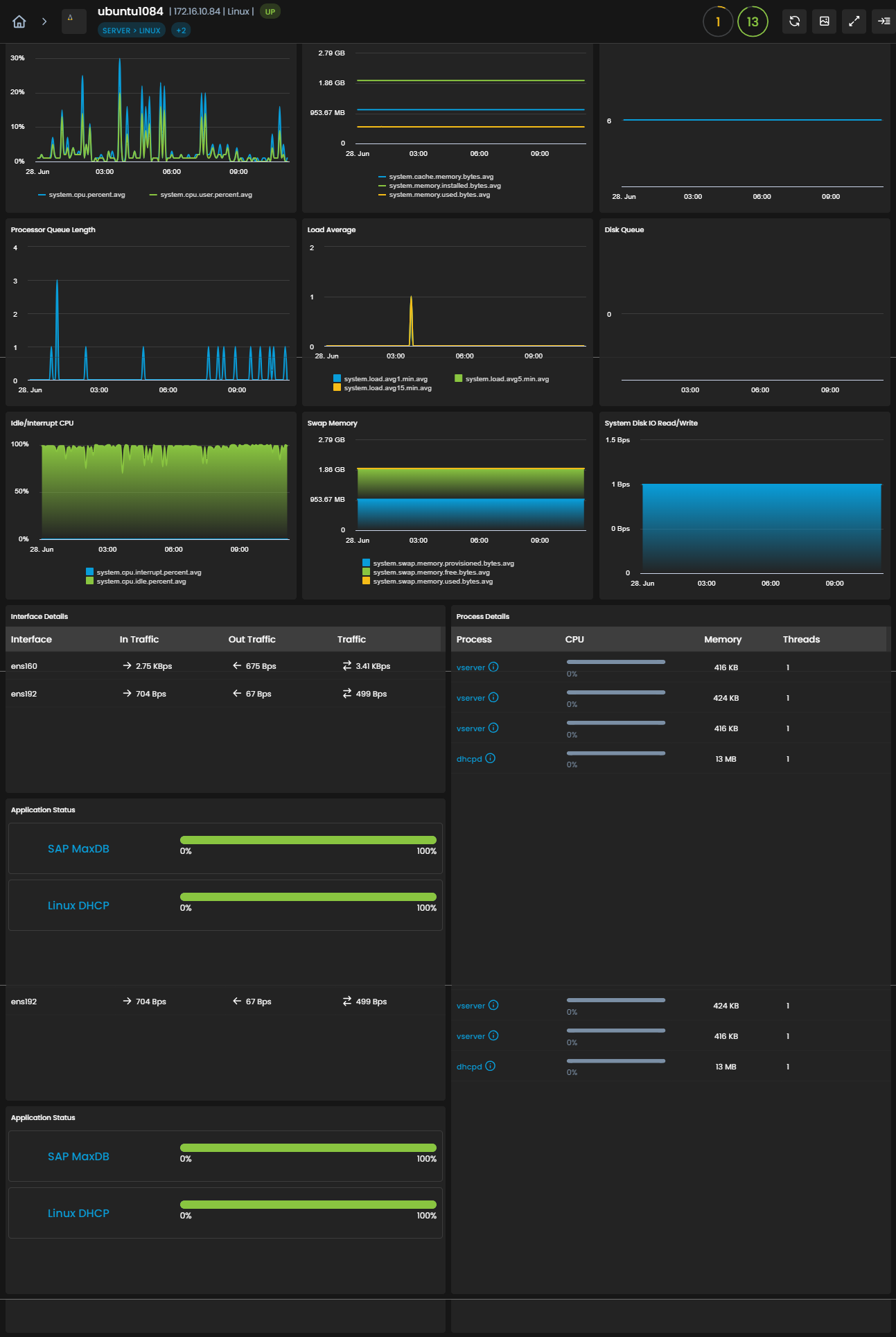
Linux DHCP, the dynamic host configuration protocol service on Linux-based systems, seamlessly integrates with Motadata AIOps to provide comprehensive monitoring capabilities. With this integration, organizations gain real-time visibility into the performance and health of their DHCP servers. Monitor critical DHCP metrics such as lease activity, IP address allocation, and server response times to ensure efficient and reliable IP address management.
Prerequisites for Linux DHCP Integration with Motadata AIOps
Obtain the configuration file name and lease file name of the Linux DHCP server.
The credentials used to discover the Linux DHCP server should either have root access or the necessary privileges to access the configuration file name and lease file name on the Linux DHCP Server.
Ensure that the Linux DHCP service is active and running on the server.
Confirm that the Linux DHCP process and service are listed in the process and service monitor settings of Motadata AIOps. While these may be listed by default, verify that the names of the service and process match the specific Linux DHCP version that you intend to monitor.
By fulfilling these prerequisites, you can integrate Linux DHCP with Motadata AIOps and ensure effective monitoring and management of your DHCP server.
List of Supported KPIs
Name | Description | Type |
|---|---|---|
dhcp.ip.addresses | The total number of DHCP IP addresses | Count |
dhcp.active.ip.addresses | The number of currently active DHCP IP addresses | Count |
dhcp.abandoned.ip.addresses | The number of abandoned DHCP IP addresses | Count |
dhcp.transient.ip.addresses | The number of transient DHCP IP addresses | Count |
dhcp.available.ip.addresses | The number of available DHCP IP addresses | Count |
dhcp.scopes | The total number of DHCP scopes | Count |
dhcp.leased.ip.addresses | The number of leased DHCP IP addresses | Count |
dhcp.scope | The DHCP scope name | String |
dhcp.scope.subnet.mask | The subnet mask associated with the DHCP scope | String |
dhcp.scope.name | The name of the DHCP scope | String |
dhcp.scope.free.percent | The percentage of free IP addresses in the DHCP scope | Count |
dhcp.scope.utilization.percent | The percentage of utilized IP addresses in the scope | Count |
dhcp.scope.ip.addresses | The total number of IP addresses in the DHCP scope | Count |
dhcp.scope.active.ip.addresses | The number of currently active IP addresses in the scope | Count |
dhcp.scope.available.ip.addresses | The number of available IP addresses in the scope | Count |
dhcp.lease | The DHCP lease information | String |
dhcp.lease.start.time | The start time of the DHCP lease | String |
dhcp.lease.started.time | The time the DHCP lease started | String |
dhcp.lease.started.time.sec | The uptime of the DHCP lease in seconds | Count |
dhcp.lease.end.time | The end time of the DHCP lease | String |
dhcp.lease.binding.state | The binding state of the DHCP lease | String |
dhcp.lease.hardware.ethernet | The hardware Ethernet address associated with the lease | String |
dhcp.lease.client.hostname | The hostname of the DHCP lease client | String |
dhcp.lease.rewind.binding.state | The rewind binding state of the DHCP lease | String |
dhcp.lease.next.binding.state | The next binding state of the DHCP lease | String |
dhcp.pool.utilization.percent | The percentage of utilized IP addresses in the pool | Count |
dhcp.pool.free.percent | The percentage of free IP addresses in the pool | Count |
dhcp.pool | The DHCP pool identifier | Count |
dhcp.pool.network | The network associated with the DHCP pool | Count |
dhcp.pool.ip.addresses | The total number of IP addresses in the DHCP pool | Count |
dhcp.pool.active.ip.addresses | The number of currently active IP addresses in the pool | Count |
dhcp.pool.abandoned.ip.addresses | The number of abandoned IP addresses in the pool | Count |
dhcp.pool.transient.ip.addresses | The number of transient IP addresses in the pool | Count |
Explore More Integrations
Browse our comprehensive integrations catalog to discover all supported platforms and services.