What Is IT Asset Management (ITAM)? A Complete Guide
Every organization runs on IT assets — laptops, servers, software licenses, cloud subscriptions, and networking gear. But as these assets multiply across teams and locations, keeping track of what you own, where it lives, and how it's being used becomes a real challenge. That's exactly the problem IT Asset Management (ITAM) solves.
Whether you're an IT manager trying to get a handle on sprawling hardware inventories or a finance leader tired of surprise software renewal bills, understanding ITAM is the first step toward taking control.
IT Asset Management (ITAM) is a set of practices for tracking, managing, and optimizing an organization's IT assets — including hardware, software, and cloud resources — throughout their entire lifecycle, from procurement to disposal.
What Is IT Asset Management?
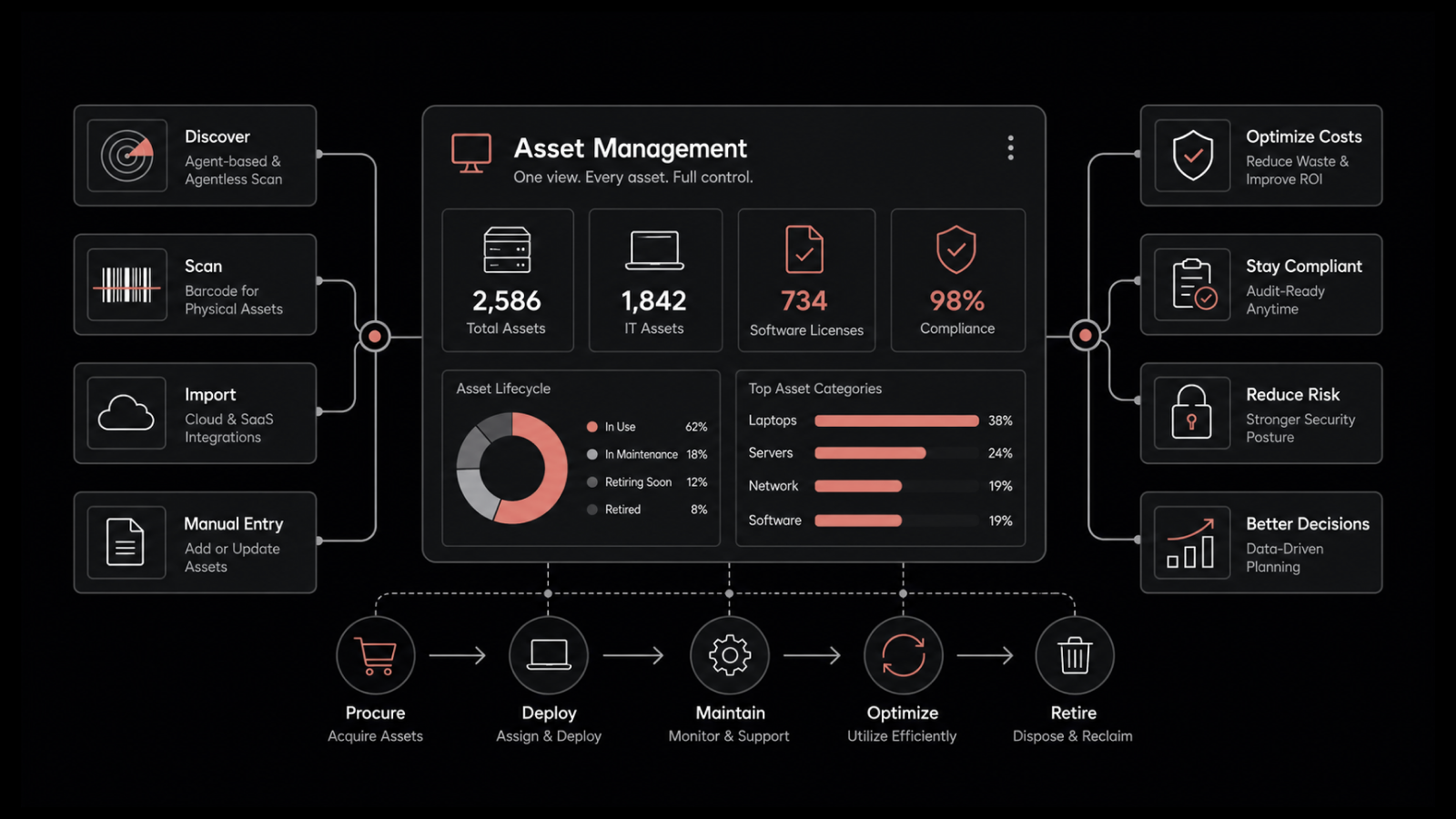
IT Asset Management (ITAM) is a governance-driven practice that covers the identification, tracking, management, and disposal of IT assets across their full lifecycle. It connects IT, finance, and procurement teams around a single source of truth for every asset in the organization.
ITAM isn't just about knowing what you have. It's about making informed decisions — when to buy, when to maintain, when to retire, and when to reallocate. Organizations with mature ITAM practices typically see 15–30% reductions in unnecessary IT spending, according to industry research.
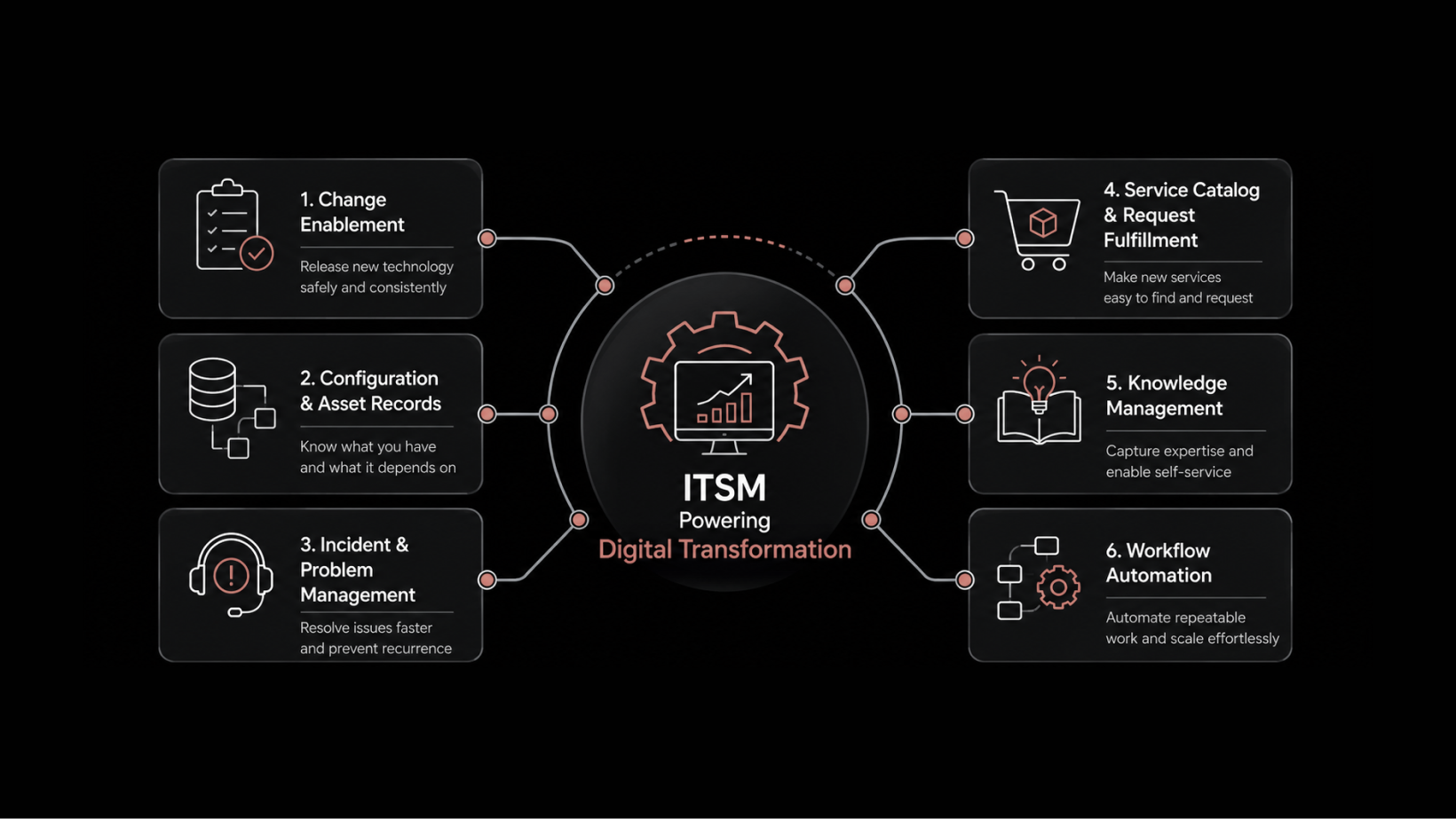
ITAM has a close relationship with IT Service Management (ITSM). While ITSM focuses on delivering and supporting IT services, ITAM focuses on the assets that make those services possible. Together, they form a complete picture of IT operations.
The IT Asset Management Process
The ITAM process is a structured set of activities that keeps assets visible, costs controlled, and compliance maintained from day one through end-of-life.
Inventory Assets
This is where it all starts. You can't manage what you can't see. Asset inventory means identifying, recording, and maintaining a centralized list of all IT assets — hardware, software, and cloud resources. A complete inventory captures each asset's location, owner, configuration, and usage status.
Calculate Lifecycle Costs
Understanding the total cost of ownership (TCO) for each asset helps you budget more accurately. TCO includes procurement, deployment, licensing, maintenance, upgrades, support, and disposal costs. This analysis drives better decisions when you're choosing between renewing, replacing, or retiring an asset.
Track Assets
Asset tracking gives you continuous visibility into asset movement, usage, and status. Real-time tracking helps you spot underused assets, prevent loss, improve security posture, and stay audit-ready at all times.
Maintain Assets
Proactive maintenance — including routine updates, patching, repairs, and performance monitoring — keeps assets running at peak performance. This reduces downtime, extends asset lifespan, and minimizes operational disruptions.
Plan Financially
Financial planning ties IT asset investments to business goals and budgets. It covers forecasting asset requirements, managing depreciation, planning renewals, and optimizing IT spend. When you align financial data with asset usage, every dollar works harder.
Categories of IT Asset Management
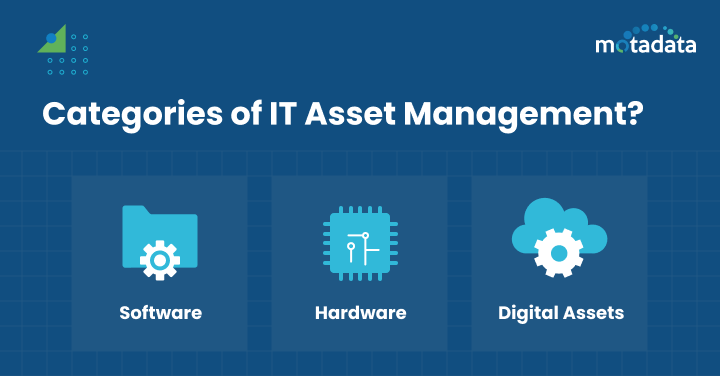
ITAM covers different asset types, each with its own management needs.
Software Asset Management (SAM)
Software Asset Management handles everything related to software assets — licensing, compliance, usage tracking, and contract management. SAM ensures you're not paying for licenses you don't use and that you're not running software without proper licenses. Given that software audits can result in penalties of hundreds of thousands of dollars, SAM is non-negotiable.
Hardware Asset Management
Hardware Asset Management covers physical IT assets: servers, desktops, laptops, mobile devices, and networking equipment. Tracking hardware means knowing where each device is, who's using it, its maintenance history, and its lifecycle stage. Accurate hardware records drive smarter acquisition, maintenance, and disposal decisions.
Digital Asset Management
Digital assets — data stores, databases, cloud resources, and information systems — require their own management discipline. This includes data governance, security controls, metadata management, and inventory control. As organizations move more workloads to the cloud, digital asset management becomes increasingly important.
IT Asset Management Framework
An ITAM framework gives you a structured, repeatable approach to managing assets. Think of it as the blueprint that connects people, processes, technology, and governance into a single system.
1. Governance and Policy Management
Governance defines who owns each asset, how assets are managed, and what rules apply. It includes asset ownership policies, compliance requirements, and clearly defined roles across IT, finance, and procurement teams. Strong governance prevents costly gaps in accountability.
2. Asset Discovery and Inventory Control
Automated discovery tools scan your environment to find every hardware, software, and cloud asset — including shadow IT that teams may have spun up without IT's knowledge. A centralized, continuously updated inventory is the foundation for everything else in ITAM.
3. Lifecycle Management
This pillar covers each asset from planning through procurement, deployment, maintenance, and eventual retirement. A structured lifecycle approach helps you extend asset life, reduce downtime, and avoid unnecessary purchases.
4. Financial Management and Cost Optimization
Financial visibility into IT assets includes TCO analysis, budgeting, depreciation tracking, and chargeback models. When you align financial data with actual asset usage, you can cut waste and improve ROI.
5. Software License Management
Software represents a major cost and compliance risk. This pillar tracks license entitlements against actual usage, prevents over- and under-licensing, and keeps you audit-ready. It also covers SaaS subscription management and renewal planning.
6. Risk, Security, and Compliance Management
ITAM strengthens your security posture by identifying end-of-life assets, supporting patch management, ensuring secure disposal, and maintaining audit trails. You can't protect what you can't see — and ITAM makes everything visible.
7. Automation and Integration
Modern ITAM depends on automation for discovery, updates, reporting, and compliance checks. Integration with ITSM, CMDB, procurement, and finance systems keeps data consistent and reduces manual effort.
8. Performance Measurement and Continuous Improvement
Define ITAM KPIs, run regular audits, gather stakeholder feedback, and continuously refine your processes. Measuring performance ensures your ITAM program delivers ongoing value.
Key Components of IT Asset Management
Asset Discovery
Asset discovery is the process of scanning and documenting every IT resource across your organization. When all assets are located and cataloged, you can make better decisions about purchases, reallocation, and decommissioning.
Asset Inventory
Asset inventory goes beyond discovery — it's the ongoing maintenance of a complete, accurate record of every IT asset, including its location, configuration, usage, and maintenance history.
Asset Lifecycle Management
This component manages each asset through its full journey: acquisition, deployment, operation, maintenance, and retirement. It's especially important for high-value hardware that depreciates over time.
License Management
License management tracks software licenses to ensure compliance with vendor agreements and optimize license utilization. Poor license management leads to audit penalties, wasted spend, and compliance risk.
Compliance and Audit Management
This component ensures you meet regulatory requirements, follow governance frameworks, and stay ready for software audits at all times. Proactive compliance management prevents fines and protects your organization's reputation.
Stages of the IT Asset Lifecycle
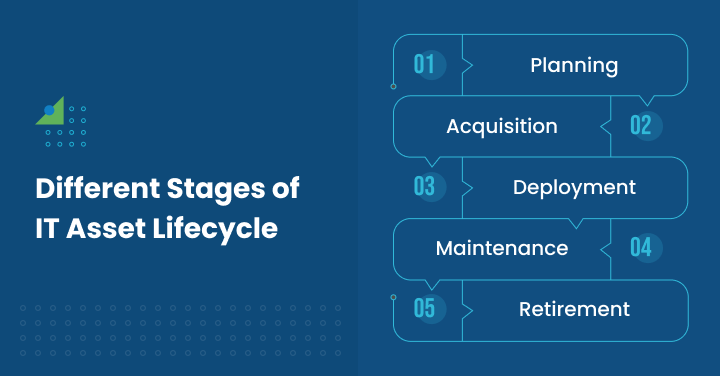
Every IT asset goes through a predictable lifecycle. Managing each stage well is what separates organizations that get full value from their IT investments from those that don't.
Planning
Before you buy anything, define what the organization needs, how the asset will be used, and how it'll be acquired. This includes evaluating options, running cost-benefit analysis, and aligning procurement with business goals.
Acquisition
The acquisition stage covers procurement — selecting vendors, negotiating contracts, and purchasing the right assets at the right price. Strategic acquisition balances cost with quality and long-term compatibility.
Deployment
Deployment integrates new assets into your existing environment. Proper deployment means configuring systems correctly, training users, and verifying that the asset works as expected within your infrastructure.
Maintenance
Regular updates, patches, repairs, and performance checks keep assets healthy and extend their useful life. Proactive maintenance prevents unexpected failures and keeps your environment secure.
Retirement
When an asset reaches end-of-life, it needs to be properly decommissioned. This includes secure data wiping, compliance documentation, and environmentally responsible disposal or recycling.
Benefits of IT Asset Management
Improved Utilization and Reduced Risk
ITAM makes every asset visible. When teams know what they own and how it's being used, they can reuse existing resources instead of buying more. At the same time, outdated systems and expired licenses are easier to spot and address before they become security incidents.
Scalability and Flexibility
As your organization grows, ITAM helps you scale IT resources without chaos. Teams can plan ahead, understand capacity limits, and add assets without losing control over what's already deployed.
Better Cross-Team Collaboration
When IT asset information lives in a single source of truth, IT, finance, procurement, and compliance teams all work from the same data. This shared visibility speeds up decision-making and reduces friction.
Stronger Vendor Management
Accurate records of licenses, contracts, and renewals give you bargaining power. You avoid surprise costs, hold vendors accountable, and negotiate better terms over time.
Strategic Planning Support
Mature ITAM shifts from solving daily problems to supporting bigger decisions. Leaders can spot trends, understand true costs, and plan investments with confidence.
ITAM Best Practices
1. Build a Pilot Team
Start with a cross-functional team from IT, finance, procurement, and compliance. Test your ITAM processes in a controlled environment before rolling out enterprise-wide.
2. Identify and Prioritize Key Assets
Not all assets carry the same weight. Focus first on assets that directly support business operations or carry higher compliance and security risk.
3. Automate Discovery and Integration
Use automated discovery tools to identify hardware, software, and cloud assets. Integrate ITAM with your ITSM, CMDB, procurement, and finance systems for consistent data flow.
4. Track Continuously
Real-time tracking gives you ongoing visibility into asset location, usage, and status. This supports audits, improves security, and enables proactive optimization.
5. Set Clear Policies
Document how assets are acquired, used, maintained, and retired. Clear policies ensure consistency and accountability across departments.
6. Maximize Automation
Automate routine tasks like inventory updates, license tracking, reporting, and alerts. This frees up your IT team for work that actually requires human judgment.
7. Collect Feedback and Iterate
Use feedback from IT teams, end users, and stakeholders to continuously improve your ITAM processes. Regular reviews and audits keep your program aligned with business needs.
The Impact of AI on IT Asset Management
Traditional ITAM relied on manual effort, periodic audits, and static reports. As IT environments grow more dynamic — with cloud platforms, remote workforces, and subscription-based software — those approaches can't keep up. AI changes the game.
Smarter Asset Discovery
AI-powered discovery continuously scans IT environments to identify assets in real time. Unlike rule-based methods, AI adapts to changes automatically, keeping inventories accurate and exposing shadow IT that manual processes miss.
Predictive Maintenance and Cost Optimization
By analyzing usage patterns and historical data, AI can forecast hardware failures, identify assets nearing end-of-life, and flag underused resources. These insights let IT teams act before issues arise — reducing downtime, avoiding unnecessary purchases, and extending asset lifecycles.
Intelligent Compliance and Decision-Making
AI monitors license usage, spots anomalies, and flags risks early. It transforms raw asset data into clear recommendations, helping IT leaders make faster, better-informed decisions. Instead of reacting to audit findings, you're staying ahead of them.
How Motadata Makes IT Asset Management Simple
IT asset management often starts with good intentions — then spreadsheets grow stale, assets go missing, licenses become hard to track, and audits arrive with little warning. This is the reality many IT teams face as environments expand. Motadata's ServiceOps platform cuts through this complexity by bringing every asset into a single, clear view.
The platform automatically discovers hardware and software assets across your environment and organizes them in a centralized inventory. Lifecycle and license management run on automation, so you're never surprised by an expiring warranty or an approaching renewal deadline. Clear dashboards surface underused assets, compliance gaps, and cost-saving opportunities — turning reactive firefighting into proactive planning. Whether you're managing 500 assets or 50,000, Motadata gives your IT team the visibility and control they need to get real value from every investment.
Start a free trial and see how Motadata simplifies IT asset management for your organization.
FAQs
How can ITAM help reduce costs for my organization?
ITAM reduces costs by maximizing asset utilization, eliminating redundant purchases, and extending the useful life of IT assets. By understanding TCO and tracking usage data, organizations can identify waste and make smarter procurement decisions. The result is lower operational expenses and better ROI on IT investments.
What are the key components of a successful ITAM program?
A successful ITAM program includes accurate asset discovery, a centralized inventory, structured lifecycle management, license compliance tracking, and regular auditing. These components work together to give organizations complete visibility and control over their IT resources.
How does ITAM support regulatory compliance?
ITAM supports compliance by maintaining accurate records of all IT assets, tracking software license usage against entitlements, and ensuring proper disposal procedures. This documentation keeps organizations audit-ready and helps them avoid penalties for non-compliance.
What are the benefits of automating IT asset management?
Automation reduces manual effort, minimizes human error, speeds up asset tracking, and improves overall process efficiency. Automated discovery, reporting, and alerts let IT teams focus on strategic work instead of administrative tasks — while keeping asset data accurate and up to date
How does AI improve IT asset management?
AI brings predictive capabilities to ITAM — forecasting hardware failures, identifying underused resources, detecting license anomalies, and adapting discovery processes to changing environments. This shifts ITAM from reactive tracking to proactive optimization.
Author
Arpit Sharma
Senior Content Marketer
Arpit Sharma is a Senior Content Marketer at Motadata with over 8 years of experience in content writing. Specializing in telecom, fintech, AIOps, and ServiceOps, Arpit crafts insightful and engaging content that resonates with industry professionals. Beyond his professional expertise, he is an avid reader, enjoys running, and loves exploring new places.