Digital Experience Monitoring (DEM): A Complete Guide to Understanding and Improving User Experience
Definition: Digital Experience Monitoring (DEM) is the practice of measuring and analyzing how end users experience digital services — including applications, websites, and business workflows — by correlating performance data from user devices, application layers, and network paths into a unified view.
Your Dashboard Says Everything Is Fine. Your Users Disagree.
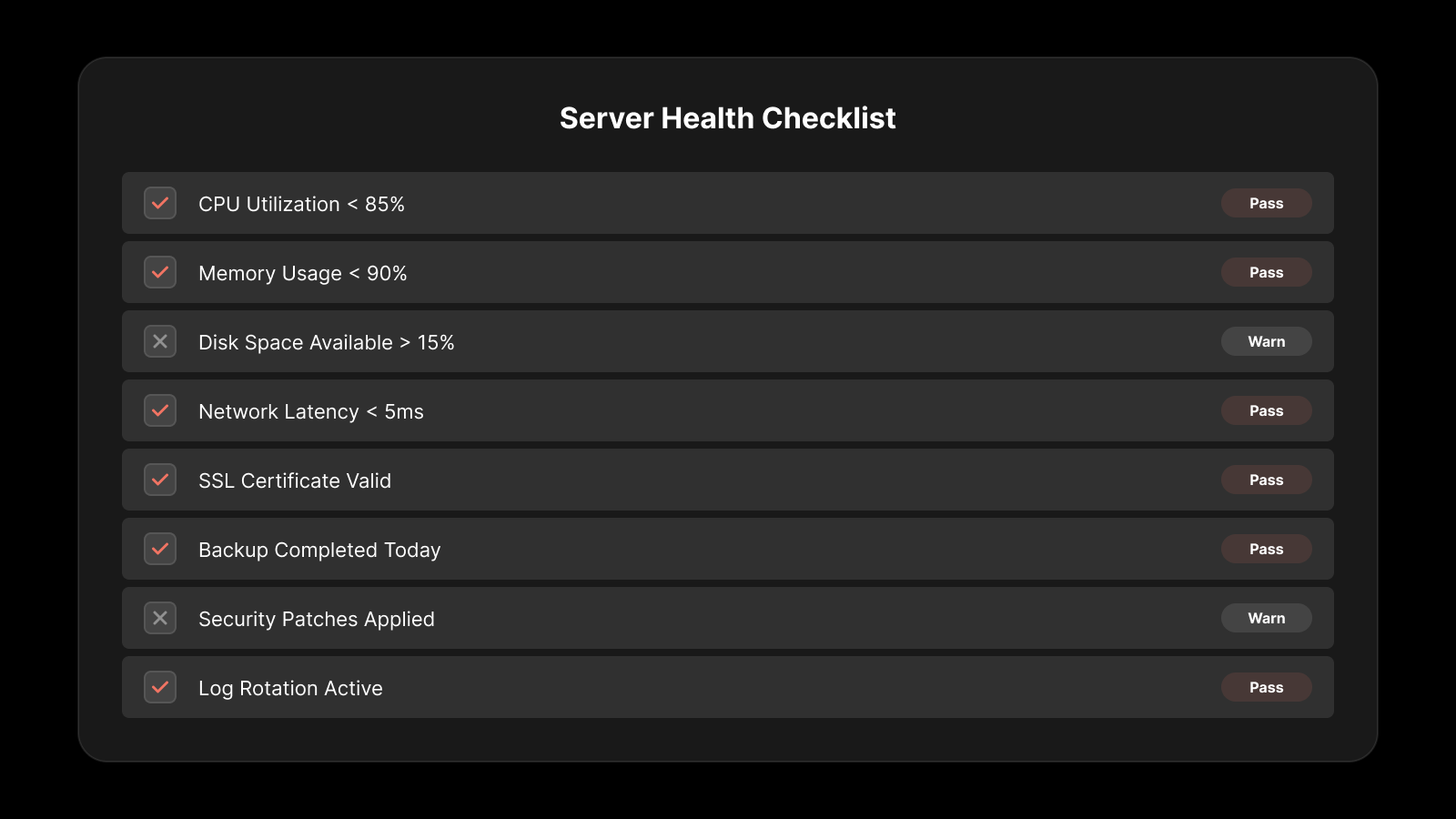
Here's a scenario every IT team recognizes: your monitoring dashboard shows green across the board. CPU utilization is normal. Server uptime is at 99.99%. Every health check passes. But your support queue is filling up with complaints — pages are loading slowly, transactions are timing out, and mobile users can't complete basic tasks.
The disconnect is real, and it happens more often than most teams want to admit. Traditional infrastructure monitoring tracks whether systems are up. It doesn't measure what users actually feel when they interact with your applications. That gap is exactly where Digital Experience Monitoring comes in.
What Is Digital Experience Monitoring?
Digital Experience Monitoring is the practice of tracking how technology performs from the user's perspective — not just from the server room. It captures the full journey: from the moment a user clicks a button to the instant they see a result, tracing every network hop, API call, and database query along the way.
Unlike traditional monitoring that centers on servers and devices, DEM focuses on end-user experience. It answers questions like:
Is the application responsive for users in different locations?
Are specific workflows breaking or slowing down?
Which part of the stack — network, application, or third-party service — is causing the problem?
This user-first approach makes DEM a natural fit for organizations that want to improve user experience through better IT services.
Key Components of DEM
DEM isn't a single tool — it's a framework built from several complementary monitoring disciplines. Each component addresses a different layer of the user experience.
End-User Monitoring (EUM)
End-User Monitoring captures what users feel during real interactions with your applications. Instead of relying on status codes and health checks, EUM tracks:
Page and screen load times from the user's device
Transaction completion rates across critical workflows
Navigation paths that reveal where users get stuck
Error patterns that surface during everyday use
EUM also accounts for geographic and device-level variation. A user on a mobile device in a rural area will have a very different experience than someone on a desktop in a data center — and EUM captures both.
Application Performance Monitoring (APM)
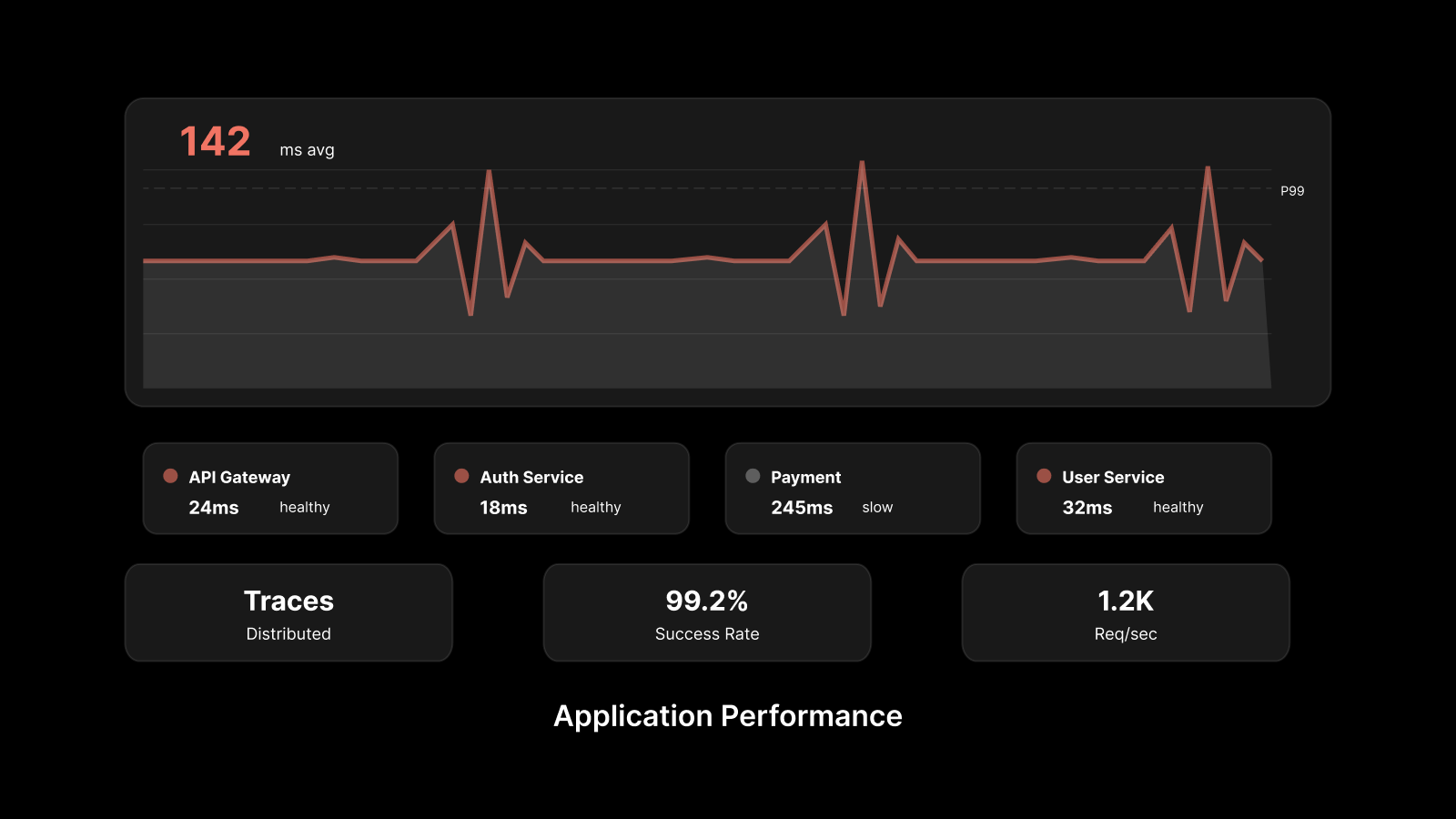
Application Performance Monitoring looks inside the application to explain why something feels slow or broken. While EUM tells you that a transaction took 12 seconds, APM tells you that 9 of those seconds were spent waiting on a database query.
APM traces issues through:
Response delays across application tiers
Code-level bottlenecks in specific functions or services
Service dependencies that create cascading slowdowns
Background processes that compete for resources
When combined with DEM, teams can link user frustration to the exact component causing it.
Business Process Monitoring
Business Process Monitoring follows complete workflows from start to finish — not just individual page loads. It tracks whether multi-step processes like checkout flows, ticket submissions, and service requests complete successfully or break somewhere along the way.
This matters because a process can fail even when every individual component appears healthy. A checkout flow might involve a payment gateway, an inventory service, and an email confirmation system. If any one of those steps drops a connection, the user's experience breaks — even if your server dashboard shows green.
Synthetic Monitoring vs. Real User Monitoring (RUM)
Synthetic and real user monitoring serve different but complementary purposes:
Synthetic monitoring runs scripted tests that simulate user actions at regular intervals. It catches problems before real users encounter them — even during off-peak hours when no one is actively using the application.
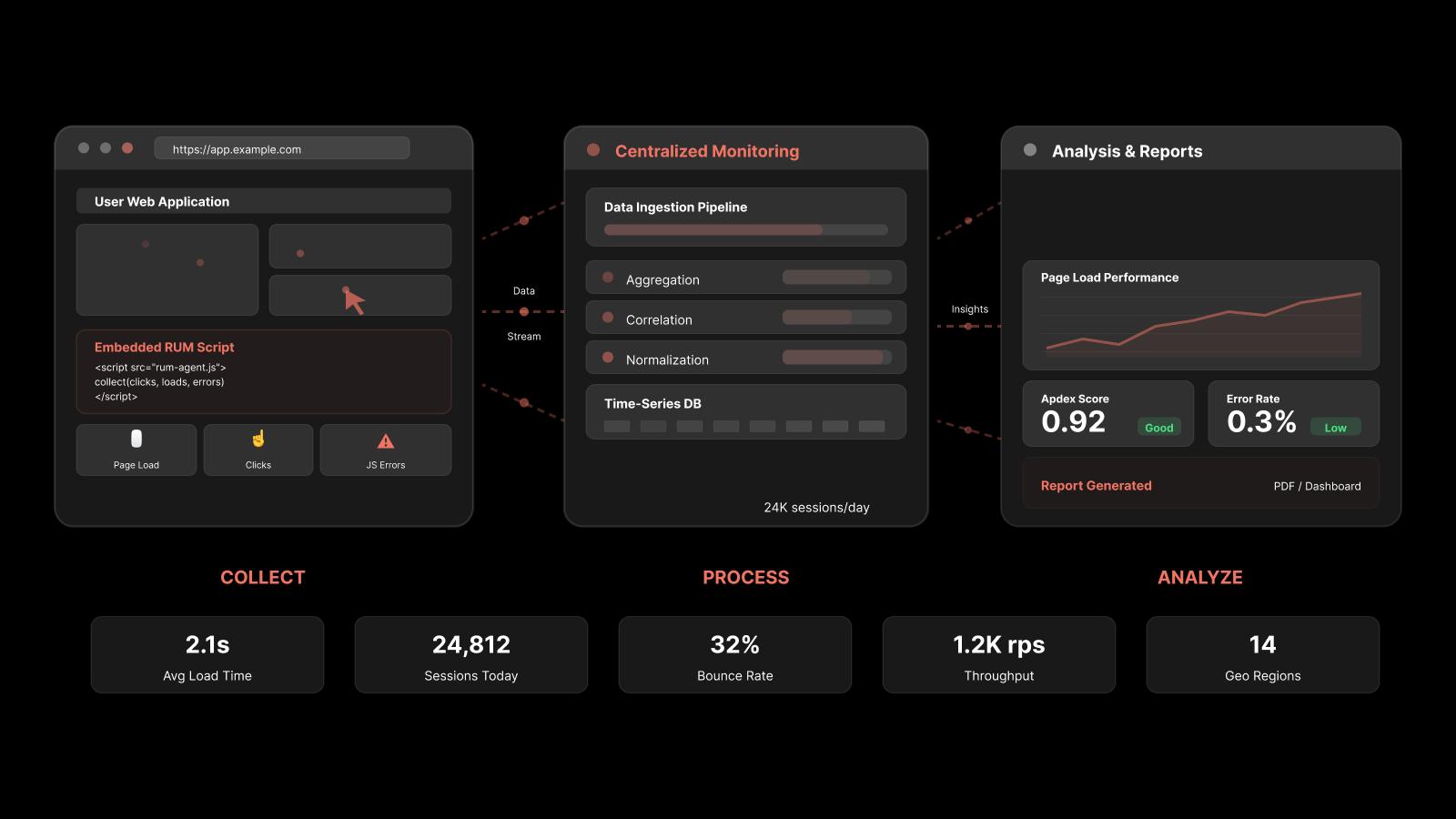
Real User Monitoring (RUM) captures data from actual user sessions in live environments. It reflects the real-world conditions — network variability, device diversity, geographic distance — that synthetic tests can't fully replicate.
Used together, they provide a complete picture: synthetic monitoring catches issues proactively, while RUM confirms their real-world impact.
Why DEM Matters for Modern Organizations
Digital services sit at the center of revenue, collaboration, and service delivery. When experience degrades — even slightly — the impact is immediate:
Customer trust erodes when transactions fail or pages load slowly
Employee productivity drops when internal tools become unresponsive
Operational workflows stall when integrations between systems break
Revenue opportunities disappear when users abandon slow checkout processes
DEM helps IT teams align technical performance with what users actually encounter. It shifts the operational mindset from "what broke?" to "what's affecting people right now?" — and that shift drives faster, more targeted responses.
The practical benefits include:
Spotting performance friction before users file support tickets
Reducing disruptions and the effort required to recover from them
Improving user confidence and digital adoption rates
Prioritizing fixes based on actual user impact instead of guesswork
Key Use Cases of Digital Experience Monitoring
Enterprise Applications
DEM ensures that employees can reliably access everyday systems like ERP, CRM, HR, and finance platforms. For organizations running complex enterprise environments, Motadata Enterprise Monitoring provides the unified visibility needed to track experience across all business-critical applications.
E-Commerce Experiences
Slow checkouts and sluggish page loads cost orders. DEM tracks payment processing steps, browsing-to-cart journeys, and mobile versus desktop experiences to ensure that performance issues don't silently erode conversions.
Remote and Hybrid Workforces
With users connecting over home Wi-Fi, VPNs, and corporate access paths, DEM helps IT teams understand how applications perform across diverse network conditions. Motadata Wi-Fi and Network Monitoring extends this visibility to wireless network segments.
Web and Mobile Applications
DEM allows teams to compare performance across browsers, operating systems, and device types — ensuring consistent experience for every user segment.
IT Support and Operations
By linking signals from users, infrastructure, and applications, DEM helps support teams lower MTTR, prioritize tickets by impact, reduce alert noise, and focus effort where it drives the biggest improvement.
Essential DEM Metrics
Teams need to look beyond uptime and track metrics that reflect the full user journey. Each metric group highlights a different dimension of digital experience.
End-user experience metrics focus on what users feel directly. Page load times show responsiveness. Transaction completion times reveal delays in critical actions. Crash rates and navigation patterns help identify where users struggle or abandon workflows.
Application health metrics explain what's happening behind the scenes. Response time, availability, and API performance help teams trace experience issues back to application or service-level problems.
Business outcome metrics show real impact. Completion rates, abandonment behavior, and satisfaction indicators connect performance issues to revenue and productivity.
Network path quality metrics highlight delivery problems. Latency, packet loss, and congestion often explain slow or inconsistent experiences that aren't visible from the server side.
Tracking these together links technical events to real user outcomes — and that's what makes DEM actionable.
Implementing DEM Effectively
Implementing Digital Experience Monitoring works best when it's approached with clarity and purpose — not by adding more tools to an already crowded stack.
Step 1: Choose a unified DEM platform. A good platform brings user experience, application performance, network health, and business workflow data into a single view. This unified approach helps teams understand how experience issues form and where they originate.
Step 2: Combine RUM and synthetic monitoring. Synthetic tests spot potential issues early by simulating user actions on a schedule. Real user monitoring shows how applications perform under actual conditions. Together, they provide both proactive detection and real-world validation.
Step 3: Configure role-based dashboards and alerts. Set up dashboards and alerts around key experience metrics. Role-based views help teams avoid unnecessary noise and quickly identify slow transactions, failed steps, or rising error rates.
Step 4: Integrate with ITSM and observability tools. DEM becomes far more effective when it's connected to ITSM and observability platforms. This integration helps teams move from detection to resolution faster by linking experience issues with incidents, changes, and root-cause analysis.
When implemented thoughtfully, DEM helps teams shift from reacting to problems to preventing them — while keeping digital experiences reliable and consistent.
Challenges and Practical Solutions
High Data Volume and Complexity
DEM analyzes user data from many sources simultaneously. Without proper structuring, the data from networks, systems, and applications can create noise that obscures meaningful signals. Solution: Use automated dashboards and scoped alerts to focus on what truly matters instead of sorting through raw data.
Multi-Channel Monitoring
Tracking experience consistently across mobile, desktop, cloud, and on-premises environments is difficult when tools work in silos. Solution: Adopt a unified monitoring platform that brings all channels into a single view, eliminating fragmented perspectives.
Correlating Metrics Across Systems
Isolated metrics from different applications make it hard to understand the complete experience picture. Without context, troubleshooting takes longer and user experience suffers. Solution: Use AI-driven insights that automatically correlate signals across systems and highlight likely root causes.
Platforms like Motadata, with unified digital experience monitoring capabilities, help teams simplify complexity and turn experience data into actionable intelligence across domains.
Conclusion
Digital Experience Monitoring gives teams a clearer, user-focused understanding of how technology performs in real-world conditions.
By connecting user behavior, application performance, network paths, and business outcomes, DEM helps organizations move from reactive firefighting to purposeful, experience-led improvement.
It becomes necessary for teams to identify the issues and fix the problem early. This proactiveness will help them run the application smoothly and do not abstain the customer experience. This shift also amplifies the importance of proactive monitoring as it leads to smoother operations, less hurdles and most importantly, happy users
To summarize everything, the outcome of better digital experience are
Happier users
More reliable digital services
Better business results
Begin your monitoring your digital experience today with a comprehensive Motadata’s comprehensive DEM solution and take control before performance issues.
FAQs
What is Digital Experience Monitoring (DEM)?
Digital Experience Monitoring is the practice of tracking how users experience applications, networks, and workflows under real conditions. It helps IT teams improve performance and reliability by measuring what users actually feel — not just what dashboards show.
How is DEM different from traditional monitoring?
Traditional monitoring checks whether systems are up. DEM focuses on how users feel — capturing delays, errors, and friction even when systems appear healthy on backend dashboards.
Why is digital user experience monitoring important for businesses?
Poor digital experience impacts customer trust, employee productivity, and revenue. DEM helps businesses detect and fix experience issues early, before they escalate into support tickets or lost sales.
What are the key components of end-to-end digital experience monitoring?
DEM includes end-user monitoring, application performance monitoring, business process tracking, synthetic testing, and network path analysis. Together, these provide full visibility into the user experience.
How does Motadata support Digital Experience Monitoring?
Motadata provides a unified DEM platform that connects user experience, applications, networks, and IT operations. AI-driven analytics enable proactive monitoring, faster root-cause analysis, and quicker issue resolution across the entire digital experience stack.
Author
Arpit Sharma
Senior Content Marketer
Arpit Sharma is a Senior Content Marketer at Motadata with over 8 years of experience in content writing. Specializing in telecom, fintech, AIOps, and ServiceOps, Arpit crafts insightful and engaging content that resonates with industry professionals. Beyond his professional expertise, he is an avid reader, enjoys running, and loves exploring new places.