8 Best Patch Management Software for 2026
Somewhere in your environment, a patch is sitting in a queue because the last rollout broke something, and nobody wants to run it again.
That is the exact failure mode good patch management software is supposed to prevent, and multiplied across a few hundred endpoints, it is exactly the kind of gap attackers look for.
Verizon's 2026 DBIR found that exploiting a vulnerability is now the most common way attackers get in, and organizations fully closed only 26 percent of their critical vulnerabilities in 2025.
Most IT teams lose that race for a boring reason. The process runs through WSUS, a spreadsheet, or a manual push that eats a Friday afternoon, and the person running it also owns three other jobs.
This guide compares eight patch management tools, Motadata ServiceOps among them, on how they actually handle scanning, deployment, third-party app coverage, and compliance reporting.
By the end, you will know which tools deserve a real trial and which ones you can skip without a demo call.
What is a Patch Management Software?
A patch management software is the system a team uses to find, test, and deploy updates across its operating systems and applications.
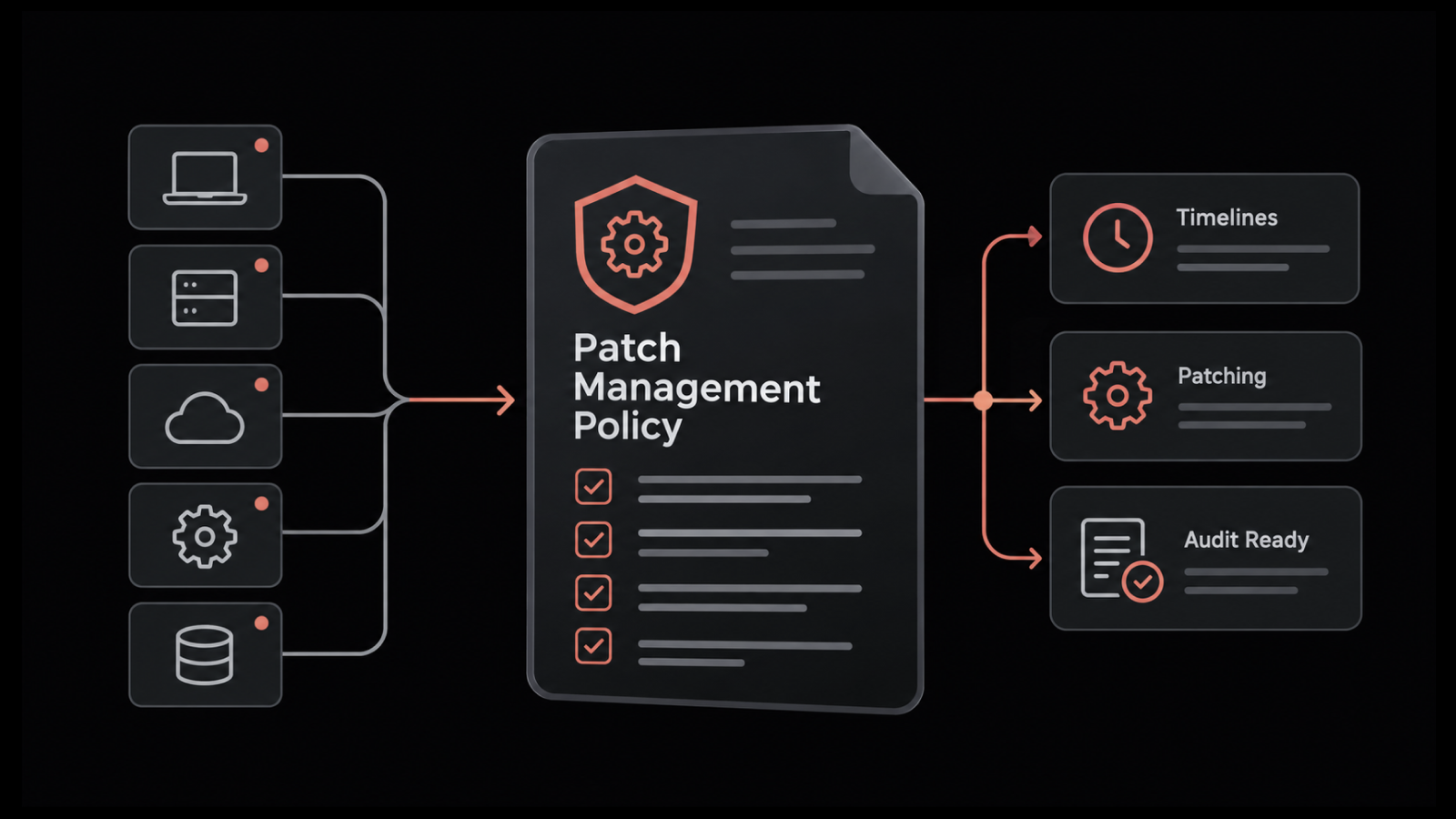
It scans endpoints for missing patches, checks them against a defined policy, and pushes the approved ones out on a schedule instead of waiting for someone to remember.
Patch tools split into three groups:
Some tools patch only the operating system.
Other tools reach into Windows and Linux environments plus hundreds of third-party applications, such as Chrome, Adobe Reader, and Zoom. This is where most real exposure sits.
Some tools bundle patching into a broader platform, whether that is a full RMM for MSPs or, in ServiceOps's case, an ITSM suite that also runs the service desk and asset inventory.
How We Evaluated These Tools
A patch tool can look polished in a sales demo and still fall apart once it hits 500 real endpoints during a bad rollout.
We considered the following six factors to separate the tools below:
Coverage: which operating systems and third-party applications each tool patches, and how deep that catalog actually goes.
Automation: whether scanning, testing, and deployment run on a policy without daily babysitting, since automated patch management is what actually closes the gap between disclosure and a patched fleet.
Compliance reporting: whether the tool proves patch status against frameworks like PCI DSS or HIPAA, not just a green checkmark on a dashboard.
Deployment flexibility: cloud, on-premises, or both, and what that means for regulated teams.
Pricing clarity: how easy it is to predict the bill as endpoint counts grow.
Market proof: current G2 and Gartner Peer Insights ratings, captured mid-2026, where a tool has enough reviews to make the number meaningful.
Our evaluation comes from vendor documentation, published pricing, and G2 and Gartner Peer Insights reviews.
We flag every price that is quote-only and every rating we could not independently verify.
The 8 Best Patch Management Tools Compared
The table below lines up all eight tools on OS coverage, third-party reach, deployment options, and starting price. It allows you to see where each one stands before the full reviews get into the trade-offs.
Tool | Best For | OS Support | 3rd-Party App Coverage | Deployment | Starting Price |
Motadata ServiceOps | Unified patching, service desk, and asset management | Windows, macOS, Linux | Not publicly published | On-prem, private cloud, public cloud | Custom quote, 30-day trial |
NinjaOne | Fast onboarding, broad AI-driven catalog | Windows, macOS, Linux | AI-driven catalog, thousands of titles | Cloud only | Quote-based, from about $1.50/endpoint/mo at scale |
ManageEngine Patch Manager Plus | Widest documented 3rd-party catalog | Windows, macOS, Linux | 1,100+ | Cloud and on-prem | From about $245/yr for 50 devices; free tier to 20 endpoints |
Atera | Small MSPs on per-technician pricing | Windows, macOS | Bundled via RMM | Cloud only | $149 to $219/technician/mo |
Automox | Cross-platform scripting without a full RMM | Windows, macOS, Linux | 580+ | Cloud only | From $1/endpoint/mo |
Action1 | Best free tier, risk-based prioritization | Windows, macOS, Linux | 630+ | Cloud only | Free to 200 endpoints, then quote |
Microsoft Intune with Windows Autopatch | Microsoft 365-native shops | Windows 10/11 patching; macOS, iOS, Android via MDM only | Limited, needs bolt-on tools | Cloud (Microsoft 365) | From $22/user/mo (M365 Business Premium, needed for Autopatch) |
Kaseya VSA | Large MSPs needing deep scripting control | Windows, macOS, Linux | 100+ | Cloud and on-prem | Custom quote |
Top Patch Management Tools: A Detailed Overview
Here are the detailed descriptions and information of the top patch management tools.
1. Motadata ServiceOps
Best for: mid-market and regulated IT teams that want patching unified with the service desk and asset management on one CMDB.
Rating: 4.6 on G2, 4.4 on Gartner Peer Insights.
Patch and package management is one of three pillars in ServiceOps, alongside the service desk and IT asset management, sharing one CMDB and AI engine across all three.
The moment a patch fails, the failed endpoint, its ticket, and the asset record behind it all sit in one place instead of three logins.
The patch module scans the network for missing updates across Windows, macOS, and Linux distributions, then deploys them from one console.
Deployment policies support maintenance windows, user deferment, and forced reboots, so patches land on your schedule, not the vendor's.
A test-group workflow pushes new patches to a pilot set of machines first, catching a bad update before it reaches the full fleet. Compliance reporting maps to PCI DSS, HIPAA, and SOX, which matters when patch reports have to satisfy an auditor.
ITSM, ITAM, and patch management can be licensed together or separately, so a team that only wants patching is not forced to buy the whole platform.
However, the unified view is why most buyers choose it in the first place. Customers who consolidate onto ServiceOps have cut mean time to resolution by up to 80 percent.
Pros
- A failed patch, its ticket, and the affected asset record show up in one place, not three
- Modular licensing lets a team buy patch management on its own if that is all it needs
- On-premises, private cloud, and public cloud options suit regulated industries like BFSI and government
- Test-group approval workflow reduces the risk of a bad patch reaching the whole fleet at once
Cons
- We have not published a specific count of supported third-party applications, unlike ManageEngine's 1,100+ or Action1's 630+, so a team that needs a very deep out-of-the-box catalog should confirm coverage for its specific software list before buying
- Pricing is quote-based with no published per-endpoint number, unlike Automox or Intune
- The strongest value shows up when you also want the service desk and asset management, less so for a team that only wants a dedicated point patch tool
Pricing: subscription-based with tiered plans by asset and user count, custom quote, 30-day free trial.
2. NinjaOne
Best for: IT teams and MSPs that want the fastest onboarding and even coverage across Windows, macOS, and Linux.
Rating: 4.7 on G2, 4.7 on Gartner Peer Insights.
NinjaOne treats Windows, macOS, and Linux as equal citizens. Most patch tools handle Windows well and leave the other two feeling bolted on.
NinjaOne's AI-driven third-party catalog closes that gap, and the cloud-native agent reaches devices off the corporate network without a VPN.
Reviewers consistently point to the interface as the reason teams pick it. New technicians get productive fast, and that speed is worth real money at MSP scale where onboarding time eats into margin.
Pros
- Fastest onboarding curve among the RMM-style tools on this list, according to reviewers
- Genuine cross-platform parity rather than a Windows-first tool with other OSes bolted on
- Real-time compliance dashboards for patch status across the fleet
Cons
- Per-endpoint pricing is quote-based and scales aggressively as device counts grow, which makes budgeting harder for a fast-growing MSP
- PSA and ticketing integration is thinner than a dedicated ITSM platform
- PSA and ticketing integration is thinner than a dedicated ITSM platform
Pricing: pay-per-endpoint, quote-based. Independent testing has found volume pricing around $1.50 to $3.75 per device per month depending on scale.
3. ManageEngine Patch Manager Plus
Best for: teams that want the widest documented third-party application catalog in a standalone patch tool.
Rating: 4.5 on G2, 4.6 on Gartner Peer Insights.
ManageEngine's catalog covers more than 1,100 third-party applications, the broadest published number on this list.
Both cloud and on-premises editions patch Windows, macOS, and Linux, with test-group deployment rings and compliance reporting built in.
A free edition covers up to 20 endpoints, which makes it an easy way to trial the product before committing budget.
For a head-to-head look at how ManageEngine's service desk stacks up against ours on the ITSM side, our ServiceOps versus ManageEngine SDP comparison covers the broader platform, not just patching.
Pros
- Broadest documented third-party catalog of any tool reviewed here
- Free edition available for environments up to 20 endpoints
- Flexible cloud or on-prem deployment for teams with data residency requirements
Cons
- The interface feels dated next to cloud-native competitors like NinjaOne or Automox
- Best value shows up inside the wider ManageEngine product stack, less so as a standalone purchase
- Runs as a separate console from ticketing unless you also adopt ManageEngine's service desk product
Pricing: Professional edition from about $245 per year for 50 devices on-premises, cloud from about $345 per year for 50 devices, free edition for up to 20 endpoints, 30-day trial.
4. Atera
Best for: small MSPs and lean IT teams that want patching bundled with RMM, PSA, and ticketing on predictable per-technician pricing.
Rating: 4.6 on G2, 4.3 on Gartner Peer Insights.
Atera prices per technician rather than per endpoint, so an MSP can add client devices without watching the bill climb device by device.
Patch scheduling covers Windows and macOS, with an Autopilot feature for pre-approved updates and an AI Copilot that helps technicians triage tickets.
Patching depth is the trade-off for that per-technician simplicity. It is one module inside a broader bundle, not Atera's main focus, and it shows in the reporting.
Pros
- Per-technician pricing means unlimited endpoints without the bill scaling per device
- One login covers monitoring, ticketing, and patching
- Fast to set up compared to enterprise RMM platforms
Cons
- Patch management is a secondary feature inside a broader bundle, not the platform's core strength
- Linux patching support trails NinjaOne and Automox
- Reporting depth lags dedicated patch tools once an environment grows past a few hundred endpoints
Pricing: $149 to $219 per technician per month across the Professional, Expert, and Master tiers (annual billing), 30-day trial.
5. Automox
Best for: cloud-native teams that want cross-platform, policy-driven patching without a full RMM attached.
Rating: 4.5 on G2, 4.6 on Gartner Peer Insights.
Automox patches Windows, macOS, and Linux and covers more than 580 third-party applications.
Its Worklets feature packages custom scripts as reusable automation, which gives a technical team a way to close gaps a prebuilt catalog cannot reach on its own.
It is a clean pick for a team that wants patching done well and nothing else bolted on. The moment you also need remote control, PSA ticketing, or backup, you are buying and managing a second tool alongside it.
Pros
- Strong cross-OS parity across all three major platforms
- Scripting flexibility handles edge cases a fixed catalog misses
- Fast deployment with minimal infrastructure overhead
Cons
- Not a full RMM, so remote control, ticketing, and backup all require separate tools
- Reviewers have flagged reporting as thin for deep compliance work
- Pricing climbs at higher tiers as environments scale
Pricing: starts at $1 per endpoint per month on an annual commitment, custom plans above that.
6. Action1
Best for: budget-conscious teams and MSPs onboarding new clients that need a real free tier with no functional gating.
Rating: 4.9 on G2, 4.8 on Gartner Peer Insights.
Action1's free tier covers two hundred endpoints with full features and no time limit, generous enough that some MSPs run entire small clients on it before ever paying.
Beyond the price, Action1 pulls CISA's Known Exploited Vulnerabilities data directly into its patching workflow, so a critical, actively exploited flaw gets flagged ahead of a routine update.
Pros
- Free tier covers 200 endpoints with no feature gating and no time limit
- Highest reviewer satisfaction score of any tool reviewed here
- Reviewers report setup in under five minutes
Cons
- Not built as a full RMM, so ticketing and remote control need a separate tool
- Some reviewers describe the remote access feature as still maturing
- Multi-tenant management at large MSP scale is more limited than dedicated MSP platforms
Pricing: free for up to 200 endpoints with full features, paid plans beyond that are quote-based.
7. Microsoft Intune with Windows Autopatch
Best for: organizations already standardized on Microsoft 365 that want OS patching to inherit their existing identity and security stack.
Rating: 4.5 on G2, 4.2 on Gartner Peer Insights.
Windows Autopatch automates Windows and Microsoft 365 update rings with minimal setup, and because most Windows devices are already enrolled in Intune for device management, there is no second agent to install.
It plugs directly into Entra ID, Defender, and Conditional Access, so patch status becomes one more signal in a security posture you already run.
Third-party patching is where Intune runs into trouble. Anything outside Microsoft's own products needs bolt-on tooling like Winget scripts, and Linux support is thin.
Pros
- No additional agent needed on Windows devices already enrolled in Intune
- Ties patch status directly into an existing Microsoft security posture
- Already included at no extra cost for organizations already on Microsoft 365 Business Premium or an E3/E5 tier
Cons
- Windows Autopatch is not a standalone purchase, so a team on Microsoft 365 Business Basic or Standard has to upgrade to Business Premium or an E3/E5 license just to unlock it
- Third-party application patching is limited and usually needs additional scripting or tooling
- Linux support is thin to nonexistent
- Cross-resource reporting outside the Microsoft ecosystem gets complicated fast
Pricing: Windows Autopatch is not sold as a standalone add-on. It requires Microsoft 365 Business Premium (from $22 per user per month) or a Windows or Microsoft 365 E3, E5, F3, A3, or A5 license. Bare Intune Plan 1, without Autopatch eligibility, starts at $8 per user per month.
8. Kaseya VSA
Best for: large MSPs and enterprise IT teams that need deep scripting control across a big, distributed endpoint fleet.
Rating: 4.0 on G2, 4.2 on Gartner Peer Insights.
Kaseya VSA gives administrators granular policy control over exactly which patches go to which device groups and when, backed by agent-executed scripts for the cases a prebuilt catalog does not cover.
It is a mature platform with a long track record at MSP scale, and it patches Windows, macOS, and Linux with over 100 third-party applications out of the box.
Kaseya VSA also carries a history worth weighing. Kaseya disclosed a supply-chain ransomware attack against VSA in 2021 that affected downstream MSP customers.
That does not disqualify the product years later, but it is a fair question to raise during vendor security review, alongside the platform's steep learning curve.
Pros
- Granular control over which patches deploy to which device groups and when
- Deep scripting handles edge cases most prebuilt catalogs miss
- Deep scripting handles edge cases most prebuilt catalogs miss
Cons
- Steep learning curve that reviewers consistently flag
- The 2021 supply-chain ransomware incident is worth factoring into vendor security review
- Pricing is quote-based with no published starting point
Pricing: custom quote, contact Kaseya directly.
What Should You Look for in Patch Management Software?
Look for the following six capabilities: multi-OS coverage, third-party application depth, risk-based prioritization, test-group deployment, compliance reporting, and off-network coverage.
Each one separates a tool that closes real gaps from one that only looks good on a dashboard.
Multi-OS coverage: Windows, macOS, and Linux from one console, not Windows-first with the rest as an afterthought.
Third-party application depth: Browsers, PDF readers, and conferencing apps carry their own CVEs, and that is where most patching gaps live.
Risk-based prioritization: A tool that flags an actively exploited flaw ahead of a routine update, not just a severity label.
Test-group deployment: The ability to push a patch to a pilot group before the full fleet, so a bad update does not become a fleet-wide incident.
Compliance reporting: Per-device, per-patch evidence that survives an audit conversation, not a summary percentage.
Off-network coverage: A cloud-native agent that patches a laptop without requiring VPN access first.
A solid patch management strategy starts with these capabilities and adds process around them.
The tool cannot supply the discipline, but it can make the discipline easier to keep.
Which Patch Management Tool Is Right for Your Team?
The right pick depends on your environment more than any single feature. These six scenarios cover the situations we see most often, so find the one closest to yours.
1. You are already running or considering an ITSM platform.
ServiceOps earns its place by keeping patch status, the ticket it opens, and the asset record in one system instead of three.
2. You are a small MSP scaling your client count.
Atera's per-technician pricing keeps the bill predictable as endpoints grow.
3. You are budget-constrained or onboarding a new MSP client.
Action1's free tier covers 200 endpoints with no feature gating.
4. You manage a wide, mixed software estate.
ManageEngine's 1,100-plus third-party catalog is the deepest documented option here.
5. You run a Microsoft 365-native shop with a Windows-heavy estate.
Intune with Windows Autopatch avoids a second agent and plugs into your existing security stack.
6. You manage a large MSP or enterprise fleet that needs heavy scripting.
Kaseya VSA and Automox both give administrators granular, code-level control.
If you sit between two of these cases, run a trial against a real maintenance window rather than deciding from a feature table alone.
Pick the Best Patch Management Software for Your Business
Most teams choosing patch management software are picking between a dedicated point tool and a platform where patching is one piece of something bigger. NinjaOne and Action1 both do the dedicated job well.
ServiceOps is the pick when patching does not want to live alone. A missed patch almost always needs a ticket that points back to the asset it affects.
Running all three off one CMDB removes the manual step of connecting them by hand, which is the part most teams underestimate until they are three tools deep and still stitching data together.
That said, a team that only wants patching and nothing else does not need a full ITSM platform to get it, and a dedicated tool like NinjaOne or Action1 will serve that narrower need well.
For most teams juggling patch status, tickets, and asset records across separate tools, the switch usually pays for itself the first time a missed patch stops being a mystery to track down.
FAQs
What is the best patch management software for a small business?
For a small business, Action1's free tier covers up to 200 endpoints with full features, and ManageEngine Patch Manager Plus offers a free edition for up to 20 endpoints.
Both let a small team run real patching without a software budget line, and either one scales into a paid tier once the environment grows past the free limit.
What is the best patch management software for enterprise environments?
Enterprise buyers typically weigh Motadata ServiceOps, ManageEngine Patch Manager Plus, and Kaseya VSA, since all three support on-premises or hybrid deployment and compliance reporting mapped to frameworks like PCI DSS and HIPAA.
The right choice depends on whether patching needs to connect to a shared service desk and asset inventory, which favors ServiceOps, or whether the priority is the widest third-party catalog, which favors ManageEngine.
Is there a free patch management tool?
Yes. Action1 offers a permanently free tier for up to 200 endpoints with no feature gating, and ManageEngine Patch Manager Plus has a free edition for up to 20 endpoints.
Microsoft's WSUS is also free for Windows-only environments, though it lacks automated third-party application patching.
What is the best patch management software for a Windows-only environment?
Microsoft Intune with Windows Autopatch is the strongest fit if your entire estate runs Windows and Microsoft 365, since it requires no separate agent and ties directly into Entra ID and Defender.
For a Windows-heavy estate that also needs broad third-party app coverage, ManageEngine or NinjaOne cover more ground than Intune does on its own.
How often should you apply patches?
Critical security patches, especially anything on CISA's Known Exploited Vulnerabilities list, should go out within days of release.
Routine feature and bug-fix updates can follow a weekly or monthly schedule inside a defined maintenance window. The right cadence depends on how exposed the affected system is, not a single fixed rule for every patch.
Is Motadata ServiceOps better than NinjaOne for patch management?
It depends on what else your team needs. NinjaOne is hard to beat for a dedicated, cross-platform patch tool with fast onboarding.
ServiceOps pulls ahead when you also want the service desk and asset management running on the same CMDB, so a failed patch, its ticket, and the affected asset all live in one system instead of three.
Author
Ramya Shah
Technical Writer
Ramya Shah is a technical content writer with a computer engineering background and roots in automotive journalism. He covers IT Service Management, observability, IT operations, and AI-driven automation. An early adopter of AI-assisted writing workflows, he turns complex IT processes into clear, engaging content optimized for search and answer engines (AEO), lifting content output and organic visibility.