Maximize Cloud Efficiency with Network Monitoring Tools
Over 90% of organizations now run workloads in the cloud -- yet Gartner estimates that up to 30% of cloud spending goes to waste every year. The gap between cloud adoption and cloud efficiency is a monitoring problem. Without real-time visibility into network health, bandwidth consumption, and resource utilization, IT teams can't tell whether their cloud investment is delivering returns or burning budget.
Network monitoring tools close that gap. They give administrators a continuous, data-driven view of what's happening across cloud data centers -- from traffic patterns and latency to security threats and capacity limits. For organizations that depend on cloud performance, these tools aren't optional; they're foundational.
This post covers what cloud network monitoring involves, why it matters, the benefits it delivers, the challenges you'll face, and how to choose the right tool for your environment.
Cloud network monitoring is the practice of using software tools to continuously observe, measure, and analyze the performance, availability, and security of network components within cloud data center environments -- including virtual machines, applications, databases, and network devices.
Why Network Monitoring Matters in Cloud Environments
In cloud environments, resources are virtualized and allocated on demand. This flexibility is a major advantage -- but it also means that even a minor network issue can cascade into downtime, degraded performance, and poor user experience.
Here's why monitoring is non-negotiable in the cloud:
Performance Optimization
By proactively monitoring network traffic and resource usage, organizations can identify bottlenecks and network congestion at an early stage. This keeps data flowing smoothly and ensures cloud-based applications perform as expected.
Security and Compliance
All your business data travels over the internet in cloud environments, which increases the risk of breaches and intrusions. Network monitors give administrators clear visibility into traffic patterns, helping them detect malware infections and unauthorized access before damage is done.
Resource Management
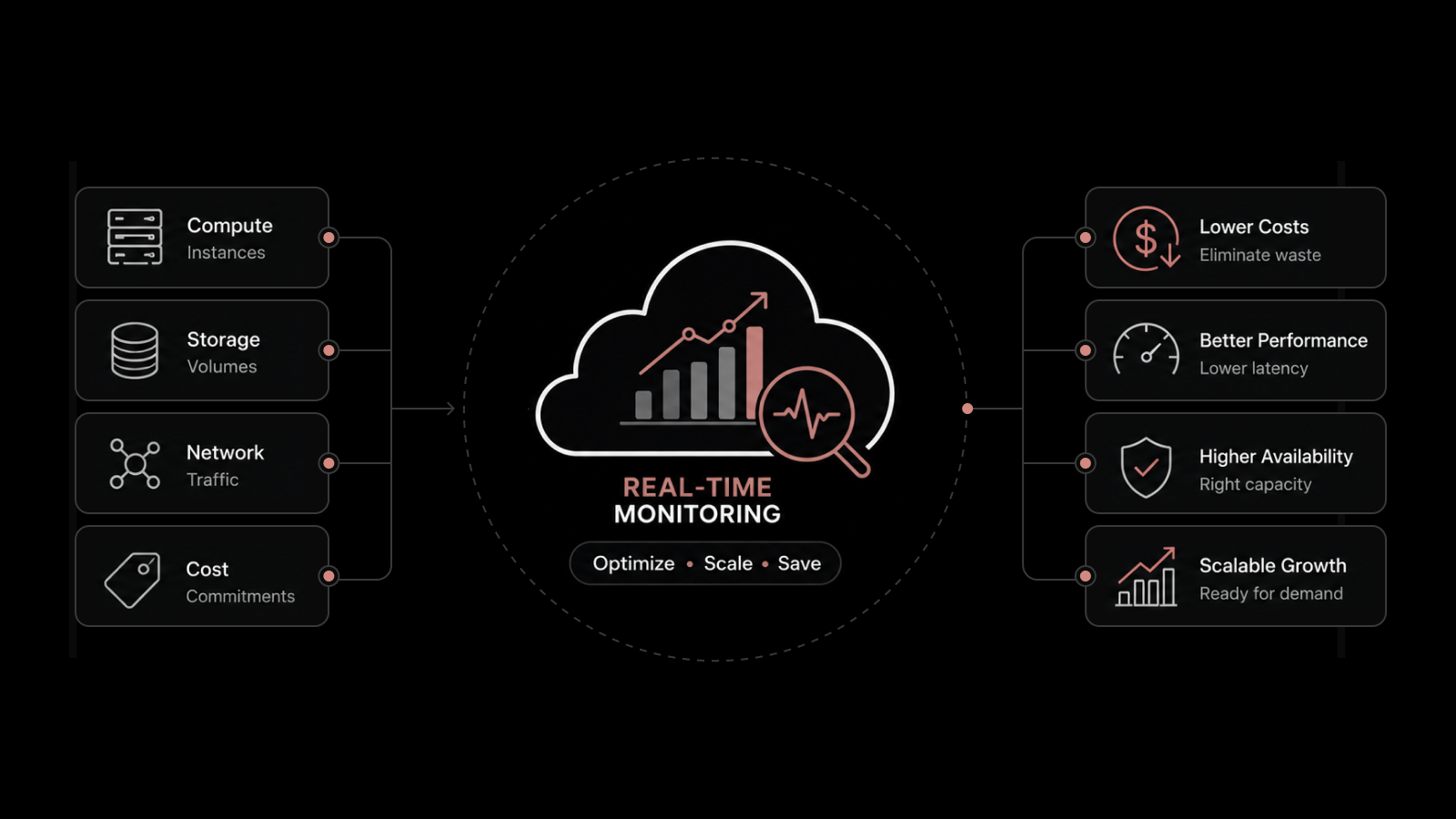
Continuous monitoring of network components gives cloud teams a clear picture of resource usage. This data supports better capacity forecasting, helps eliminate unnecessary costs, and ensures resources are allocated where they're needed most.
The Role of Network Monitoring Tools in Cloud Data Centers
Network monitoring tools address the specific operational demands of cloud data centers. Here's what they bring to the table:
Real-Time Visibility into Network Performance
Monitoring software provides a live view of applications, servers, and databases. IT teams can see network health status, traffic flow, and emerging issues as they happen -- not hours later. With continuous monitoring, organizations can respond to infrastructure problems in real time and maintain a consistent user experience.
Security Monitoring and Threat Detection
Network monitors run constant scans across servers, databases, and virtual machines, watching for unusual activity. When they spot unauthorized access attempts, vulnerabilities, or malware outbreaks, they alert administrators immediately. Catching threats early protects data and prevents disruptions to cloud operations.
Key Benefits of Cloud Network Monitoring Tools
1. Greater Visibility and Control
Network management tools collect data from servers, applications, virtual machines, network devices, and other cloud components. They track data packets, bandwidth usage, latency, error rates, and other metrics to build a complete picture of network behavior. With this granular visibility, network administrators can act immediately on trends and patterns that signal performance degradation or capacity issues.
2. Improved Performance and Optimization
These tools continuously monitor key metrics and include built-in alert systems that notify administrators about performance bottlenecks the moment they appear. Teams can resolve issues before they affect application performance. Resource usage and traffic pattern data also support capacity forecasting and long-term optimization.
3. Stronger Security and Threat Detection
Modern monitoring tools include intrusion detection systems and threat intelligence integrations that identify potential breaches in real time. They run vulnerability scans, trigger real-time alerts on suspicious activities, and help cloud data centers maintain compliance with security standards -- strengthening overall security posture.
4. Cost Optimization and Resource Management
Constant monitoring of cloud resource usage reveals which resources are underutilized and which are overprovisioned. These insights let cloud teams optimize resource allocation, eliminate unnecessary spending, and keep cloud environments running at peak efficiency.
5. Faster Root Cause Analysis and Troubleshooting
When network issues arise, monitoring tools help IT teams pinpoint the source quickly -- reducing downtime and speeding up resolution. Real-time visibility makes unusual patterns easier to spot, and the ability to generate performance metrics and analyze traffic patterns accelerates the entire troubleshooting process.
Challenges of Network Monitoring in Cloud Environments
Cloud monitoring introduces challenges that don't exist in traditional on-premises setups. Understanding these challenges helps you choose the right tools and strategies.
Visibility Across Distributed Infrastructure
Cloud resources are spread across geographically distributed data centers, making it difficult to get a unified view of network performance. Dynamic cloud environments -- where resources scale up and down continuously -- add another layer of complexity. Multi-tenancy, where multiple customers share infrastructure, increases the need for precise, isolated monitoring.
Performance Variability and Limited Control
Cloud performance can fluctuate due to shared resources, congestion, or varying service levels. Identifying the root cause of performance issues gets harder when you don't control the underlying infrastructure. Cloud providers manage portions of the network, which limits how much you can customize network configurations and performance tuning.
Evolving Security Threats
Cloud infrastructures expose a larger attack surface because they allow remote access and resource sharing across a broad audience. The shared responsibility model between providers and users demands clear accountability. And because threats evolve constantly, monitoring strategies need regular updates to stay effective.
Best Practices for Cloud Network Monitoring
1. Define the KPIs That Impact User Experience
Not every metric deserves equal attention. Before deploying a cloud monitoring solution, identify which KPIs and metrics directly affect user experience and business outcomes. This focus helps you prioritize alerts and avoid noise.
2. Monitor Cloud Usage and Costs Together
Cloud spending can grow quickly as usage scales. Make sure your monitoring system tracks consumption patterns alongside expenses so you can catch cost anomalies early.
3. Set Up Real-Time Alerting
Configure alerting policies that trigger notifications based on specific events -- threshold breaches, anomalies, or service degradation. Real-time alerts let your team act before users notice a problem.
4. Use Dashboards for Visual Analysis
Visualize your data using customizable dashboards with graphs, charts, and diagrams. This makes it easier to spot trends, analyze traffic patterns, and communicate network status across teams.
5. Centralize Your Monitoring Data
Store all monitoring data from multiple sources in a single platform for consistency and easy access. A centralized view helps you correlate events across your entire cloud environment and make faster decisions.
How to Choose the Right Cloud Network Monitoring Tool
Real-Time Monitoring Capabilities
Invest in a tool that provides real-time visibility into servers, databases, and virtual machines. The ability to detect and troubleshoot issues as they occur is a baseline requirement.
Integration Support
Your monitoring tool should integrate with your existing cloud infrastructure and be compatible with multiple cloud service providers. Smooth integration means fewer blind spots.
Scalability and Adaptability
Choose a tool that grows with your business. As your cloud environment expands, your monitoring solution should scale without requiring a full replacement.
Customizable Alerting
Look for configurable alert systems that support multiple notification channels. Custom thresholds and escalation rules ensure the right people get the right information at the right time.
Advanced Analytics and Reporting
A tool with strong analytics capabilities helps you identify traffic anomalies, performance bottlenecks, and security threats faster. Comprehensive reporting turns those insights into clear, shareable intelligence for decision-making.
Cost and Pricing Transparency
Compare pricing models across vendors. Make sure the features you need are included at the price point you're evaluating, and check for hidden costs tied to data volume or number of monitored devices.
Drive Cloud Efficiency with Motadata AIOps
Motadata's AI-native AIOps platform gives you full-stack visibility across your cloud data centers -- from network devices and virtual machines to applications and logs. With machine learning-driven analytics, it detects anomalies before they become outages, maps resource utilization patterns for cost optimization, and delivers real-time alerting across your hybrid infrastructure. If you're looking for a single platform that combines network monitoring, cloud monitoring, and AI-powered insights, Motadata is built for exactly that. Start a free trial and see the difference.
FAQs
How do network monitoring tools help with troubleshooting in cloud environments?
Network monitoring tools provide real-time visibility into traffic flow, bandwidth utilization, and application performance. By continuously tracking these metrics, administrators can identify the root cause of network issues quickly and apply corrective measures. This speeds up diagnostics and reduces downtime -- keeping cloud systems running smoothly.
How can network monitoring reduce cloud costs?
Monitoring tools track bandwidth and resource usage across your cloud environment, identifying unnecessary consumption and inefficiencies. Administrators use these insights to optimize resource allocation, right-size instances, and eliminate waste -- directly reducing operational expenses without sacrificing performance.
Why is cloud network monitoring harder than on-premises monitoring?
Cloud services are dynamic, with distributed resources that scale automatically across regions. Monitoring traffic from multiple cloud providers adds complexity, and the shared responsibility model means you don't control every layer. These factors require tools specifically designed for cloud-native environments.
What security concerns are unique to cloud network monitoring?
Traditional data center security methods don't translate directly to cloud environments. Key concerns include managing identity and access at scale, preventing shadow IT, maintaining proper access controls, and adapting security monitoring to the shared responsibility model between your team and the cloud provider.
How often should cloud network monitoring configurations be updated?
Review and update your monitoring configurations at least quarterly, or whenever you make significant changes to your cloud infrastructure. As your environment scales and new services are deployed, monitoring baselines, alert thresholds, and coverage areas need to evolve with it.
Author
Motadata Team
Content Team
Articles produced collaboratively by our engineering and editorial teams bear the collective authorship of Motadata Team.