What Is a Service in ITSM? Definition, Types, Lifecycle, and Why It Matters
In ITSM, a service is a means of delivering value to customers by facilitating outcomes they want to achieve without requiring them to take ownership of specific costs and risks. Services are intangible deliverables managed through structured processes, people, and technology to ensure consistent quality and business alignment.
Ask ten IT professionals what "service" means, and you'll get ten different answers shaped by their experience and context. But as the global economy becomes increasingly digital and service-driven, having a precise, shared understanding of what a service actually is and how to manage it separates organizations that deliver consistent value from those that struggle with every customer interaction.
The ITIL Definition of Service
According to ITIL, "a service is a means of delivering value to customers by facilitating outcomes customers want to achieve without taking ownership of specific costs and risks."
Let's unpack that. A service is fundamentally about delivering value to end-users by fulfilling the outcomes they need. It's an intangible deliverable -not a physical product. IT service management provides the structured strategies that make this delivery consistent, repeatable, and scalable.
But value delivery doesn't happen in isolation. Businesses are simultaneously working to reduce operating costs, decrease time-to-market for new products, and amplify customer engagement. These business outcomes shape how services get designed, delivered, and improved over time.
Types of Services in IT Service Management
Understanding the different categories of services helps organizations design their service management approach more effectively.
Business Services
Business services are the services organizations use to conduct their core business activities. They include functions like insurance, banking, warehousing, transportation, communication, and IT support. Many companies rely on outsourcing specific business services to increase efficiency and reduce costs.
In the ITSM context, business services are the ones that directly support revenue-generating activities. Your email system, CRM platform, and ERP system are all business services that employees depend on daily. When these services go down, business processes stall.
Social Services
Social services are provided by individuals or organizations for the betterment of society, typically without profit expectations. Non-profit organizations deliver these services to achieve social goals rather than financial returns, using tools such as a donor database system to help manage donor relationships and sustain their mission.
IT Services
IT services represent the largest and fastest-growing segment of the service industry. They encompass everything from infrastructure management and application support to cybersecurity and cloud operations. IT services form the backbone that enables both business services and social services to function effectively in a digital economy.
The Five Stages of the ITIL Service Lifecycle
To deliver excellent customer experience, you need to continuously improve your services and operational processes. The ITIL service lifecycle provides a structured framework for managing this continuous improvement across five stages:
1. Service Strategy. This stage defines which services to offer, which markets to serve, and how to differentiate from competitors. It aligns IT capabilities with business objectives and establishes the financial models that determine whether a service is viable.
2. Service Design. Here, services get designed to meet the requirements identified in the strategy stage. This includes defining service level agreements, capacity plans, availability targets, and the technology architecture needed to deliver the service reliably.
3. Service Transition. This stage governs how new or changed services move from design into production. It covers change management, release planning, testing, and knowledge transfer to ensure smooth deployments with minimal disruption.
4. Service Operation. The day-to-day management of live services happens here. Incident management, problem management, event monitoring, and request fulfillment all fall under service operation. This is where your service desk technicians spend most of their time.
5. Continual Service Improvement. CSI ensures that services evolve in response to changing business needs, technology advancements, and lessons learned from operations. It uses data and feedback to identify improvement opportunities and measure their impact.
Organizations that focus on all five lifecycle stages manage their IT services holistically and position themselves for long-term growth rather than constant firefighting.
Why Your Business Needs Service Management
IT services occupy a significant share of the service industry, and there's a constant race to surpass competitors by delivering superior service experiences. ITSM provides the features and processes that make this possible as a critical component of any digital transformation strategy.
Better Business Insights
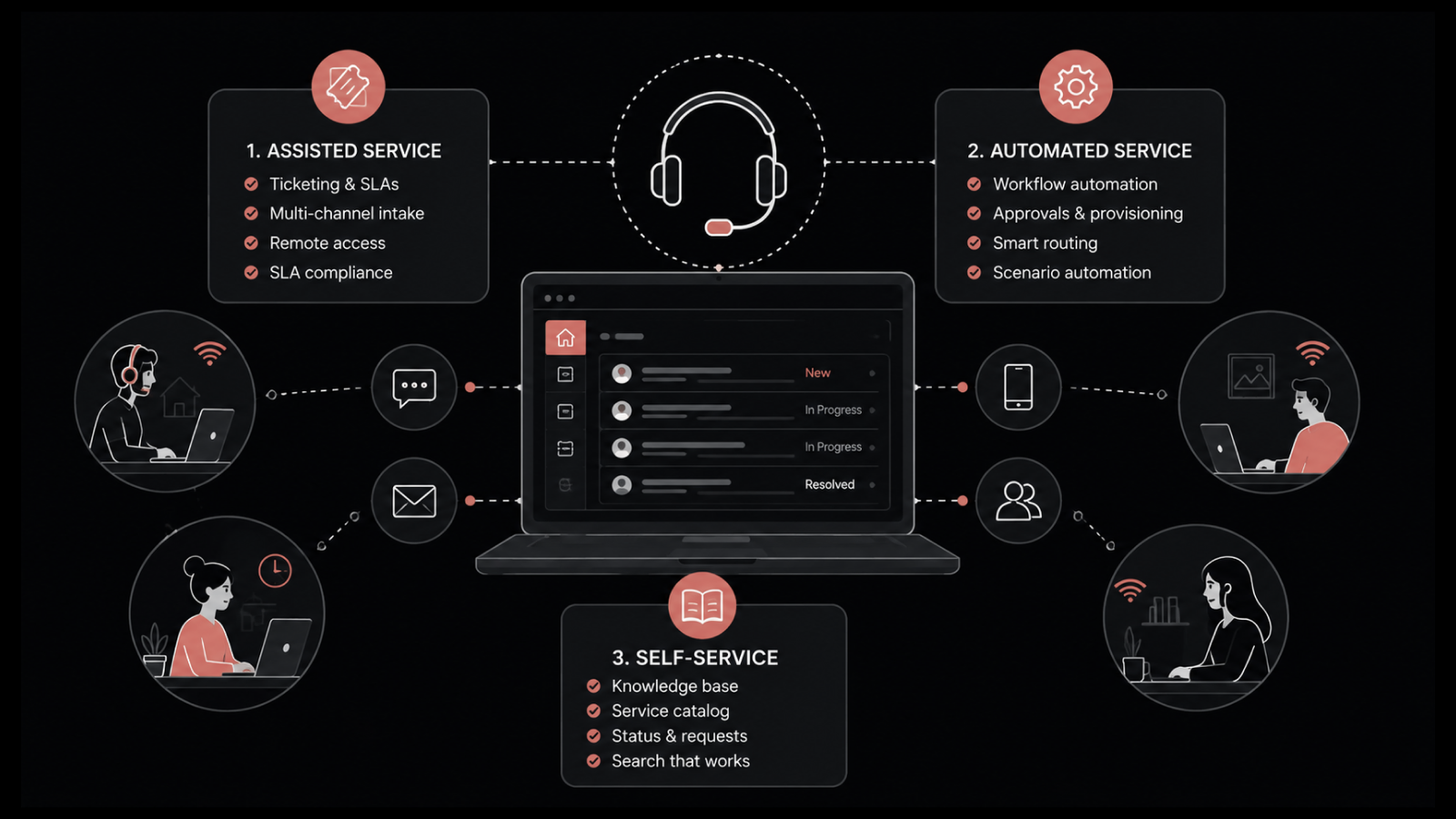
By integrating service management tools into your business, you gain a deeper understanding of your organization's internal needs. ITSM platforms provide detailed insights through real-time visibility, intelligent automation, and advanced analytics.
When you have a comprehensive view of your business processes, you can deliver better service experiences that directly boost business growth. Decisions based on real data replace decisions based on gut feelings.
Amplified Employee Productivity
Employee productivity is the engine behind excellent service delivery. ITSM tools convert manual, repetitive tasks into automated workflows and provide collaborative environments that connect teams with technology seamlessly.
When employees spend less time on routine tasks and more time on work that requires their expertise, productivity climbs -- and so does service quality. The result is a virtuous cycle: better tools lead to more productive employees, who deliver better services, which drives better business outcomes.
Reduced IT Operational Costs
Automating repetitive tasks and providing real-time visibility to employees reduces your organization's overall operating costs. The initial investment in an ITSM platform pays for itself through long-term efficiency gains and improved customer retention rates.
Organizations that introduce automation into their IT operations can save up to $350K annually -- a significant number regardless of company size. Those savings compound year over year as automation coverage expands.
AI-Powered Virtual Agents
AI-powered virtual agents reduce ticket volumes and deliver faster resolutions by handling common issues automatically. They provide 24/7 personalized support, reducing the cost of service delivery while improving the customer experience around the clock.
Whether it's custom chat plugins or drag-and-drop workflow builders, modern ITSM platforms come with capabilities that transform service delivery from reactive to proactive.
Reduced Organizational Risk
Every change an organization makes carries risk. That risk multiplies when changes happen through poor planning and without structured processes. Service management tools dramatically reduce service and business risk through:
Change management that ensures changes follow approved workflows
Project management that coordinates complex, multi-team initiatives
Stakeholder communication that keeps everyone informed and aligned
The ITSM platform replaces ad-hoc decision-making with structured, repeatable processes that reduce risk across the organization.
Service vs. Product: Understanding the Difference
One common source of confusion in ITSM is the distinction between a service and a product:
Characteristic | Service | Product |
|---|---|---|
Tangibility | Intangible -- experienced, not possessed | Tangible -- can be held or stored |
Ownership transfer | Customer accesses the outcome, not the underlying costs or risks | Customer owns the physical item |
Consistency | Varies based on delivery context and provider | Standardized and replicable |
Consumption | Consumed and produced simultaneously | Produced first, consumed later |
Customization | Often customized per customer need | Standardized with limited variants |
Understanding this distinction helps IT teams design services that focus on outcomes rather than outputs, which is the fundamental shift ITSM drives.
How Motadata ServiceOps Elevates Service Delivery
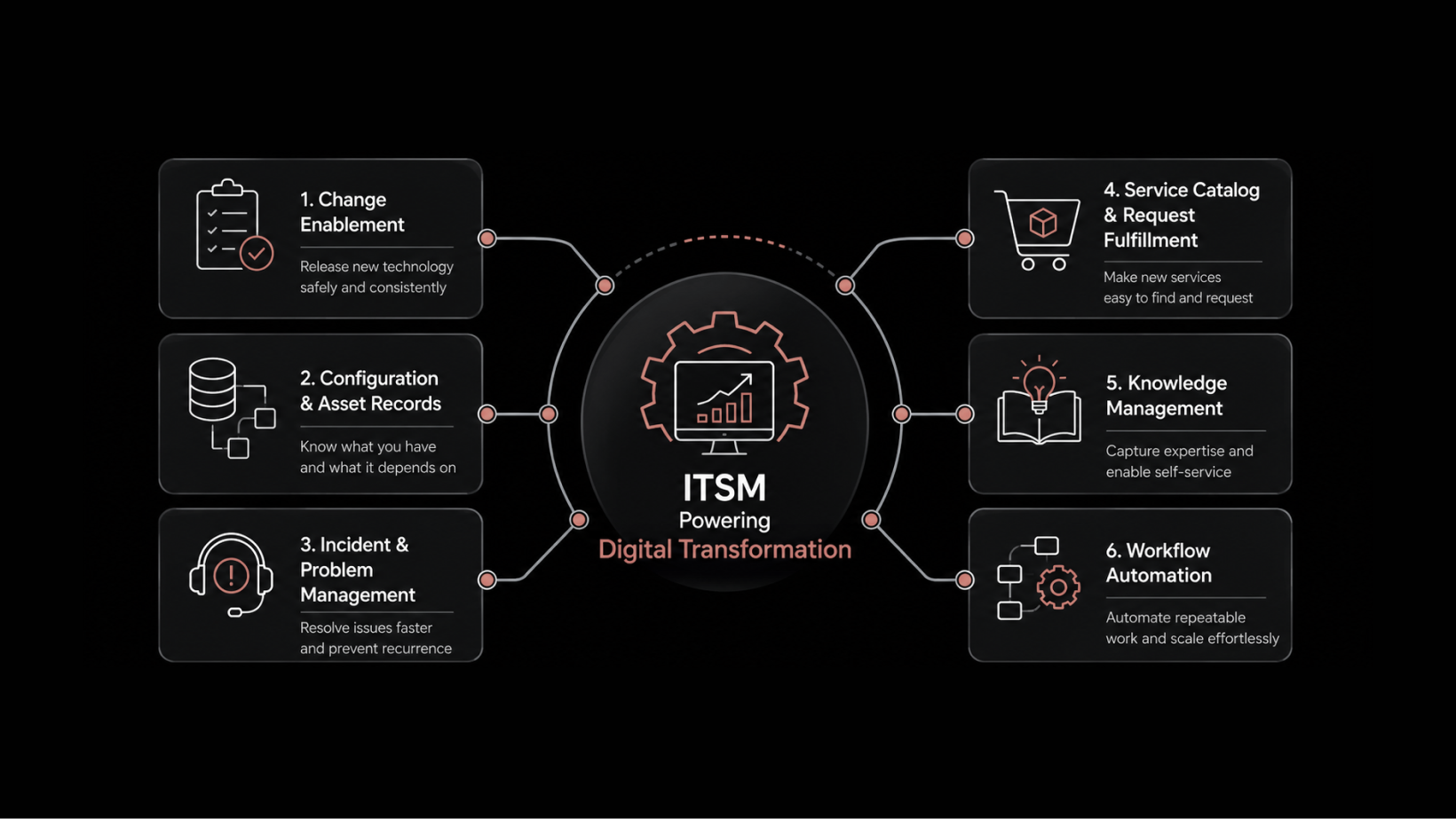
Whether it's people, processes, or technology, Motadata's ITSM platform provides an AI-native environment that helps organizations adopt changes faster and deliver services better.
The unified platform streamlines business processes with intelligent automation and real-time visibility:
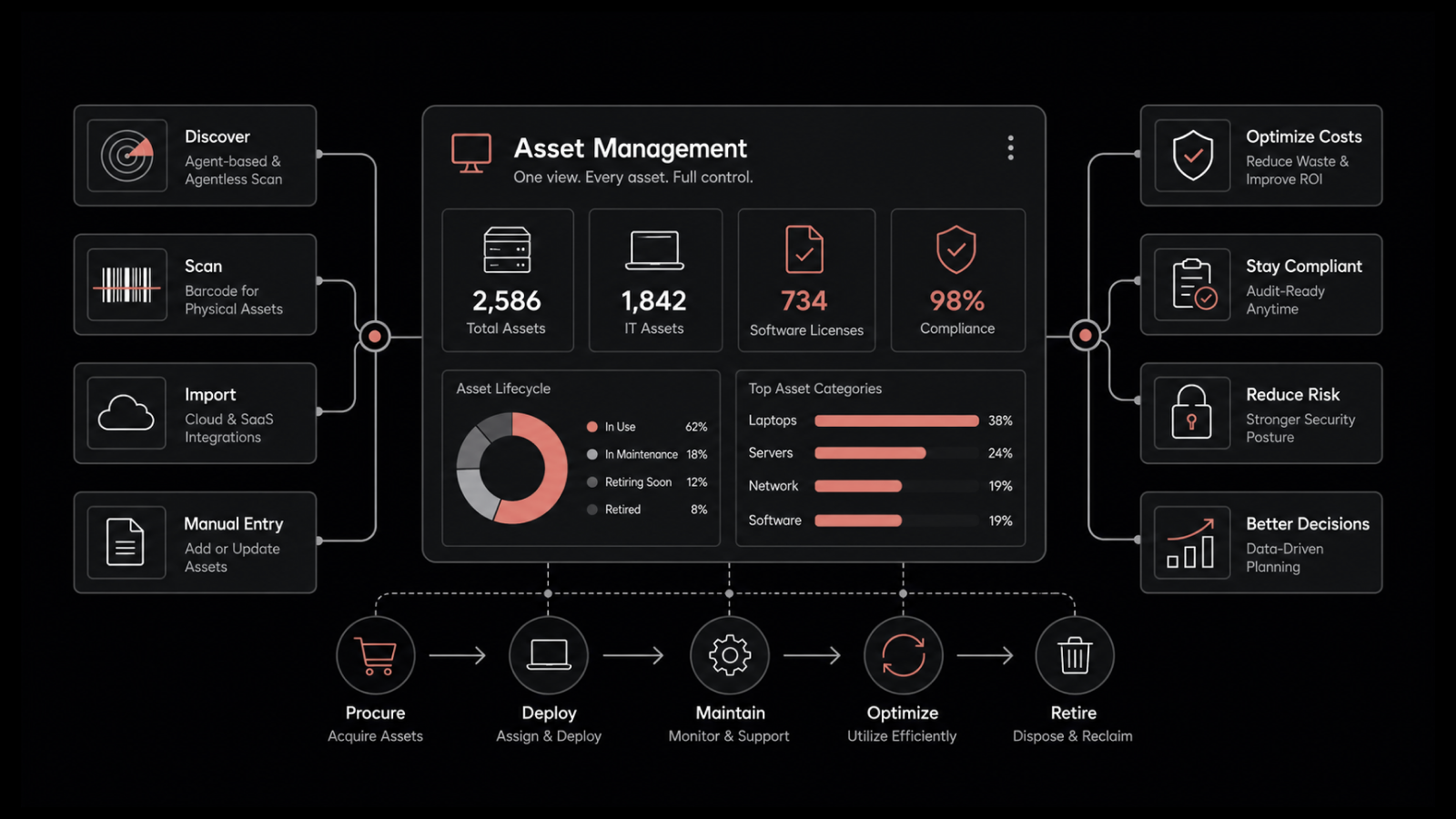
Automated asset discovery that keeps your CMDB accurate without manual effort
Faster service delivery through AI-powered routing and prioritization
Complete lifecycle management from service design through continual improvement
Intelligent automation that handles routine tasks and frees technicians for complex work
Real-time visibility into service performance, SLA compliance, and operational bottlenecks
Motadata's ServiceOps reshapes your ITSM strategy to deliver consistently better experiences to end-users while reducing operational overhead.
Integrate Motadata ServiceOps today and streamline your service delivery with AI-native automation.
FAqs
What is a service in service management?
According to ITIL, a service is a means of delivering value to customers by facilitating outcomes they want to achieve without requiring them to own the specific costs and risks involved. In ITSM, services encompass everything from IT support and infrastructure management to application delivery and security operations.
What is the service lifecycle?
According to ITIL, a service is a means of delivering value to customers by facilitating outcomes they want to achieve without requiring them to own the specific costs and risks involved. In ITSM, services encompass everything from IT support and infrastructure management to application delivery and security operations.
Why is ITSM important for businesses?
ITSM reduces operational costs, improves employee and organizational productivity, provides actionable insights through real-time visibility, and enables faster service delivery. It transforms IT from a cost center into a strategic business enabler by aligning IT services with business objectives and customer expectations.
What is the difference between ITSM and ITIL?
ITSM (IT Service Management) is the broad practice of managing IT services to meet business needs. ITIL (Information Technology Infrastructure Library) is a specific framework within ITSM that provides best practices, processes, and guidelines for implementing effective service management. ITIL is one of several ITSM frameworks, but it's the most widely adopted.
How does AI improve service management?
AI improves service management by automating ticket routing and prioritization, powering virtual agents that handle common requests 24/7, enabling predictive analytics that identify issues before they affect users, and providing intelligent recommendations that help technicians resolve complex issues faster.
Author
Arpit Sharma
Senior Content Marketer
Arpit Sharma is a Senior Content Marketer at Motadata with over 8 years of experience in content writing. Specializing in telecom, fintech, AIOps, and ServiceOps, Arpit crafts insightful and engaging content that resonates with industry professionals. Beyond his professional expertise, he is an avid reader, enjoys running, and loves exploring new places.