10 Software License Management Best Practices for 2026
Software licensing used to be simple: buy a license, install the product, done. Those days are long gone. Today's IT environments run a mix of perpetual licenses, subscription software, SaaS platforms, open-source tools, and cloud-native services — each with its own terms, renewal cycles, and compliance requirements.
When license management falls behind, the consequences are real. Surprise audit penalties can run into the hundreds of thousands. Unused licenses drain budget every month. Unauthorized software installations create security holes. And without clear visibility into what you're actually using, you end up paying for tools nobody touches.
Whether you're managing licenses for a 200-person company or a 20,000-seat enterprise, having structured software license management practices in place is what separates organizations that control their software costs from those that don't.
Software License Management is the process of tracking, organizing, and optimizing software license agreements across an organization — ensuring compliance with vendor terms, controlling costs, and maximizing the value of every software investment.
Understanding Software License Management
What It Is and Why It Matters
Software license management is the discipline of tracking software agreements, monitoring actual usage, and ensuring your organization stays compliant with vendor terms. It covers every type of license — perpetual, subscription-based, concurrent, and SaaS.
Strong license compliance isn't optional. Non-compliance can lead to audit penalties, legal action, and damaged vendor relationships. On the flip side, organizations that actively manage licenses typically find 20–30% of their software spend is going to licenses that are unused, underused, or duplicated.
Good license management also aligns IT spending with actual business needs. By tracking what's installed, what's being used, and what's gathering dust, companies gain the transparency needed to make smarter software investment decisions.
Key Objectives
The core goals of effective software license management are:
Cost optimization — Eliminate waste by reclaiming unused licenses, right-sizing subscriptions, and consolidating redundant tools.
Compliance assurance — Stay within the terms of every license agreement to avoid audit penalties and legal exposure.
Operational efficiency — Give IT teams clear visibility into the software portfolio so they can make faster, better-informed decisions.
Risk reduction — Prevent unauthorized software usage that creates security vulnerabilities and compliance gaps.
Understanding License Types
Before you can manage licenses effectively, you need to understand what you're managing. Here's a quick reference:
License Type | How It Works | Key Management Concern |
|---|---|---|
Perpetual | One-time purchase, use indefinitely | Tracking maintenance/support renewals; version currency |
Subscription | Recurring fee (monthly/annual) | Renewal management; usage justification |
Concurrent | Limited simultaneous users | Monitoring active sessions; right-sizing seat count |
SaaS | Cloud-hosted, subscription-based | User adoption tracking; duplicate tool identification |
Open Source | Free to use, license terms vary | Compliance with license obligations (GPL, MIT, Apache) |
Volume/Enterprise | Bulk licensing with negotiated terms | Contract management; true-up reconciliation |
10 Software License Management Best Practices
1. Build a Centralized License Inventory
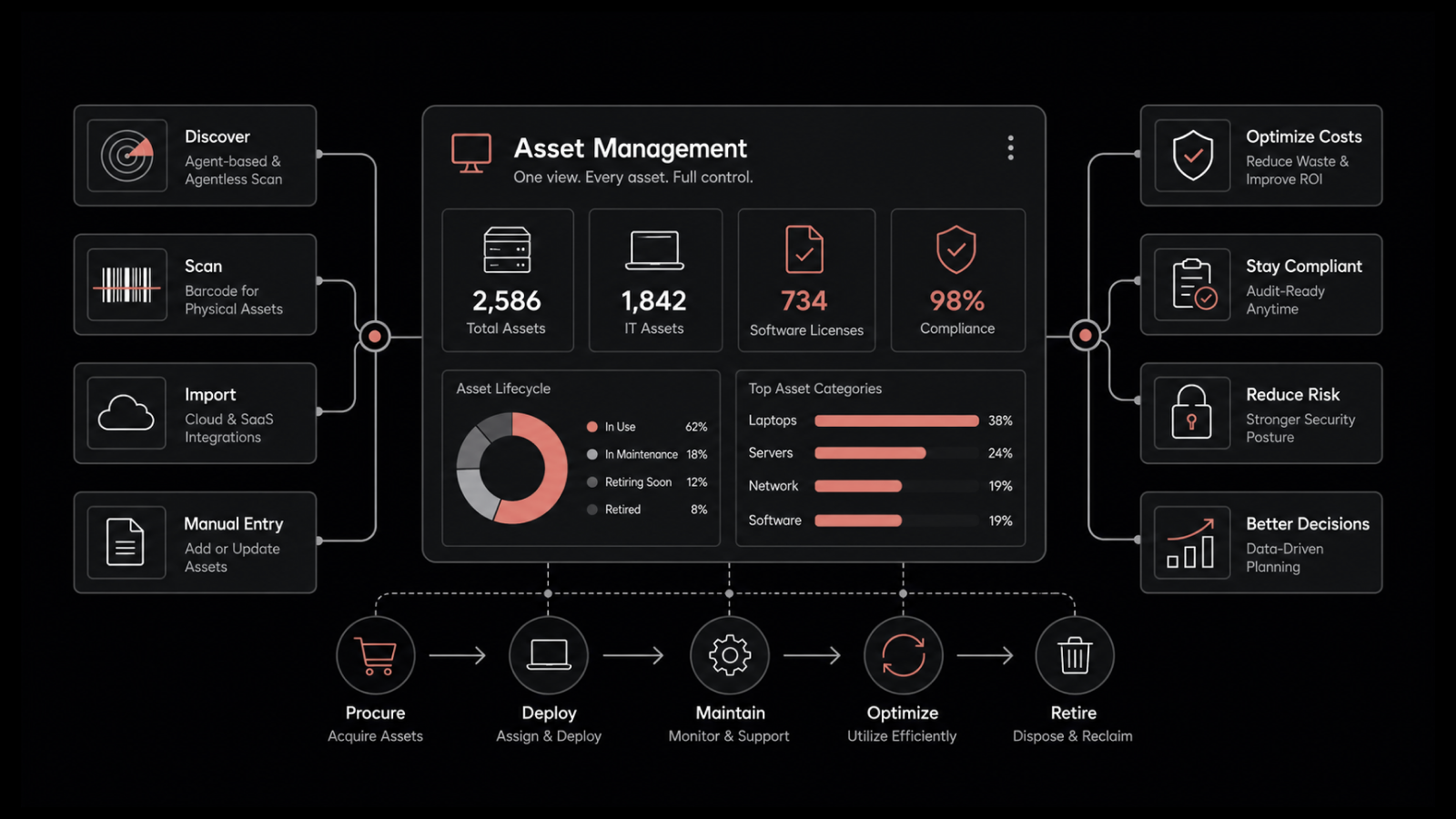
You can't manage what you can't see. Step one is bringing all software assets into a single asset management system — every license, every subscription, every SaaS tool, documented in one place.
A centralized inventory shows you exactly what licenses you own, where they're deployed, who's using them, and when they expire. This eliminates the scattered spreadsheets and tribal knowledge that cause licenses to slip through the cracks.
How to do it: Start by running automated discovery across your environment to identify all installed software. Then reconcile what's installed against what's licensed. Update the inventory continuously — not just quarterly.
2. Keep Accurate Records and Documentation
Inaccurate or outdated records are one of the biggest sources of license management failure. Every license agreement, installation record, purchase order, and renewal date should be documented in your management system.
Precision matters here. Missing details about vendor terms or expiration dates lead to compliance gaps and surprise costs. When your records are organized and kept current, audits become manageable events instead of fire drills.
How to do it: Assign documentation ownership to a specific role or team. Use automated tools to capture installation data and tie it back to license entitlements. Review records monthly.
3. Understand Your License Agreements Thoroughly
Misreading the fine print of a license agreement can lead to expensive consequences. You need to understand exactly what each agreement allows: how many users, which usage scenarios, what upgrade rights, and what restrictions apply.
Vendors frequently update their licensing terms. A policy that was acceptable last year may have changed at renewal. Your IT and procurement teams should review every agreement at renewal time and flag any terms that have shifted.
How to do it: Create a summary sheet for each major license agreement that captures permitted use, user limits, geographic restrictions, and renewal terms. Share these summaries with the teams that manage day-to-day software deployment.
4. Audit Software Usage Regularly
Regular audits are how you find out what's really happening with your software. They reveal licenses that aren't being used, software that's been installed without authorization, and gaps between what you're entitled to and what's actually deployed.
Audits also prepare you for vendor-initiated audits — which can happen at any time with many enterprise software providers. If you're already tracking usage accurately, a vendor audit becomes a confirmation exercise rather than a scramble.
How to do it: Run internal software audits at least quarterly. Compare actual usage data against license entitlements. Flag any discrepancies and resolve them within 30 days.
5. Implement Access Controls and User Management
Unauthorized software usage creates both compliance risk and security exposure. Strict access controls ensure that only approved users can access specific tools, and that permissions are revoked promptly when employees change roles or leave the organization.
Role-based access control (RBAC) maps permissions to job functions, reducing unnecessary access and making it easier to track who's using what.
How to do it: Integrate license management with your identity and access management (IAM) system. Set up automated deprovisioning workflows that revoke software access when an employee leaves or changes roles.
6. Automate Where You Can
Manual license tracking doesn't scale. Automation handles the repetitive tasks — monitoring expiration dates, sending renewal reminders, tracking actual usage, and flagging compliance deviations — with greater accuracy and consistency than any spreadsheet.
Automated tools also provide real-time visibility into license utilization, so you can make data-driven decisions about where to invest and where to cut.
How to do it: Deploy a license management tool that integrates with your ITAM platform. Set up automated alerts for renewals 90, 60, and 30 days before expiration. Use automated discovery to catch new software installations as they happen.
7. Stay on Top of Vendor Policy Changes
Vendors change their pricing models, licensing terms, and audit practices regularly. If you're not tracking these changes, you risk falling out of compliance without realizing it — or paying more than you need to because you missed a more favorable licensing option.
How to do it: Assign someone to monitor vendor announcements and policy updates for your top 10 software providers. Review changes at each renewal cycle and renegotiate terms when it makes sense.
8. Plan for Software Retirement
Licenses don't manage themselves at end-of-life. When software is retired, you need a structured process to decommission it — revoking access, archiving data, terminating contracts, and ensuring no compliance obligations are left hanging.
Leaving retired licenses active is like paying rent on an apartment nobody lives in. A planned retirement process catches these costs and eliminates them.
How to do it: Include software retirement as a formal stage in your asset lifecycle. Review your license inventory quarterly to identify candidates for retirement. Document the decommissioning steps and verify completion.
9. Educate Employees on Software Usage Policies
Your license management program is only as strong as the people who follow it. Employees need to understand what software they're allowed to install, how to request new tools, and what the consequences of unauthorized usage are.
Training shouldn't be a one-time event. Regular reminders and updated policy documentation keep software usage practices fresh and reduce the risk of accidental violations.
How to do it: Include software usage policies in onboarding for all new employees. Run annual refresher training for existing staff. Make your software request and approval process easy to follow.
10. Assign Clear Ownership and Accountability
Without a designated owner, license management tends to fall through organizational cracks. Assign a specific person or team — often an IT asset manager or software asset manager — to oversee licensing across the organization.
This owner is responsible for tracking license status, coordinating audits, managing vendor relationships, and reporting on software spend. Clear accountability drives consistency and ensures nothing gets missed.
How to do it: Define the software asset management role in your organization. Give this person authority over license procurement decisions and direct access to usage data. Set quarterly review meetings with IT, finance, and procurement stakeholders.
How Motadata Simplifies Software License Management
Managing hundreds or thousands of software licenses across perpetual, subscription, and SaaS models is a challenge that grows with your organization. Motadata's ServiceOps platform brings software license management into a single, centralized system where every license is tracked, every renewal is monitored, and every compliance gap is flagged automatically.
Automated discovery identifies all software installed across your environment. Usage tracking shows which licenses are actively used and which ones are just consuming budget. Built-in compliance monitoring keeps you audit-ready at all times. And with clear dashboards and reporting, your IT, finance, and procurement teams all work from the same data — making smarter decisions about where to invest and where to cut.
See Motadata's Software Asset Management in action — schedule a demo today.
Frequently Asked Questions
What is software license management?
Software license management is the process of tracking, organizing, and optimizing software license agreements across your organization. It ensures compliance with vendor terms, prevents over- or under-licensing, and helps control software costs. It covers all license types — perpetual, subscription, SaaS, and open-source.
How can you measure software license management success?
Track KPIs like license compliance rate, percentage of unused licenses reclaimed, cost savings from optimization, renewal on-time rate, and audit readiness score. Automated tools provide real-time dashboards for these metrics, making it easy to demonstrate the program's value to leadership.
What are the benefits of software license management?
Key benefits include reduced software costs through waste elimination, stronger compliance that prevents audit penalties, improved operational efficiency through centralized tracking, reduced security risk from unauthorized software, and better alignment between software investments and actual business needs.
How does automation help with license management?
Automation handles discovery, tracking, renewal alerts, compliance monitoring, and reporting with greater accuracy than manual processes. It eliminates the lag and errors that come with spreadsheet-based management and gives teams real-time visibility into their software portfolio.
What's the biggest risk of poor license management?
The biggest risk is financial — audit penalties from enterprise software vendors can reach hundreds of thousands of dollars. But poor management also creates security gaps (unauthorized software), wastes budget (unused licenses), and damages vendor relationships (non-compliance). It's a problem that compounds over time.
Author
Arpit Sharma
Senior Content Marketer
Arpit Sharma is a Senior Content Marketer at Motadata with over 8 years of experience in content writing. Specializing in telecom, fintech, AIOps, and ServiceOps, Arpit crafts insightful and engaging content that resonates with industry professionals. Beyond his professional expertise, he is an avid reader, enjoys running, and loves exploring new places.