How Motadata ServiceOps Reduced Service Delivery Time by 50%
A 50% reduction in service delivery time. SLA adherence jumping to 98.31%. Manual procurement cycles replaced by automated workflows that finish in days instead of weeks. These aren't projections — they're actual results from an IT services company that switched to Motadata ServiceOps.
This case study walks through the real challenges this organization faced, the solutions they implemented, and the measurable outcomes they achieved. If you're evaluating ITSM platforms, this is what transformation looks like in practice.
IT service delivery is the process of providing IT services — applications, infrastructure, technical support, and business processes — to internal users or external customers. Effective service delivery aligns IT operations with business goals to drive revenue, improve user satisfaction, and reduce operational costs.
The Challenge: Fragmented IT Service Management
The customer — an IT services company — faced a set of challenges that will sound familiar to any organization still relying on disconnected tools and manual processes.
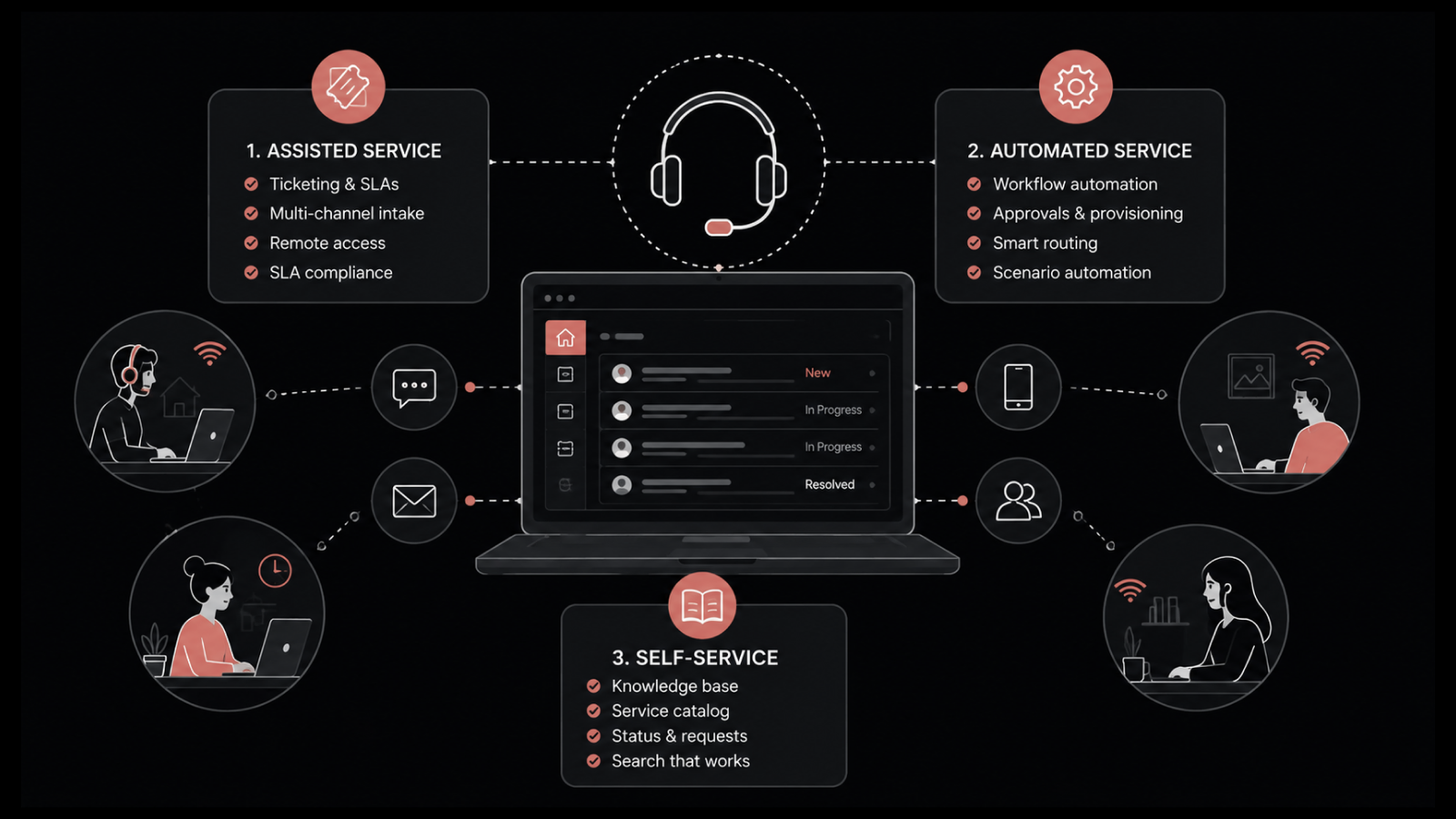
Service requests came from everywhere. Multiple channels, multiple departments, no standardization. Requests arrived via email, phone, walk-ups, and chat — with no unified system to capture, route, or track them.
Communication broke down constantly. Without a centralized platform, information stayed siloed within departments. Technicians lacked context. Managers lacked visibility. Customers waited too long for updates.
Manual processes slowed everything down. Procurement required chains of emails. Travel approvals looped between teams and administrators for days. Asset records lived in scattered Excel spreadsheets. Every process relied on human memory and manual handoffs.
There was no connection between tickets and assets. The help desk captured tickets, but it couldn't link them to the underlying assets. Technicians couldn't see recurring problems, couldn't correlate failures, and couldn't perform meaningful root cause analysis.
The company needed an ITSM platform that could unify their service operations, automate repetitive workflows, and deliver the visibility they were missing.
The Solution: Motadata ServiceOps Implementation
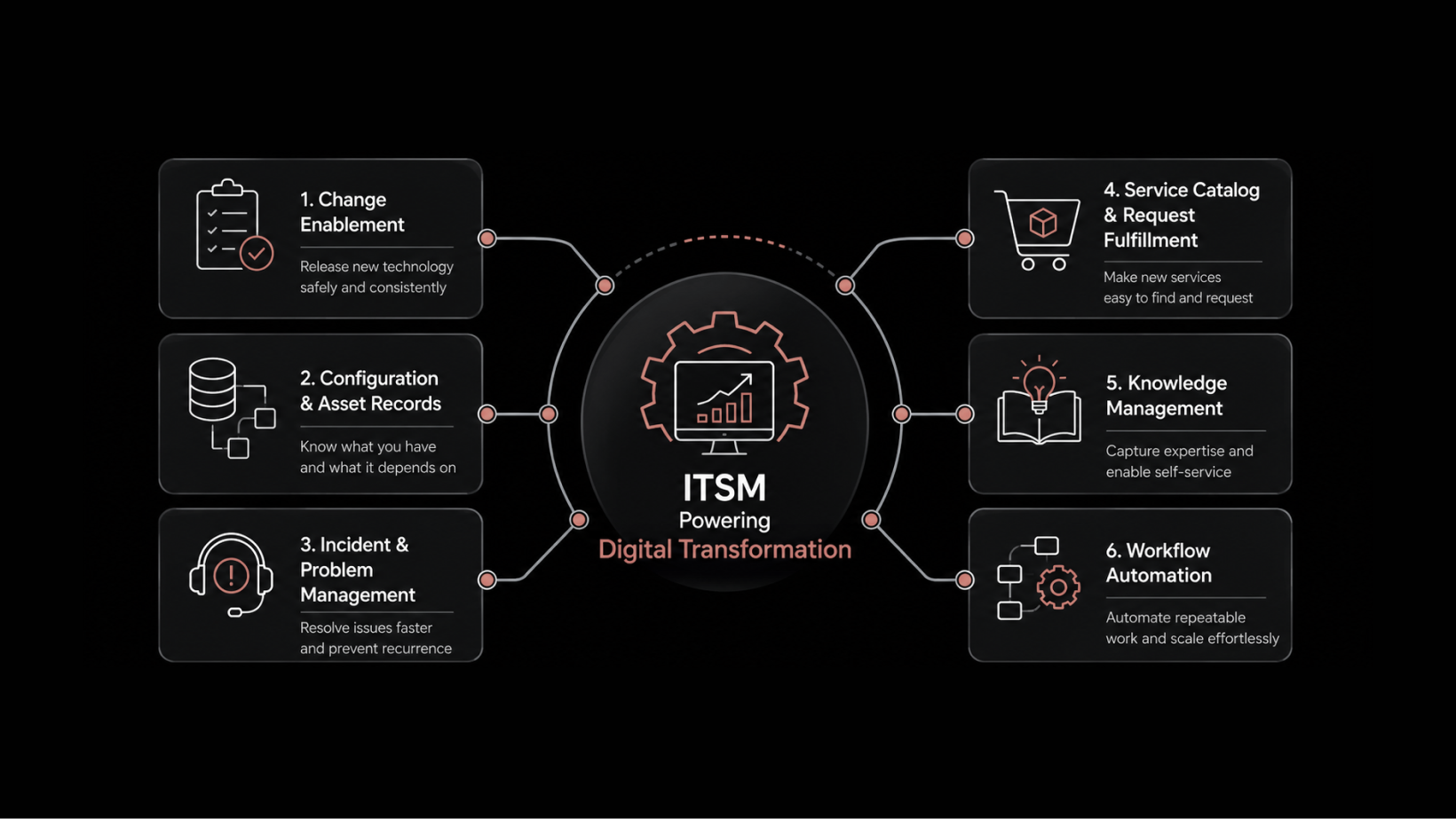
Motadata ServiceOps gave the customer a comprehensive ITSM platform with a modern interface, automation capabilities, and the integrations they needed to break down silos. Here's what they implemented:
Automated Workflows for Procurement
Before ServiceOps, purchasing an asset was a bureaucratic ordeal. Requests went back and forth via email between requesters, approvers, and procurement teams. There was no standardized process, no audit trail, and no way to track where a request stood.
With Motadata ServiceOps, the customer deployed multi-level approval workflows customized to their business policies. The new process works like this:
A requester fills out an asset requisition form in the self-service portal.
The workflow automatically routes the request through the appropriate approval chain.
Approvers receive notifications and can approve or reject directly within the platform.
Approved requests move to procurement with a defined timeline.
If a request is rejected, the requester receives an automated notification with the reason.
The result: procurement cycles that used to take weeks now complete in days, with full visibility and a complete audit trail at every step.
Flexible Service Catalog That Goes Beyond IT
As an IT services company, the customer's teams traveled frequently for project work. The travel request process was entirely manual — emails between team members, administrators, and managers — creating delays and confusion.
Motadata ServiceOps' Service Catalog solved this by bringing travel requests into the same automated framework as IT service requests:
Team members submit travel requests through the Service Catalog.
The system automatically assigns the request to a technician and triggers an approval workflow.
Itineraries are created with full visibility for administrators and team leads.
Multiple notifications keep all stakeholders informed at every stage.
This wasn't just an IT improvement — it demonstrated how ServiceOps extends across the organization to automate any departmental workflow.
Self-Service Adoption and Knowledge Management
The customer recognized that great IT service delivery starts with empowering users to help themselves. Motadata ServiceOps' self-service portal, powered by an intelligent Knowledge Base, delivered exactly that.
Users can now search for solutions to common issues without submitting a ticket. The Knowledge Base surfaces relevant articles based on the user's query, reducing ticket volume for the service desk team and giving users faster resolutions.
This shift to self-service didn't just improve efficiency — it improved the employee experience by putting answers at people's fingertips.
Comprehensive Asset Management with CMDB
Before ServiceOps, the customer managed IT and non-IT assets separately in Excel spreadsheets. Data was fragmented, outdated, and impossible to correlate with service tickets.
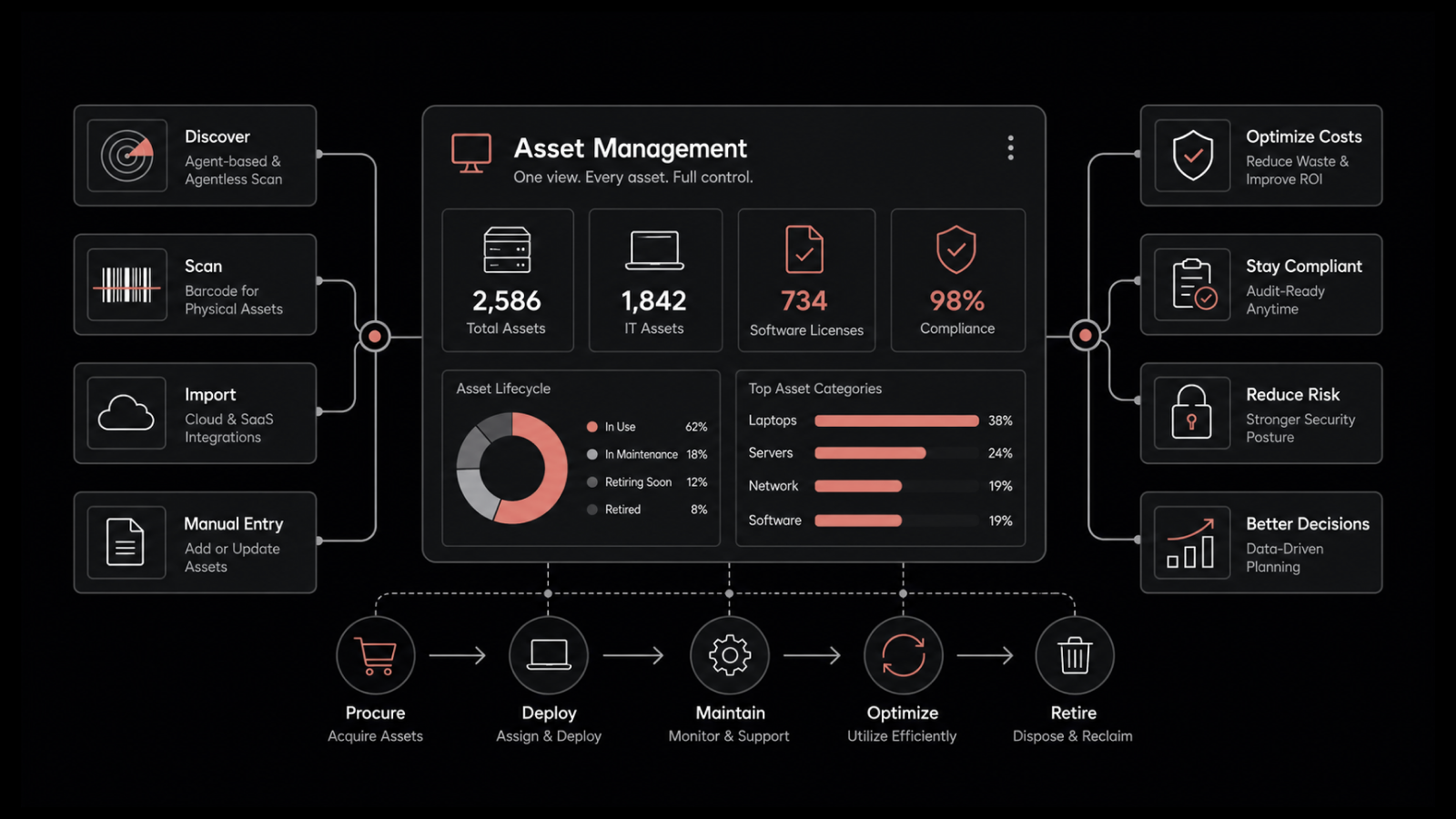
Motadata ServiceOps' Configuration Management Database (CMDB) unified everything:
320+ hardware assets and 1,200+ software licenses consolidated in a single portal
Financial data stored alongside operational data for each physical asset
Direct linking between service tickets and assets, enabling technicians to identify recurring problems
Complete asset lifecycle visibility — from procurement to retirement
The CMDB transformed asset management from a manual, error-prone process into a structured, searchable system that directly supports faster incident resolution.
Contextual Service Desk for Faster Ticket Resolution
The customer's previous help desk captured tickets, but it lacked context. Technicians couldn't see an asset's history, couldn't identify patterns, and couldn't collaborate effectively on complex issues.
Motadata ServiceOps' contextual service desk changed that by connecting tickets to assets, providing full incident history, and supporting technician collaboration. With this context in place:
Technicians resolve tickets faster because they can see the full picture
Root cause analysis becomes straightforward with asset-ticket correlation
Collaboration features let multiple technicians work together on complex issues
Intelligent reports and dashboards make key metrics visible at a glance
Measurable Results
The outcomes speak for themselves:
Metric | Before ServiceOps | After ServiceOps |
|---|---|---|
Service delivery time | Baseline | Reduced by 50%+ |
SLA adherence | Not tracked effectively | 98.31% |
Asset management | Fragmented Excel sheets | Unified CMDB (320+ HW, 1,200+ SW) |
Procurement process | Email-based, weeks | Automated, days |
Self-service adoption | None | Active, reducing ticket volume |
Ticket resolution | No context, slow | Contextual, faster RCA |
Within the first year, the customer saw enough transformation that they decided to expand automation to additional business processes — extending ServiceOps' impact across the entire organization. Try ServiceOps Now!
FAQs
What is IT service delivery?
IT service delivery is the process of providing technology services — including applications, infrastructure, support, and business processes — to users or customers. It encompasses everything from incident management and request fulfillment to change management and asset tracking.
What is an ITSM tool?
An ITSM (IT Service Management) tool is a software platform that helps organizations manage and deliver IT services. It typically includes capabilities for ticket management, workflow automation, asset management, a knowledge base, and reporting.
How can I reduce service delivery time?
Reducing service delivery time requires three things: automating repetitive workflows to eliminate manual bottlenecks, providing self-service options so users can resolve common issues themselves, and giving technicians contextual information so they can resolve tickets faster.
What is a CMDB and why does it matter?
A Configuration Management Database (CMDB) is a centralized repository that stores information about all IT and non-IT assets, their configurations, and their relationships. It matters because linking assets to service tickets enables faster root cause analysis, better change management, and more informed decision-making.
How do automated workflows improve ITSM?
Automated workflows eliminate manual handoffs, ensure consistent process execution, and accelerate cycle times. They route requests to the right people, trigger approvals automatically, and provide full audit trails — reducing errors and improving accountability.
Transform Your Service Delivery with Motadata ServiceOps
Motadata ServiceOps is an AI-native ITSM platform built to eliminate the manual complexity that slows IT service delivery. With automated workflows, a contextual service desk, comprehensive asset management, and a flexible Service Catalog, ServiceOps gives your team everything they need to deliver faster, more reliable IT services.
The results from this case study aren't unique — they're repeatable. Organizations across industries are using ServiceOps to cut service delivery time, improve SLA adherence, and extend automation beyond IT.
Start your free 30-day trial or schedule a demo to see what Motadata ServiceOps can do for your organization.