ITSM Maturity for SMBs: Overcoming the 3 Biggest Barriers
Definition
ITSM maturity measures how effectively an organization delivers, manages, and improves IT services over time. It's not about how many ITIL processes you've implemented or how complex your workflows are. It's about consistency, repeatability, and the ability to deliver reliable IT services that support business outcomes -- regardless of your organization's size.
Small and mid-sized businesses depend on reliable IT just as much as enterprises with 50x the headcount. Email has to work. Systems have to stay secure. Downtime costs real money. Yet most SMBs struggle to achieve ITSM maturity because they're trying to apply frameworks and tools designed for organizations with dedicated process teams, six-figure tool budgets, and formalized governance structures.
This creates a familiar paradox. Without formal ITSM, teams rely on heroics: tribal knowledge, manual fixes, and the same senior technician jumping in every time something breaks. Short-term, this feels efficient. It's actually fragile. Growth, employee turnover, or a single major incident can expose the cracks fast.
ITSM maturity doesn't mean bureaucracy. It means moving from reactive, unplanned responses to proactive, documented, and repeatable service delivery. And for SMBs, there are three barriers that stand in the way more than any others: resource scarcity, complexity overload, and cultural knowledge silos.
The good news? Each one has a practical, budget-friendly solution.
Understanding ITSM Maturity Levels
Before tackling barriers, it helps to understand where your organization sits. ITSM maturity typically follows a progression:
Level | Description | Characteristics |
|---|---|---|
Reactive | Ad hoc, firefighting mode | No documented processes; resolution depends on individual knowledge |
Defined | Basic processes established | Incident management exists; some tickets are tracked consistently |
Managed | Processes are measured and improved | SLAs are tracked; automation handles routine tasks; knowledge base exists |
Optimized | Continuous improvement driven by data | AI-assisted workflows; proactive problem prevention; data-driven decisions |
Most SMBs sit between Reactive and Defined. The goal isn't to leap to Optimized overnight. It's to make deliberate, incremental moves up the maturity curve.
Barrier 1: Resource Scarcity
The challenge of ITSM maturity doesn't start with strategy. It starts with capacity.
Limited budgets and understaffed IT teams force leaders to prioritize urgent operational work over long-term service improvement. The intent to standardize processes exists, but the reality of daily firefighting prevents meaningful progress.
This scarcity creates a vicious cycle. Without time or budget to invest in ITSM tools and processes, inefficiencies persist. Those inefficiencies consume even more time, reinforcing the perception that ITSM is "nice to have" rather than essential.
The Challenge: Lean IT Staff and Tight Budgets
In most SMBs, IT teams wear multiple hats. The same person handles help desk tickets in the morning, security alerts at noon, and system upgrades at night. With this workload, process documentation and service improvement always fall to the bottom of the priority list.
On top of that, traditional ITSM tools are priced and designed for enterprises. High licensing costs, long implementations, and ongoing maintenance make them unrealistic for small businesses focused on keeping the lights on.
Solution 1: Adopt Cloud-Based ITSM Tools
What to do: Move away from on-premises or enterprise-heavy platforms. Adopt SaaS-based ITSM tools with predictable subscription pricing.
Why it works: Cloud ITSM tools eliminate upfront capital expenses, remove maintenance overhead, and scale as the business grows. Updates, security patches, and new features are handled by the vendor, freeing internal resources for higher-value work.
For SMBs pursuing ITSM maturity, SaaS tools make service management accessible without enterprise-level investment. A platform like Motadata ServiceOps, for example, offers ITIL-aligned capabilities at a price point and complexity level designed for growing teams.
Solution 2: Prioritize Quick-Win Automation
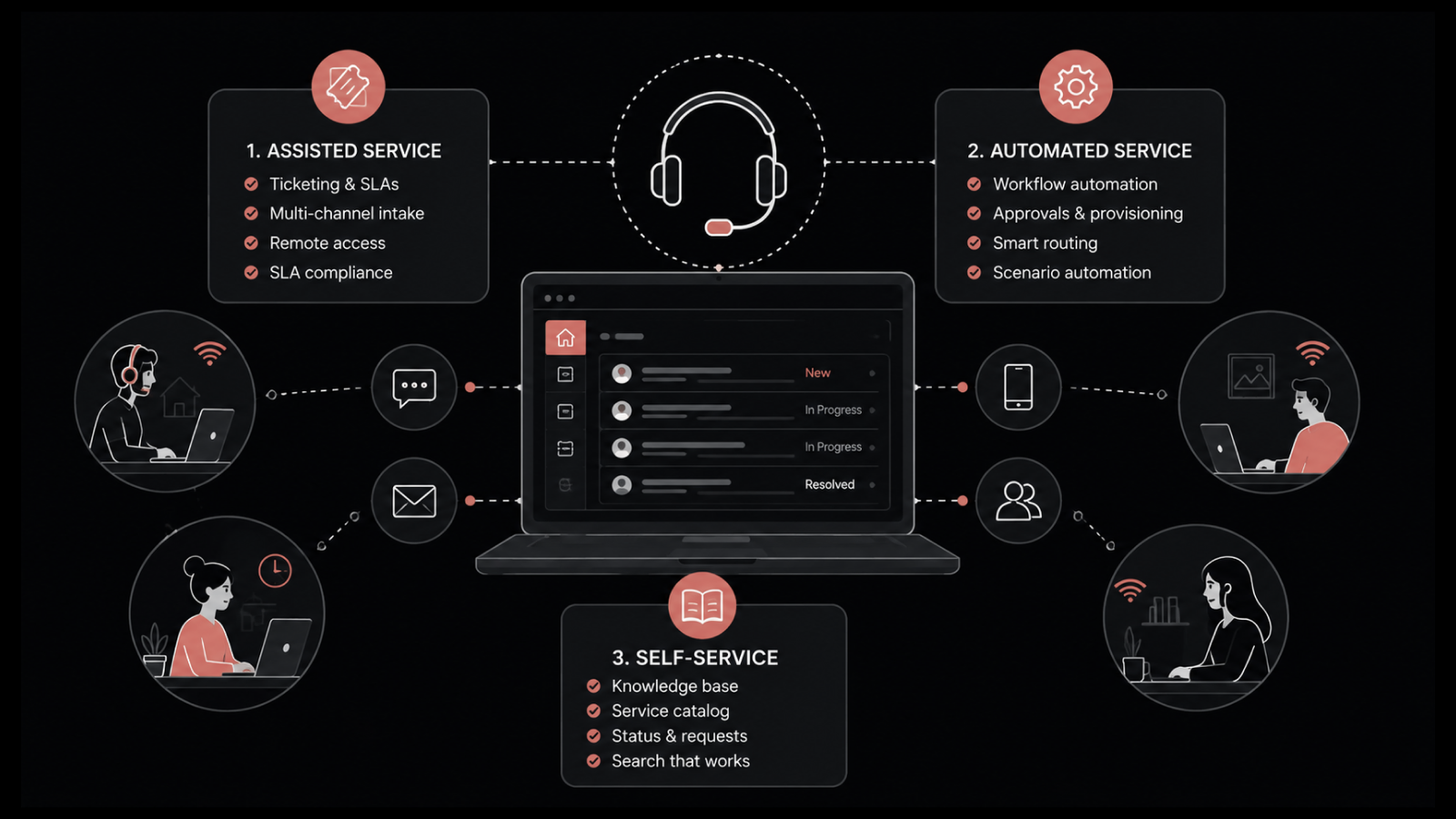
What to do: Identify and automate the most repetitive, high-volume tasks first -- password resets, ticket routing, onboarding requests, status notifications.
Why it works: Even modest automation delivers immediate ROI. Automating five common service requests can save 10-15 hours per week for a small IT team. That's not a productivity metric -- it's breathing room to focus on process improvement, documentation, and strategic work.
For small teams, automation isn't about sophistication. It's about survival and scalability.
Quick Self-Assessment: Resource Readiness
Ask yourself these questions:
Do we spend more than 40% of IT staff time on repetitive, manual tasks?
Are we using an ITSM tool designed for organizations 10x our size (or no tool at all)?
Has our ticket volume grown faster than our headcount over the past 12 months?
If you answered yes to two or more, resource scarcity is actively blocking your ITSM maturity.
Barrier 2: Complexity Overload
One of the most common reasons ITSM initiatives fail in SMBs isn't lack of effort -- it's excess complexity introduced too early.
Well-intentioned teams attempt to implement comprehensive frameworks, detailed workflows, and formal governance models designed for large enterprises. In practice, technicians spend more time navigating approvals, terminology, and documentation than resolving issues. End users experience slower response times. Confidence in ITSM erodes quickly.
ITSM maturity for small teams isn't about completeness or strict framework adherence. It's about selecting a minimal set of high-impact processes and adapting them to how the organization actually works.
The Challenge: "ITIL Is Too Big for Small Teams"
Many SMBs stall their ITSM adoption by trying to implement everything at once. Full ITIL frameworks, complex approval workflows, and heavy governance quickly create friction. The result: slow service, frustrated technicians, and resistance from the very people expected to use the system.
Complexity doesn't equal maturity. Focus does.
Solution 3: Start with Three Core Processes
What to do: Begin with three foundational processes that deliver immediate, visible impact:
Incident Management -- Restore service quickly and consistently using documented steps
Service Request Management -- Deploy a simple service catalog for the top 5-10 most common requests
Knowledge Management -- Capture solutions to reduce repeat issues and accelerate onboarding
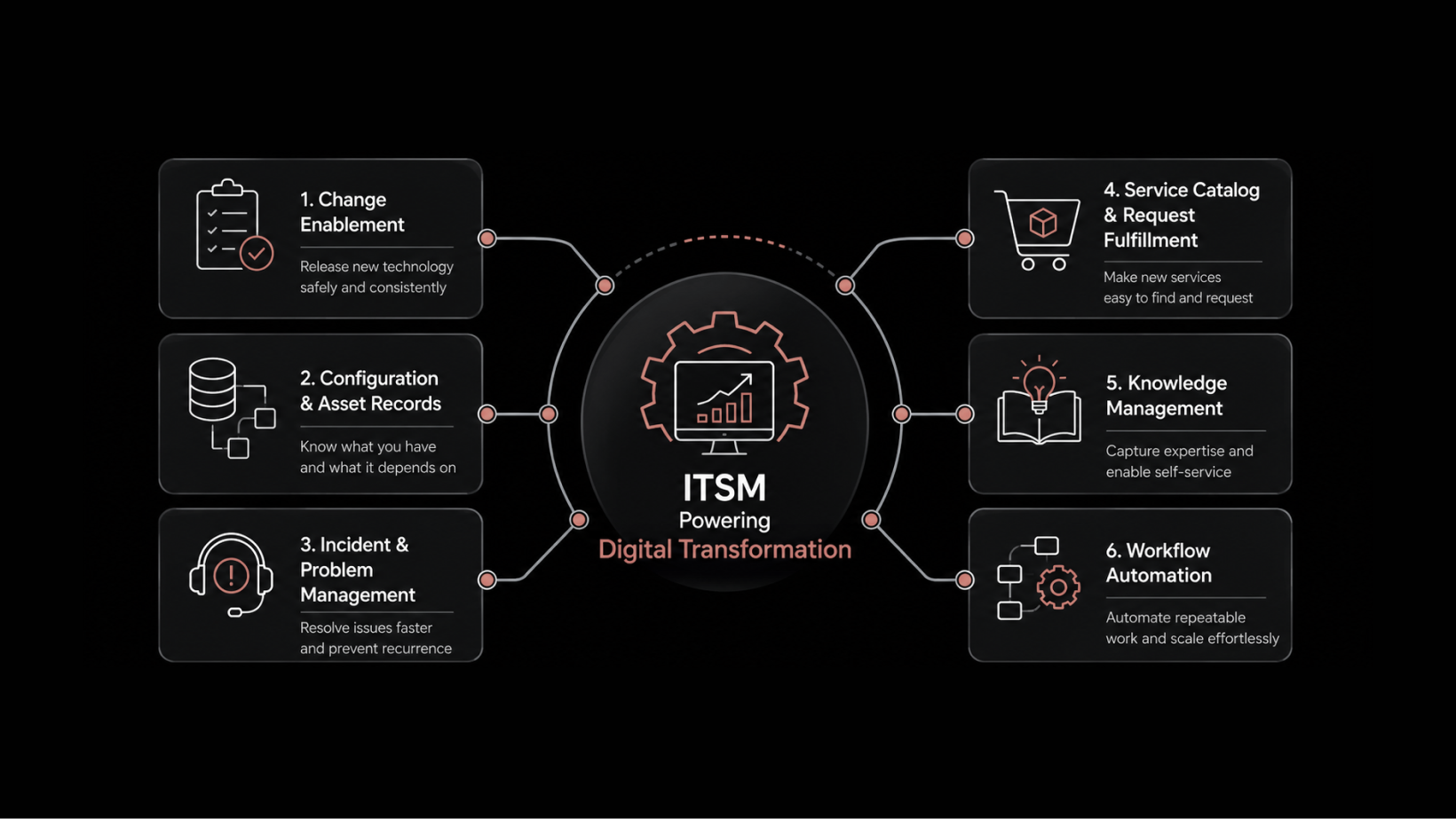
Why it works: These three processes directly improve end-user experience and reduce ticket volume without overwhelming the team. Faster resolutions and fewer repeat questions make the value of ITSM visible almost immediately. You can add change management, problem management, and asset management later -- once the foundation is solid.
Solution 4: Simplify the Language
What to do: Use plain language and adapt frameworks to your reality. Replace formal terminology with descriptions your team actually understands:
"Change Enablement" becomes "Pre-Approved System Updates"
"Configuration Items" becomes "Critical Systems We Support"
"Service Level Management" becomes "Response Time Commitments"
Document only the steps that matter for your organization -- not every recommendation in a framework manual.
Why it works: Lowering the language barrier increases adoption. When ITSM feels practical instead of academic, small teams engage with the process instead of working around it.
Area | Common SMB Mistake | Practical Approach | Business Impact |
|---|---|---|---|
Framework adoption | Full ITIL implementation from day one | Minimum viable ITSM focused on outcomes | Faster adoption, reduced resistance |
Process design | End-to-end workflows with multiple approvals | Only mandatory steps to restore/deliver service | Shorter resolution times |
Governance | Enterprise-level change boards | Pre-approved changes for low-risk updates | Control without bottlenecks |
Terminology | Formal ITIL language that confuses staff | Plain operational language | Higher process adoption |
Service catalogs | Detailed catalogs with dozens of services | Start with top 5-10 most common requests | Improved self-service usage |
Documentation | Over-documenting before proving value | Document only what's needed for consistent execution | Less overhead, faster execution |
Barrier 3: Cultural and Knowledge Silos
Technology is rarely the first thing that breaks -- knowledge is.
Informal working habits that once felt efficient become risky as systems multiply, staff turnover increases, and service expectations rise. What was "everyone knows how this works" quietly turns into "only one person knows."
This is a cultural challenge as much as a technical one. When organizations reward speed and heroics over documentation and knowledge sharing, critical information stays siloed. The result: slower resolutions, fragile service continuity, and dangerous dependency on specific individuals.
The Challenge: Tribal Knowledge Dependency
In many SMBs, critical knowledge lives exclusively in people's heads. One technician knows how System X works. Another knows who owns Application Y. When those individuals are unavailable -- or leave -- the risk becomes painfully obvious.
This dependency slows onboarding, increases resolution times, and makes the business vulnerable to a single resignation or vacation.
Solution 5: Mandate Knowledge Capture at Resolution
What to do: Require technicians to create or update a knowledge base article before closing any recurring incident. Frame it as "first-time fix, not last-time documented."
Why it works: This small habit shift gradually builds a shared knowledge base without requiring a massive documentation project. Over time, common issues get resolved faster, and reliance on individual heroes decreases. Knowledge management becomes part of daily work -- not a separate initiative.
Practical tip: Start with the top 20 most frequent ticket types. If each one gets a knowledge article, you'll deflect a meaningful percentage of repeat tickets within 90 days.
Solution 6: Make Service Assets Visible
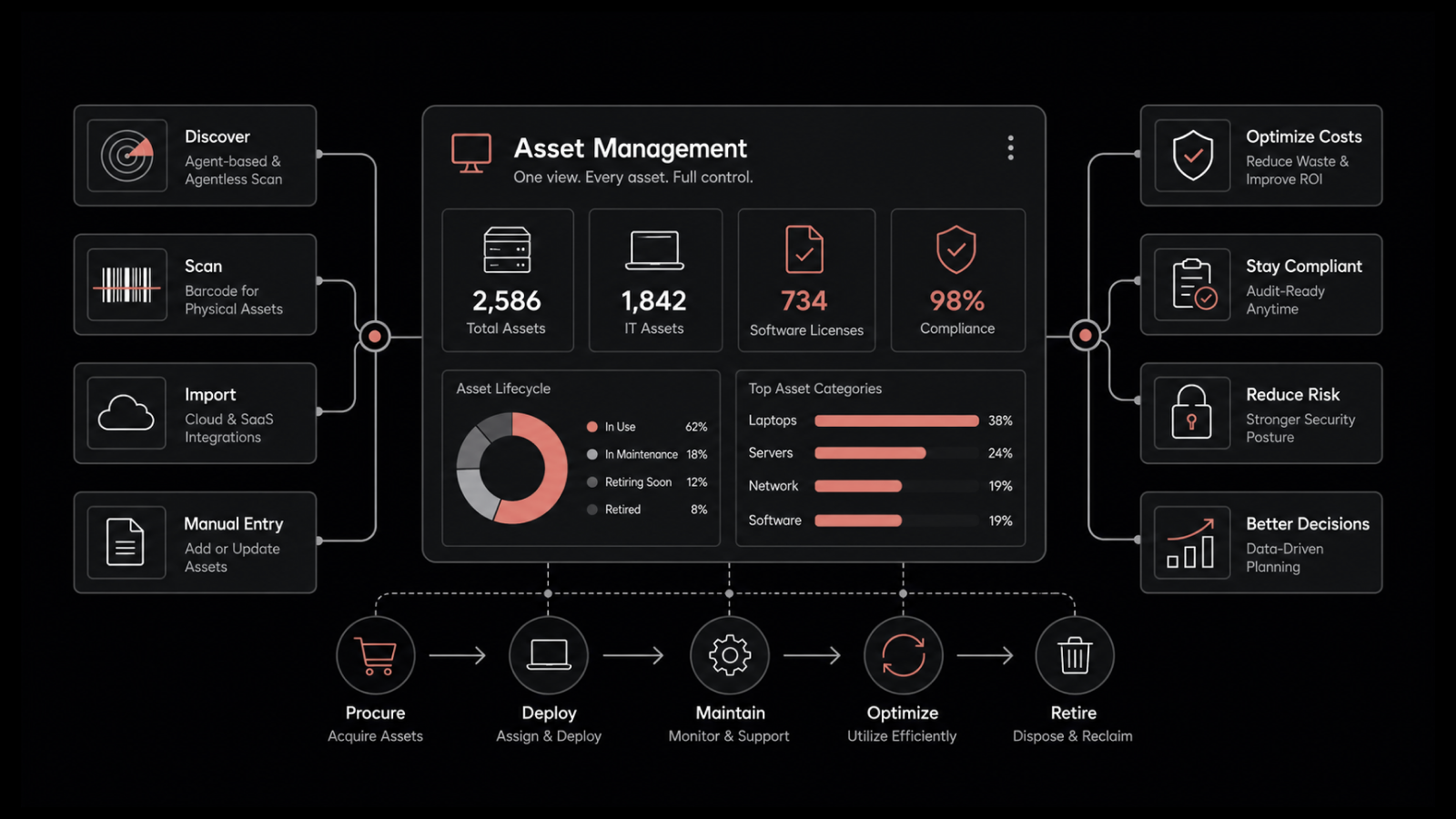
What to do: Implement a lightweight CMDB focused only on assets that directly impact service delivery -- core applications, servers, integrations, and ownership mapping.
Skip perfection. Accuracy matters more than completeness.
Why it works: Even a simple CMDB improves impact analysis, accelerates troubleshooting, and reduces the risk of undocumented systems causing outages. It also helps combat shadow IT by making ownership and dependencies visible.
For SMBs, ITSM maturity comes from clarity -- not exhaustive documentation.
Building a Practical ITSM Maturity Roadmap
Here's a phased approach that works for most SMBs:
Phase 1 (Months 1-3): Foundation
Deploy a cloud-based ITSM platform with incident management and a basic service catalog
Automate the top 5 repetitive service requests
Establish response time commitments (SLAs) for critical services
Phase 2 (Months 4-6): Knowledge and Visibility
Launch a knowledge base with articles for the top 20 recurring issues
Implement a lightweight CMDB for critical assets
Begin tracking key metrics: first-contact resolution rate, mean time to resolve, ticket volume trends
Phase 3 (Months 7-12): Optimization
Introduce problem management to address root causes of recurring incidents
Add change management for high-risk changes (keep low-risk changes pre-approved)
Use reporting and analytics to identify improvement opportunities
Phase 4 (Ongoing): Continuous Improvement
Leverage AI-assisted categorization and routing to reduce manual triage
Expand self-service capabilities based on knowledge base usage data
Review and refine processes quarterly based on performance data
FAQs
Build Your ITSM Maturity with Motadata
ITSM maturity isn't about matching enterprise complexity. It's about making intentional choices: adopting affordable tools, automating the most painful manual work, and systematically capturing knowledge to eliminate risk.
Motadata ServiceOps gives SMBs an AI-native ITSM platform built for growing teams -- with incident management, service catalog, knowledge management, automation, and analytics in a single, affordable solution.
Start your free trial and begin building ITSM maturity that scales with your business.
Author
Arpit Sharma
Senior Content Marketer
Arpit Sharma is a Senior Content Marketer at Motadata with over 8 years of experience in content writing. Specializing in telecom, fintech, AIOps, and ServiceOps, Arpit crafts insightful and engaging content that resonates with industry professionals. Beyond his professional expertise, he is an avid reader, enjoys running, and loves exploring new places.