Cloud Automation for DevOps: How to Accelerate CI/CD Pipelines at Scale
In today's digital-first world, the speed at which software is delivered has become a decisive factor in business success. Customers expect continuous innovation, immediate updates, and flawless digital experiences. However, as organizations move toward multi-cloud and hybrid environments, the complexity of managing these systems grows exponentially.
Manually provisioning servers, managing deployments, and maintaining configuration consistency across environments creates serious bottlenecks. What once worked for small-scale applications becomes unsustainable at enterprise scale. The demand for agility has made cloud automation not just desirable but essential.
Cloud automation is the practice of using scripts, workflows, and purpose-built tools to automatically manage cloud infrastructure, resources, and processes without manual intervention. It ensures operations are consistent, repeatable, and scalable across any environment.
Cloud automation eliminates repetitive manual work and enables teams to focus on innovation rather than maintenance. It turns DevOps from an aspirational culture into an operational reality.
Key Concepts: Cloud Automation, DevOps, and CI/CD
Before diving deeper, let's clarify the foundational concepts:
Cloud automation: Automated management of cloud infrastructure, resources, and operational processes — ensuring consistency, repeatability, and scalability without manual intervention.
DevOps: A culture and set of practices that combine software development (Dev) and IT operations (Ops) to shorten the development lifecycle and deliver high-quality software continuously.
CI/CD: Continuous Integration (CI) and Continuous Delivery/Deployment (CD) are automated practices that ensure every code change is tested, integrated, and deployed quickly and reliably.
When integrated effectively, cloud automation strengthens collaboration, accelerates development cycles, and ensures the reliability and security of continuous delivery processes.
Why Cloud Automation Is Foundational for Modern DevOps
The Scale Problem
The cloud has transformed how organizations build and deploy applications. Resources are dynamic and ephemeral. Virtual machines, containers, and serverless functions scale up or down within seconds based on workload demands.
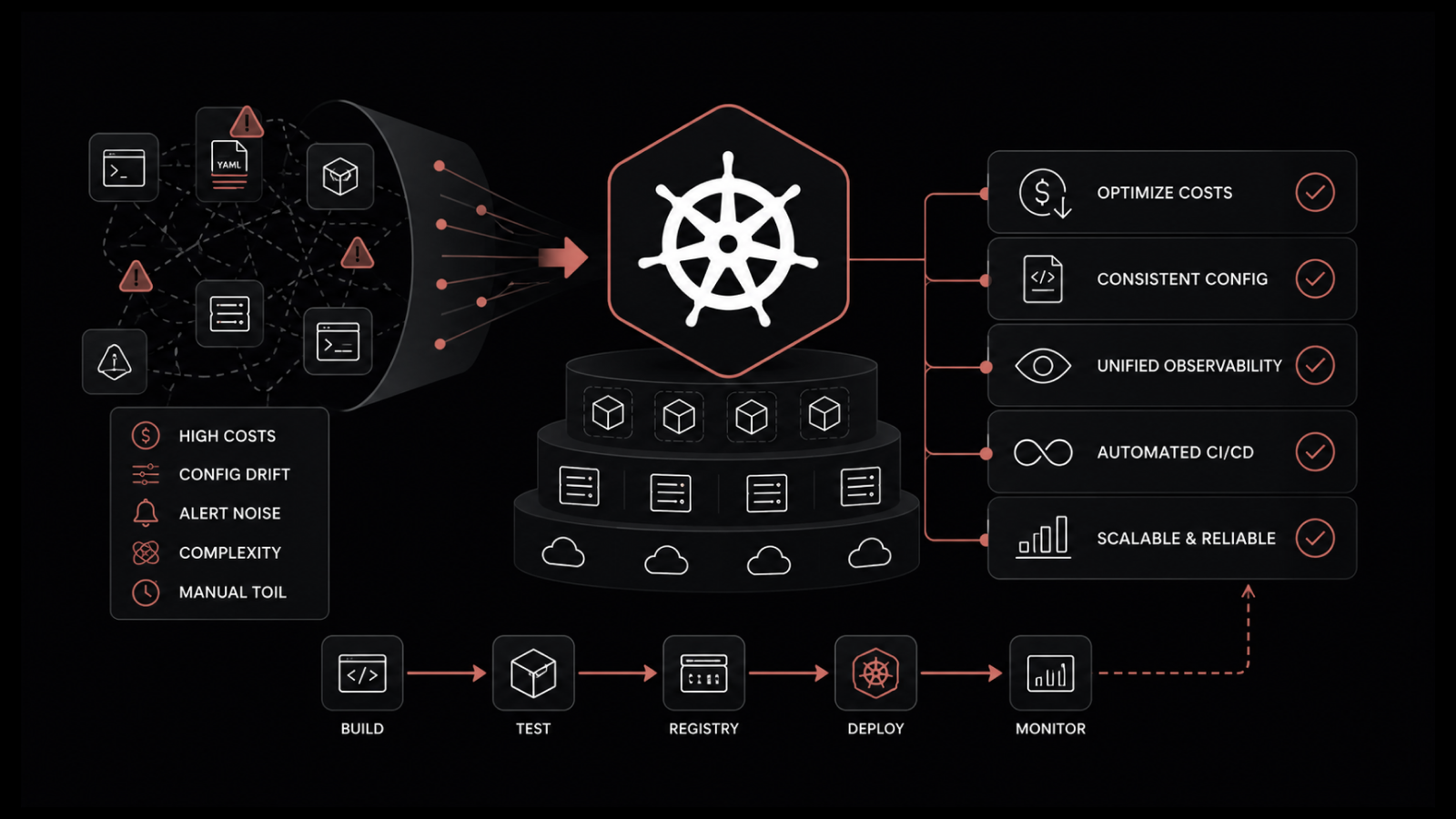
While this flexibility is powerful, it introduces complexity that manual management can't handle. Cloud automation becomes the foundation for maintaining control and consistency in fast-moving environments. It ensures infrastructure scales automatically based on performance thresholds, enabling true elasticity.
Automated scripts deploy additional servers when traffic surges and decommission them when demand falls. This improves efficiency and reduces operational costs. Through cloud automation platforms, organizations set predefined policies that automatically enforce security, cost controls, and access permissions.
Bridging the Dev-Ops Divide
DevOps is built on collaboration, yet developers and operations teams often struggle with communication gaps and conflicting priorities. Cloud automation bridges these silos by providing a shared language: code.
Through Infrastructure as Code, developers and operations engineers collaborate on the same version-controlled scripts, aligning their efforts around reproducible and traceable environments. This doesn't just foster collaboration — it enforces consistency and compliance across teams.
The Three Pillars of Cloud Automation
Infrastructure as Code (IaC)
Infrastructure as Code lets teams define cloud resources using code rather than manual configuration. Tools like Terraform, AWS CloudFormation, and Pulumi create, modify, and replicate entire environments instantly.
This ensures that each deployment — development, testing, or production — is consistent and version-controlled. IaC makes infrastructure auditable, repeatable, and reversible, which is crucial for both compliance and rapid debugging.
Configuration Management
Once infrastructure is provisioned, configuration management tools like Ansible, Chef, and Puppet automate software installation, environment setup, and system configuration. They guarantee uniformity across servers and eliminate the "it works on my machine" problem that disrupts software delivery.
Orchestration and Workflow Automation
Beyond provisioning and configuration, orchestration tools bring everything together. Platforms like Jenkins, GitLab CI/CD, GitHub Actions, and Kubernetes manage the entire workflow from code commit to deployment. They integrate testing, monitoring, and scaling — ensuring smooth, coordinated releases across distributed environments.
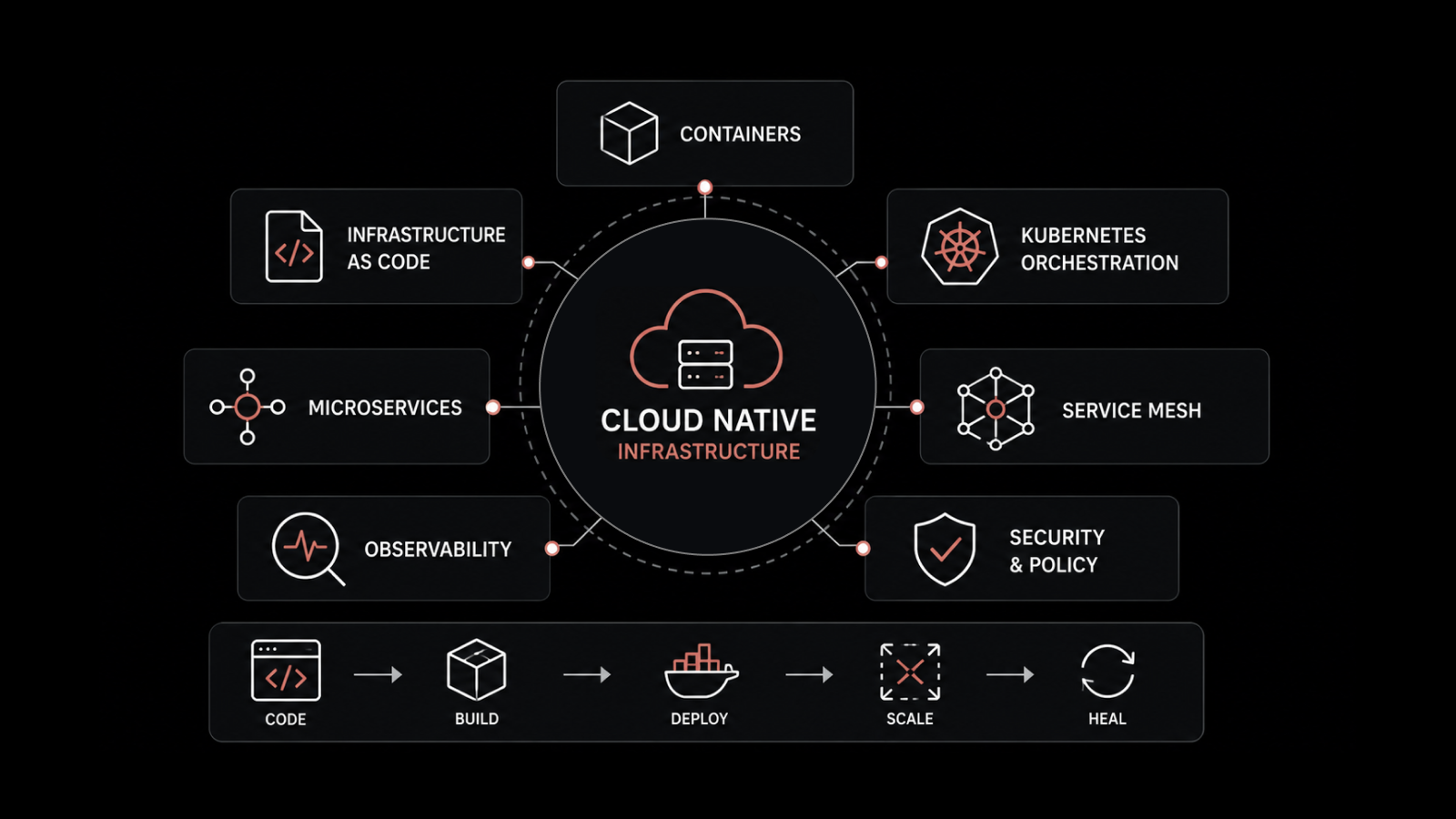
Together, these three pillars create a unified ecosystem where every stage of the DevOps lifecycle is seamlessly connected.
How Cloud Automation Enhances CI/CD Pipelines
Enhancing Continuous Integration (CI)
Automated Environment Setup for Builds
Cloud automation creates disposable, isolated environments for every new code branch. Developers run builds, integrate code, and validate features in parallel without interfering with each other. These environments are automatically destroyed once testing completes, optimizing cloud resource usage.
Parallelized Testing
Automated testing distributes across multiple cloud instances simultaneously. This parallelization drastically reduces CI cycle time. Instead of waiting hours for sequential test runs, teams validate code changes in minutes — detecting issues early and keeping releases on schedule. Running tests faster only helps if you know they're the right tests. Testsigma adds a quality intelligence layer on top of CI/CD execution, finding coverage gaps against what's actually being built so teams know not just that a build passed, but what it actually validated.
Enhancing Continuous Delivery and Deployment (CD)
Zero-Downtime Deployments
A key advantage of cloud automation platforms is their ability to orchestrate complex deployment strategies. Organizations can roll out new versions incrementally (canary deployments) or maintain dual environments (blue/green deployments). End users experience no downtime or disruptions during updates.
Automated Rollbacks
Failures are inevitable, but downtime doesn't have to be. Automated rollback mechanisms instantly revert to the previous stable version when a deployment issue is detected. This reduces mean time to recovery (MTTR) and enhances service reliability.
Environment Consistency
Automation ensures every environment — development, staging, production — remains consistent. When all configurations are stored as code, teams confidently replicate environments, eliminating discrepancies and improving predictability.
Shift-Left Security in Automated Pipelines
Security is one of the biggest challenges in software delivery. Traditionally, security checks occurred late in the process, often delaying releases. With automation, organizations "shift left" by integrating security early in the pipeline.
Automated security scanning, compliance checks, and vulnerability assessments run automatically during code builds or deployments. This proactive approach minimizes the risk of vulnerabilities reaching production and reduces remediation time.
Key shift-left practices include:
Static Application Security Testing (SAST) during code commits
Software Composition Analysis (SCA) for dependency vulnerabilities
Infrastructure-as-Code scanning for misconfigurations before provisioning
Container image scanning before deployment to production
Automated compliance policy enforcement across all environments
GitOps: The Next Evolution of Cloud Automation
GitOps extends Infrastructure as Code by making Git the single source of truth for both application code and infrastructure configuration. Every change — whether to application logic or infrastructure — flows through a Git-based workflow with pull requests, reviews, and automated reconciliation.
Core GitOps principles:
Declarative configuration: Infrastructure and application state are defined declaratively in Git repositories.
Version-controlled operations: Every change is tracked, auditable, and reversible through Git history.
Automated reconciliation: Agents continuously compare the desired state in Git with the actual state in production and correct any drift automatically.
Pull-based deployments: Instead of CI pushing changes to environments, GitOps agents pull desired state from Git — reducing the attack surface.
GitOps eliminates configuration drift, simplifies rollbacks, and provides a complete audit trail for every infrastructure change.
The Missing Link: Observability in Automated Pipelines
Most automation strategies focus on provisioning, deploying, and scaling — but neglect the feedback loop that makes automation trustworthy. Without observability, automated systems fail silently. Deployments succeed on paper but degrade performance in production. Auto-scaling triggers fire without anyone understanding why.
Observability closes the loop by providing:
Real-time performance monitoring of automated deployments
Automated anomaly detection that catches regressions introduced by new releases
Infrastructure health dashboards that track auto-scaled resources and their utilization
CI/CD pipeline metrics — build times, test pass rates, deployment frequency, and failure rates
Continuous monitoring that validates compliance and security posture after every automated change
The most mature DevOps organizations treat observability as a first-class citizen in their automation strategy — not an afterthought.
Manual vs. Automated DevOps Pipelines
Capability | Manual Pipeline | Automated Pipeline |
|---|---|---|
Environment provisioning | Hours to days | Minutes |
Deployment frequency | Weekly or monthly | Multiple times per day |
Configuration consistency | Prone to drift | Guaranteed by code |
Security scanning | Late-stage, manual | Shift-left, automated |
Rollback speed | Manual recovery | Instant automated rollback |
Scaling | Reactive, manual | Proactive, policy-driven |
Feedback loops | Slow, disconnected | Real-time, observability-driven |
Audit trail | Incomplete | Complete, version-controlled |
Build Reliable Automation With Motadata
Cloud automation drives speed, reliability, and scalability across every stage of software delivery. But automation without observability is flying blind. Deployments succeed in the pipeline but fail in production. Auto-scaling triggers fire without context. Configuration drift goes undetected.
Motadata's unified observability platform provides the monitoring backbone that cloud automation demands:
Real-time infrastructure monitoring across cloud, hybrid, and on-premises environments
AI-powered anomaly detection that catches regressions introduced by automated deployments
CI/CD pipeline observability that tracks deployment health and performance impact
Automated compliance monitoring that validates security posture after every infrastructure change
Unified dashboards that give DevOps, SRE, and platform teams a single source of truth
For organizations beginning their automation journey, start small. Automate one environment or process, then gradually expand across the CI/CD pipeline. Pair your automation with a comprehensive observability platform to centralize workflows, improve visibility, and scale effectively.
Explore Motadata Unified Observability and give your automation strategy the feedback loop it needs.
FAQs
What is the core difference between CI/CD and DevOps?
CI/CD focuses specifically on automating the process of building, testing, and deploying software. DevOps is a broader cultural and operational approach that unites development, operations, and security teams to improve collaboration and accelerate delivery. CI/CD is a key practice within the DevOps methodology.
What are the biggest challenges when adopting cloud automation?
Common challenges include cultural resistance to change, lack of standardization, tool sprawl, and insufficient observability. The key is to adopt automation gradually, establish clear governance, and use a robust platform that integrates well with your DevOps stack.
How does cloud automation reduce costs?
Automation reduces costs by eliminating manual labor for repetitive tasks, right-sizing cloud resources through auto-scaling, reducing downtime through automated rollbacks, and catching security issues early (shift-left) before they become expensive production incidents.
Is cloud automation secure?
Cloud automation improves security when implemented correctly. It enforces consistent security policies, enables shift-left scanning, provides audit trails for every change, and eliminates human error in configuration management. The key is integrating security into automation from the start rather than bolting it on later.
How do I measure the success of cloud automation?
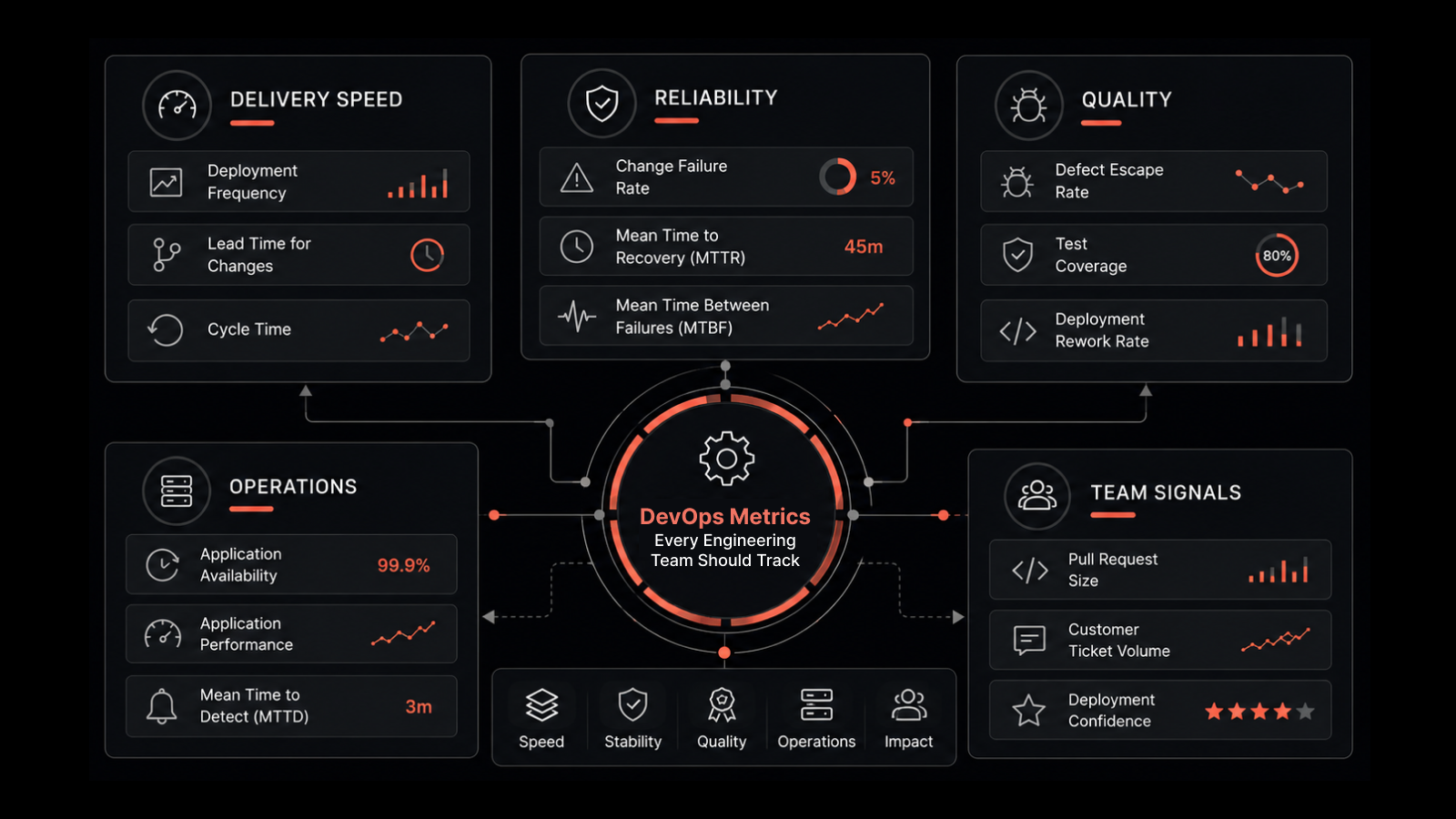
Track deployment frequency, lead time for changes, change failure rate, mean time to recovery (MTTR), infrastructure cost per deployment, and pipeline cycle time. These DORA metrics provide a clear picture of how automation is improving your delivery capability.
Author
Motadata Team
Content Team
Articles produced collaboratively by our engineering and editorial teams bear the collective authorship of Motadata Team.